Unexpected Lessons Learned Behind Bars by Ashley Collins
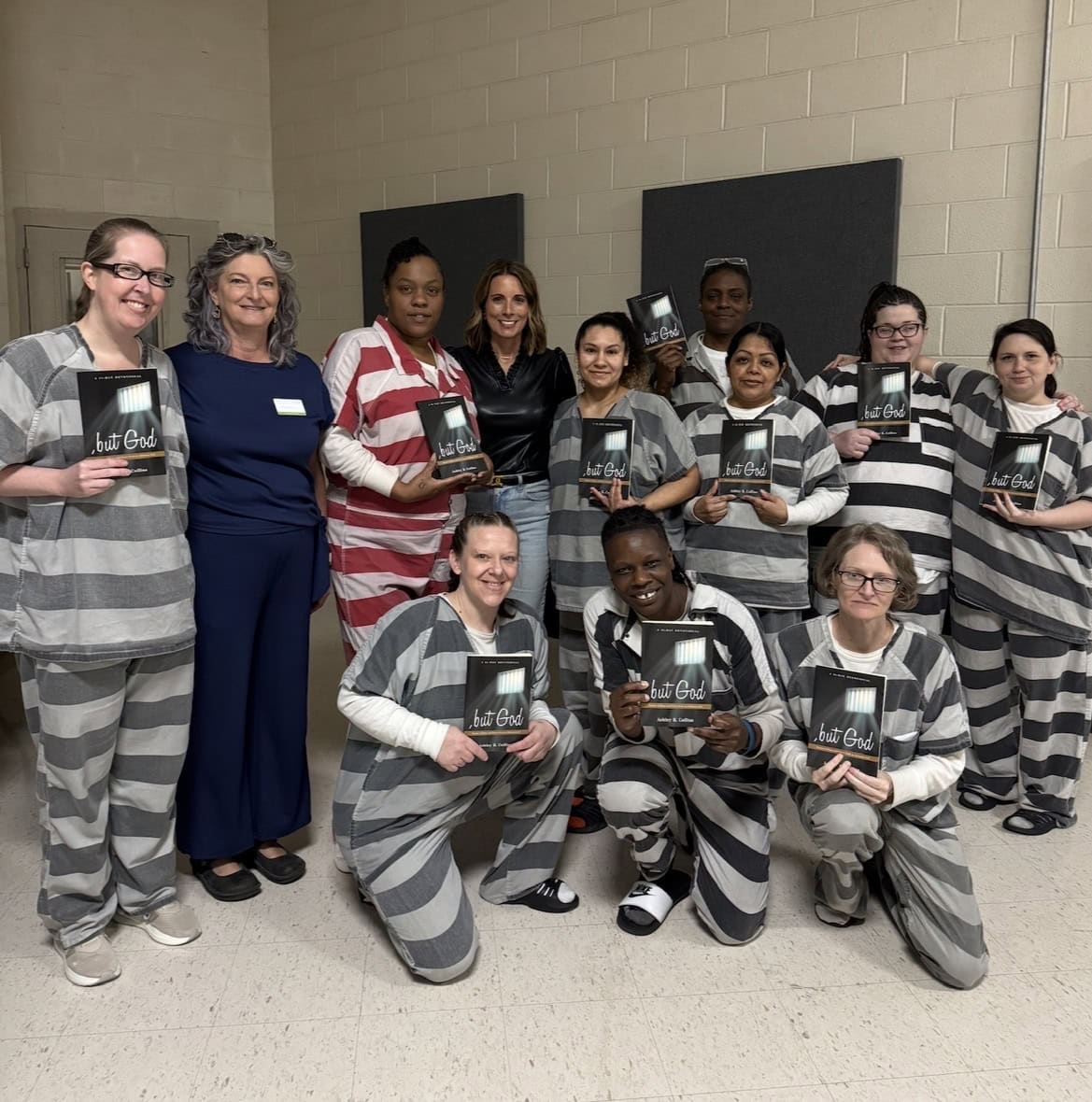

I have been in and out of jail more times than I can count.
The first few times were intimidating. But before long, I became comfortable with the surroundings, the women I met, and the conversations I never expected to have.
When you read the above sentences, what was your initial thought? Did your mind go to Jesus’ words in Matthew 25 of visiting those in prison? Or did you wonder, what did she do to end up in jail so many times?
Before I began serving in jail ministry, I probably would have assumed the latter. But after years of walking through locked jail doors, I now understand why Jesus specifically told us not to forget those in prison.
From the outside, jail is a completely different world; and indeed, in some ways, it is. But in other ways, more important ways, it isn’t. Every person has sinned. Every person struggles. Every person has made mistakes. Every person needs God’s grace.
I didn’t volunteer for jail ministry. When the opportunity presented itself, the Holy Spirit first nudged me, then pushed me in that direction. I didn’t feel prepared, qualified, or equipped to walk into a jail and share the Gospel in what I assumed would be such a dark and desolate place. But that was my issue, not God’s. I knew God had called me to share my faith and teach His Word. The problem was that I preferred to answer that call on my own timeline and within my comfort zone. God, however, is far less interested in our comfort than in our obedience. He doesn’t call us to stay where we feel capable; He calls us to depend on Him. Time and again, He invites us to say, “Yes,” trusting that He will provide everything we need.
It shouldn’t surprise me that God was right. My first time in jail was eye-opening; one I will never forget. I started listening to stories of incarcerated women, and my heart began to fill with compassion, like nothing I had ever experienced. I was overwhelmed with the Holy Spirit, and I knew this was the place to serve Him. I have been returning to jail week after week for over 14 years.
Looking back, I realized Jesus had been preparing me to understand one of His most overlooked lessons. The people Jesus mentions at the end of Matthew 25 aren’t difficult to find. Every community has people who are hungry, thirsty, strangers, in need of clothing, sick, or in prison. Jesus wasn’t describing a rare ministry opportunity. He was describing the people His followers would encounter every day.
But why did He include prisoners on that list?
We Are All Made in the Image of God
Our culture is quick to assign labels: felon, inmate, addict, criminal, outcast. Those labels often become the lens through which we see a person. God sees something different. He sees image bearers, people created in His image and deeply loved by Him. That truth should shape the way we see everyone: our friends, our enemies, and those behind bars.
The ground is level at the foot of the cross. Scripture reminds us that “all have sinned and fall short of the glory of God.” The difference is not that some people need grace more than others. The difference is that some people’s sins are a Google click away while others are easier to hide.
When we begin to see incarcerated men and women as fellow image bearers rather than labels, Jesus’ words in Matthew 25 begin to make perfect sense.
One of the women I met in jail had spent most of her life wearing labels others had given her and labels she had given herself, such as addiction, failure, unlovable, and broken. She believed she had nothing left worth saving.
One day in Bible study, she shared that after years of running from God and multiple failed attempts to end her life, she finally cried out to Him with complete honesty: “If You want me to live this badly, then You must know something about me that I don’t.”
That prayer marked the beginning of a new identity. She discovered that God saw her not as an addict or an inmate, but as His beloved daughter. Today, she is sober, her family relationships have been restored, and she now encourages others who are battling addiction. The labels that once defined her no longer do. The only label that ultimately matters is the one God gives His children.
What the Church Misses by Overlooking Jail Ministry
I’ve often walked through the doors of our county jail carrying a Bible and a lesson. My plan was to teach. What I didn’t expect was how much I would learn.
I’ve met some of the most incredible women behind bars. They have taught me about so many important lessons on God’s timing, freedom, and hope in Christ. As I think about it, I could replace the words “the women taught me” with “the apostle Paul taught me.” After all, Paul wasn’t just a missionary, he was also a prisoner. Some of his greatest lessons were written from a prison cell.
The women I’ve met behind bars have reinforced what Paul learned long ago: God often does His deepest work while we wait. I don’t like waiting. I prefer microwaves to crockpots. One is fast and efficient; the other takes time, but the result is far better. God often works more like a crockpot than a microwave. His transformation is slow, steady, and intentional. Sometimes He allows what I like to call a “divine timeout”; that is, a season that gets our attention and redirects our hearts. Not every divine timeout happens behind bars, but every one of us will experience seasons when God asks us to stop striving, trust Him, and wait on His perfect timing.
Perhaps the greatest lesson they’ve taught me is hope. Many have waited months – or even years – for court dates, sentencing, or the chance to see their children again. Yet I have heard them say, “God saved my life by putting me in jail. He has a better plan for my life.” Sometimes hope in Christ is all they have, and yet, it is enough.
When the Church overlooks the incarcerated, we don’t just miss an opportunity to serve. We miss those who have much to teach us about following Christ. Like Paul, they remind us that our circumstances don’t have the final word. God does.
Encountering Christ Through Unexpected Friendships
Jesus spent much of His ministry with people society had written off – tax collectors, sinners, and outcasts. He reminded the Pharisees, “It is not the healthy who need a doctor, but the sick. I have not come to call the righteous, but sinners” Mark 2:17. Jesus continued pursuing conversations with people until the very day He went to the cross. As His followers, we are called to do the same.
Some of the most honest conversations I’ve ever had have happened inside a jail. We talk openly about sin, shame, temptation, and God’s grace. We confess our struggles, pray for one another, and point each other back to Christ.
When was the last time you walked into church and honestly shared your deepest struggles with a group of believers? For me, learning that kind of vulnerability began behind bars. Ironically, it is often easier for me to be completely honest in a jail Bible study than in a church. Maybe that’s because everyone in jail already knows they need grace. Outside the jail walls, we’re often tempted to pretend we have it all together. One of the unexpected gifts of jail ministry has been discovering that some of my greatest encouragement has come from people I never expected to call friends.
Don’t keep your circle so small (or your assumptions so strong!) that you miss the people God wants to use to shape your faith. Some of the people who will point you closest to Jesus may come from the places you least expect.
So, why does Jesus include prisoners with his reference in Matthew 25?
After years of jail ministry, I think I’m beginning to understand. Yes, Jesus cares deeply for those behind bars. But I’ve also discovered that He uses them to transform the hearts of those who walk through the doors to serve. Every Tuesday I leave the jail reminded that God is still transforming lives, including my own.
You may never be called to serve in a jail or prison, but don’t overlook the people God has already placed in your community. They are in your grocery store, your neighborhood, your homeless shelter, your workplace, and yes, even your church.
The people we are most tempted to overlook may be the very people through whom God wants to use to reveal more of Himself, shape us into the likeness of Christ, and continue His work of sanctification in our lives.
Search:
Subscribe
Get articles about mission, evangelism, leadership, discipleship and prayer delivered directly to your inbox – for free