Tag Archives: Devotionals

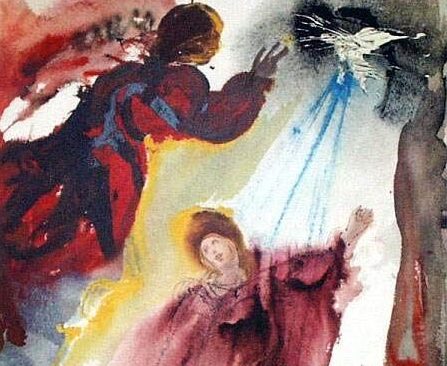
Waiting for a New Song by Michelle Bauer

I waited patiently for the Lord;

he turned to me and heard my cry.

He lifted me out of the slimy pit,

out of the mud and mire;

He set my feet on a rock

and gave me a firm place to stand.

He put a new song in my mouth,

a hymn of praise to our God.

Many will see and fear

and put their trust in the Lord.

Psalm 40: 1-3

Are you in a comfortable place? Spend a few moments in silence.  Take a few deep breaths and feel your body begin to relax. When you feel your mind becoming quiet, offer a simple prayer to God, thanking him for his presence and inviting him to speak to you.

Waiting is hard work. Can you remember a time when you waited well? When have you struggled to wait? Take a few minutes to compare and contrast these experiences.

Or – are you waiting for the Lord right now? What are you waiting for God to do or say? What makes it hard to wait in this season? What things are comforting to you as you wait?

God gave us our imaginations. When used well, our imagination can help us to connect more deeply with him. Close your eyes and imagine God turning towards you. What do you see? What might God see?

If you were to cry out to God today, would it be through tears or in an angry voice? Perhaps you are crying out, trying to get God’s attention. Whichever form it takes, crying out is what begins our part of the conversation with God.

What conversation would you like to have with God right now?

Have you ever felt like you were stuck in a slimy pit? Can you describe what that was like? How did you get there? Do you feel stuck right now?

David, the writer of this Psalm, describes the Lord lifting him out of a pit.  Notice, he did not say that God stood back and lectured him about being in the pit. He also did not have Amazon deliver a book describing how to get yourself out of a pit. In the same way a loving parent lifts a child from a crib, God lifts us from our pit.  What is your response to this rescue?

God wants to give you a new place to stand – on a firm rock. That’s a big improvement from mud and mire! What does it feel like to stand on a big, solid rock? When we are stuck in mud it’s hard to think about anything else. Standing on a steady thing gives us freedom. What will you do or be with your new-found freedom?

Offer a prayer to God. Thank him for his presence. Express your desire to experience God’s presence in an even deeper way.

Leave this quiet time in peace knowing that God is making you new.
When Christ Interrupts by Michelle Bauer

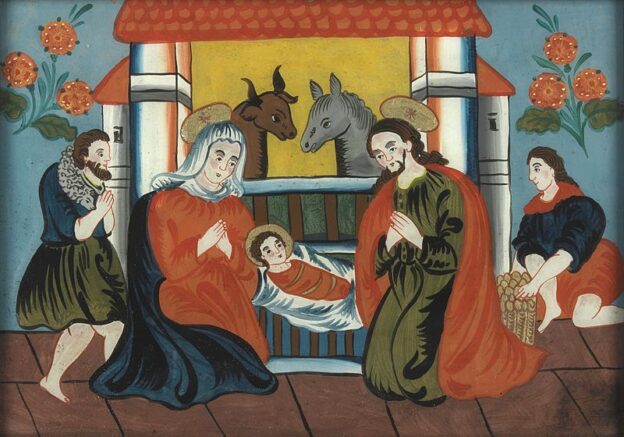
In those days Caesar Augustus issued a decree that a census should be taken of the entire Roman world. (This was the first census that took place while Quirinius was governor of Syria.) And everyone went to his own town to register.

So Joseph also went up from the town of Nazareth in Galilee to Judea, to Bethlehem the town of David, because he belonged to the house and line of David. He went there to register with Mary, who was pledged to be married to him and was expecting a child. While they were there, the time came for the baby to be born, and she gave birth to her firstborn, a son. She wrapped him in cloths and placed him in a manger because there was no room for them in the inn.  – Luke 2:1-17

Mary and Joseph continued to have their lives interrupted by history. Very pregnant Mary finds herself on a donkey making the journey from Nazareth to Bethlehem. What would it mean for Mary to have her baby away from home?

As you celebrated Jesus’ birth by exchanging gifts, did you remember that God’s presence with us is the greatest gift we will ever receive? In what way might you receive the gift of God’s presence in crowded or hurried moments today?

Mary gave birth to Jesus in a barn or cave because no one would make room for them in the inn. These are people who refused to let Jesus’ birth interrupt their lives. What did they miss out on?

Has there been a time when you have refused to let Jesus interrupt your life? What were the consequences? Take a moment to remember a time in which you did allow Jesus to interrupt your life. What were the challenges? What were the blessings?

Have you noticed how King David’s name keeps popping up in this story? God is keeping a promise he made to David that his descendants would reign forever. God always keeps his promises. What promise are you holding onto today?

We have seen that when Jesus arrives, it often brings disruption and a change in plans. Offer a prayer to God surrendering your life and plans. Invite him to be God With You today and always.

Silent Night, holy night,

All is calm, all is bright.

Round yon virgin mother and child!

Holy Infant so tender and mild.

Sleep in heavenly peace.

Sleep in heavenly peace.


Advent Classic: Why I Need Jesus by Kevin Murriel

Less than two weeks ago I was in my office preparing for mid-week worship when the phone call came. “Kevin, your cousin was killed in an armed robbery this evening.” I felt numb. A young, educated man only thirty-six years old with a family and a promising future murdered in a senseless act.

I am perplexed, saddened, and confused. More like angry, distraught, and indignant.

We have witnessed on the world stage a slew of insensate acts of violence from terrorist attacks in Paris to police brutality in Chicago. In San Bernardino, California fourteen people were killed in another mass shooting. But aren’t we in the first season of the Christian year? Is Advent supposed to begin this way?

As unpopular as it may seem the reality of Advent is that it doesn’t need to occur in the best of circumstances. In fact, Jesus was born in the midst of terrorism and heinous acts against human life as King Herod terrorized the small town of Bethlehem having all male babies up to two years old killed. Yet, Jesus still came. Hope still emerged.

In the midst of the news reports and the extensive litanies of horrific news, Jesus is still present. Advent is still here.

I am teaching a series in our mid-week worship experience titled, “A Glimpse into Heaven” which tackles pressing questions about our life in heaven based on what the Scriptures present to us.

There is one chapter in Scripture that has continually brought comfort to my soul during this series. That is Revelation 5. In it, Jesus Christ takes the scroll from the hand of God that has written on it the lamentations and suffering of humanity. A forcible reminder that he is still Lord over all.

This Advent, I need Jesus to be more than a nativity baby in a manger. I need him to be God incarnate among us–the one who wipes away tears, consoles the broken-hearted, and brings healing to the nations.

I definitely need Jesus, and so do you.

God With Us: Mary Meets an Angel by Michelle Bauer

In the sixth month, God sent the angel Gabriel to Nazareth, a town in Galilee, to a virgin pledged to be married to a man named Joseph, a descendant of David. The virgin’s name was Mary. The angel went to her and said, “Greetings, you who are highly favored! The Lord is with you.”  

Mary was greatly troubled at his words and wondered what kind of greeting this might be. But the angel said to her, “Do not be afraid, Mary, you have found favor with God. You will be with child and give birth to a son, and you are to give him the name Jesus. He will be great and will be called the Son of the Most High. The Lord God will give him the throne of his father David, and he will reign over the house of Jacob forever; his kingdom will never end.”  

“How will this be,” Mary asked the angel, “since I am a virgin?” The angel answered, “The Holy Spirit will come upon you, and the power of the Most High will overshadow you. So the holy one to be born will be called the Son of God.” “I am the Lord’s servant,” Mary answered. “May it be to me as you have said.” Then the angel left her. – Luke 1:26-35; 38 

Imagine Mary, in her home one day, resting or working, when all of a sudden her whole life is turned upside-down. She is a young woman with her life planned – get married, have children, be a productive member of her community. What are the plans you have for your life? College, marriage, children, grandchildren, career? How would it feel to have them upended in a single moment? 

One of the first things the angel says to Mary is, “The Lord is with you.” This is the message of Christmas! God has come to be with us! When do you feel God with you?   

The angel also tells Mary to not be afraid. What do you think Mary might have been afraid of?  Imagine yourself as Mary, seeing the angel and hearing this news. What would your reaction have been? The angel told Mary some pretty incredible things! What do you think was the hardest to believe? Mary’s reply to this news is to ask, “How will this be?” What would your question have been? 

What kind of a man do you think Joseph was based on these verses? Would you have wanted him to marry your daughter or to be a part of your family in some way? Joseph, too, had an expectation for how he thought his life would unfold. In what ways were his plans disrupted? What effects would these events have on the rest of his life?  

The Christmas story, as told in the Bible, is full of people who are afraid but still chose to obey. How does God’s presence with us help us to obey even when we are afraid? 

Joy to the world! The Lord is come; 

Let earth receive her King; 

Let ev’ry heart prepare Him room, 

And heav’n and nature sing,  

And heav’n and nature sing,  

And heav’n and heav’n and nature sing 

Thank God for his presence. Express your feelings about following God despite your fear. 

When Healing Follows Obedience by Michelle Bauer

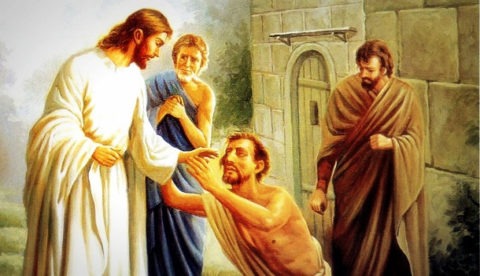
Now on his way to Jerusalem, Jesus traveled along the border between Samaria and Galilee. As he was going into a village, ten men who had leprosy met him. They stood at a distance and called out in a loud voice, “Jesus, Master, have pity on us!” When he saw them, he said, “Go, show yourselves to the priests.”  

And as they went, they were cleansed. 

One of them, when he saw he was healed, came back, praising God in a loud voice. He threw himself at Jesus’ feet and thanked him – and he was a Samaritan. Jesus asked, “Were not all ten cleansed? Where are the other nine? Was no one found to return and give praise to God except this foreigner?” Then he said to him, “Rise and go; your faith has made you well.” – Luke 17:11-19 (NIV) 

I invite you today to spend a few moments in silence. Offer a prayer of thanks to God for all the places in which you experience community – church, family, your workplace.  Thank God for inviting you into community with him. You don’t have to stand at a distance!  

Slowly read through Luke 17:11-19. You may want to continue to imagine yourself as a person in the story. This week we will focus our attention on verse 14 of this passage: “When he saw them, he said, ‘Go, show yourselves to the priests.’ And as they went, they were cleansed. 

Even though these men stood at a distance, Jesus saw them. Jesus made a choice to see these men. He could have ignored their cries. No one would blame him for wanting to avoid their disease. Are you ever tempted to shift your gaze from things that are hard or messy?  

Jesus heals people in many different ways throughout the Gospels. Can you recall some of them? Jesus healed a blind man with a mixture of spit and dirt. A woman was healed just by touching his clothes. What does this variety say to you about how Jesus sees people?  

Unlike some of the other healing stories, these men weren’t immediately healed. “As they went” they were healed.  As they obeyed Jesus’ instruction, the healing began.  Has there been a time in your life when obedience was linked with healing? 

In the time when this event took place, a priest had the authority to give a person a clean bill of health and allow them re-entry into the community.  What, then, were the risks associated with Jesus’ instructions? 

“And as they went, they were cleansed.”  

This feels like a progression of obedience and healing. In what areas have you felt yourself being progressively cleansed by God? Is there an area in which you long for more cleansing? Ask God for that now. Perhaps you feel invited to follow the leper’s model and ask Jesus for pity.  

Thank God for the blessings of your day. Ask him for guidance as you live the rest of your day.  

Be at peace knowing that you are being made whole by Jesus.

When Jesus Sees You by Michelle Bauer

Now on his way to Jerusalem, Jesus traveled along the border between Samaria and Galilee. As he was going into a village, ten men who had leprosy met him. They stood at a distance and called out in a loud voice, “Jesus, Master, have pity on us!” When he saw them, he said, “Go, show yourselves to the priests.” And as they went, they were cleansed. One of them, when he saw he was healed, came back, praising God in a loud voice. He threw himself at Jesus’ feet and thanked him – and he was a Samaritan. Jesus asked, “Were not all ten cleansed? Where are the other nine? Was no one found to return and give praise to God except this foreigner?” Then he said to him, “Rise and go; your faith has made you well.” Luke 17: 11-19 (NIV) 

As we enter into a season focused on thankfulness, take a moment to name one thing that you are grateful for today.  Offer your gratitude to God for this gift.   

Slowly reread through Luke 17:11-19. You may want to experiment with reading it out loud. Pause in between each verse to allow time for the words to really sink in. Can you imagine yourself in this story? Are you an observer? Are you one of the men who have leprosy? 

This group of ten men made contact with Jesus as he was going into the village.  They were not allowed into the village because of the contagious disease they carried. What must it have felt like to be excluded from village life? Even though these men were marginalized from society, perhaps they had formed a community among themselves. In what places do you find community? 

It seems as if these men were anticipating Jesus’ arrival. What do you imagine their hopes and fears were as they waited for him? Have you ever sensed yourself waiting for Jesus to arrive into a situation or season of your life? What were your hopes and fears? 

When Jesus does arrive, the ten men keep their distance. What keeps them from approaching him? Have you ever been hesitant to approach Jesus? Calling out in a loud voice sounds a little undignified, doesn’t it? What, if anything, would make you nervous to address Jesus in this way? 

To have pity on someone means to feel sorry for them and to be moved to show them compassion. Are you comfortable asking Jesus to have pity on you? Is there something specific in your life or history that you would like Jesus to have pity on? 

Offer a prayer to God. Thank him for the blessings of your day. Ask him for guidance as you live the rest of your day.  And leave this time in peace, knowing that you are seen by Jesus.

pile of bricks ministry

Brick by Brick: The Ministry Long Haul by Kim Reisman

Perhaps you’ve heard the familiar story of a peasant who was wearily shifting heavy stones from one spot to another. 

“What are you doing?” a man asked. 

“What does it look like I’m doing?” the peasant replied, frustrated at the backbreaking work. “I’m moving rocks.” 

Meanwhile, a short distance away, another peasant was wearily shifting heavy stones from one spot to another. The man approached that laborer. 

“What are you doing?” asked the man. 

This worker smiled, mopping sweat from his forehead. 

“I’m building a cathedral.” 

Both men were doing laborious work that stretched their muscles, drained their strength, and exhausted their resources. One responded by describing his immediate task. The other responded by describing the big picture toward which he was laboring. 

Is your to-do list full? Is your calendar overflowing? Are you overwhelmed, perhaps not by the number of ministry tasks ahead of you, but by their significance? Sometimes the gravity of the labor ahead of us is daunting. 

The Apostle Paul wrote to the Galatians, “So let us not grow weary in doing what is right, for we will reap at harvest time, if we do not give up.” (Galatians 6:9) Paul knew what it was to be weary. He didn’t have a quiet life. Paul was arrested, beaten, put in jail; he was shipwrecked on an island; he was lowered over a town wall in a basket to make a safe getaway. But he knew he wasn’t just moving rocks: the picture was much bigger than that. Paul labored in ministry, preaching the Gospel of Jesus Christ at any cost. 

When Paul traveled around the Mediterranean, he walked one mile at a time; he sailed from one wave to the next. There were no shortcuts. Sometimes, he intended to visit one place, and the Holy Spirit would upend his travel plans and direct him to ministry somewhere else. The former zealot sometimes supported himself by making tents while he trained new believers in the beliefs and practices of the Christian faith. Stitch by stitch, mile by mile, the Kingdom of God continued to flourish and grow. 

Your ministry happens brick by brick. You can only build with one rock at a time. But your labor is not wasted or fruitless. Rather, God is building new realities you can only glimpse in your ministry to-do list. Don’t grow weary in doing what is right: if you do not give up, you will get to see the effects of your labor. 

What’s The Point Of Freedom? Self-Expression vs Self-Control by Andy Stoddard

Recently I read a quote that has stuck with me: “looking at our culture, you’d think self-expression, not self-control, is a virtue.”  I’ve thought a lot about that: there is a lot there.  Today’s reading from 1 Corinthians 8: 9-13 brought it back to my mind:

But take care that this liberty of yours does not somehow become a stumbling block to the weak. For if others see you, who possess knowledge, eating in the temple of an idol, might they not, since their conscience is weak, be encouraged to the point of eating food sacrificed to idols? So by your knowledge those weak believers for whom Christ died are destroyed. But when you thus sin against members of your family, and wound their conscience when it is weak, you sin against Christ. Therefore, if food is a cause of their falling, I will never eat meat, so that I may not cause one of them to fall. 

In Paul’s day, there was much debate in the church about what you could and could not eat.  Should you eat food that has been dedicated to idols?  Should you not?  What should you do as a Christian?  This is something that we see over and over in the New Testament.  What should a Christian do? 

Paul really lays it out here.  You know what?  Sure, you can.  It’s your right.  You can do it.  But, if you harm another person, as a Christian, should you really do it?  Is it worth it? 

That’s why Paul says, if food bothers someone, then I’ll never eat meat. 

People matter more than meat.  They are more important. 

In our culture, you and I doing what we want is the most important thing.  Or at least that is what we are told over and over again.  But according to the Bible, being willing to sacrifice myself for you is the most important thing. 

It’s not about me. Rick Warren starts off his book The Purpose Driven Life with that statement: “it’s not about you.”  It’s not about you and me.  It’s about loving others more than we love ourselves. 

I should love you more than I love doing what I want.  I should lay down my life, my preference, for you.  Because you matter.  Jesus died for you.  He loves you.

And if I get what I want but harm you, have I really accomplished anything?

Self-control is a virtue.  It is a fruit of the Spirit.  And it is an awareness that it is really not all about us.  And here’s the awesome thing.  That’s where freedom comes from.  Freedom is not doing what we want all the time, living for ourselves.  Freedom is living under the grace of God.  Because then we are truly free. 

Today, let’s remember that self-control is a virtue.  Let’s remember that just because we want to do something, or we can do something, doesn’t mean that we should.  Let’s live for God.  Let’s live for others. 

And in that, let’s find true freedom.

The Restorer of Souls by Michelle Bauer

“He restores my soul. He guides me in paths of righteousness for his name’s sake.” – Psalm 23:3 

We are so grateful to God for being our shepherd. Where in your schedule have you sensed green pastures and quiet waters? Ask for God to show you areas of your life that are parched or noisy. 

Slowly read through Psalm 23. You may want to experiment with reading it out loud. Pause in between each verse to allow time for the words to really sink in. Let’s focus our attention on verse 3 of Psalm 23.   

God offers you the gift of Sabbath today in order to “restore your soul.” In what ways does your soul need to be restored today? How would you finish the statement, “today, my soul is…” 

Sometimes it isn’t the big things in life that wear our souls out; it’s the little things that burden us little by little, over time.  Think about your phone’s battery being slowly but steadily worn down by apps running in the background. What things are wearing your soul’s “battery” down?

King David tells us in this verse that the Lord restores our soul. Your soul is the innermost part of who you are, where God meets with you. In what ways have you tried to restore your own soul? 

Verse 3 also describes the Lord as a kind trail guide. Have you ever been led down a trail by someone? What is that person’s role? What qualities and experience do you value in a trusted guide? Think of a time when you were on a “righteous path” in life and when you were on a dangerous path. What were those experiences like?  

One of a shepherd’s main responsibilities is to guide their flock from one place to another safely. When have you felt as if the Lord has led you from one place or season in your life to another?  What things, events, or people did he use to guide you? Ask God for guidance this week. 

Leave this quiet time in peace, knowing that it is not your job to restore your own soul, and that you never leave the Shepherd’s presence.

The Nature of Our Good Shepherd by Michelle Bauer

            Psalm 23 

The Lord is my shepherd,  

    I shall not be in want.

He makes me lie down in green pastures,  

    he leads me beside quiet waters,  

he restores my soul.  

    He guides me in paths of righteousness for his name’s sake  

Even though I walk through the valley of the shadow of death, 

    I will fear no evil, for you are with me; your rod and your staff, they comfort me.  

You prepare a table before me in the presence of my enemies.  

    You anoint my head with oil; my cup overflows.  

Surely goodness and love will follow me all the days of my life,  

    and I will dwell in the house of the Lord forever.  

I invite you to find a quiet spot in your home or outdoors where you can be alone with God for a few moments. Once you are settled, spend a few moments in silence.  Offer a prayer to God, thanking him for his presence and inviting him to speak to you.

Slowly read through Psalm 23. You may want to experiment with reading it out loud. Pause in between each verse to allow time for the words to really sink in. 

Focus your attention on verses one and two of Psalm 23.  What word or phrase stands out to you? 

Consider these questions:  

  • Does knowing that “the Lord is my shepherd” help you to lay down your work in order to rest? 
  • What is the job description of a shepherd? How do those things relate to God’s work in your life? 
  • Have there been times when it has been hard for you to know the Lord as your shepherd? What would it look like to be as certain as David was? 

“The Lord is MY shepherd.”  He is not just the shepherd assigned to the flock you happen to be in. The Lord is YOUR shepherd. How does that make you feel? In what area of your life are you grateful to have a shepherd today? 

What are the things that you want? Make a list and offer those things to your good shepherd. 

Why would a sheep look forward to lying down in green pastures? Do green pastures, and all they have to offer, sound refreshing to you? 

We have recently seen and heard in the news about the destruction that “un-quiet” waters can cause.  Think of a time when you were able to spend time near quiet waters. What effect did that time have on your body and soul? 

Thank God for the blessings of your day. Ask God for guidance as you live the rest of your day. And leave this quiet time in peace knowing you never leave the Shepherd’s presence.