Author Archives: kevin.murriel

Race: The Newest Old Issue Confronting American Christian Life by Kevin Murriel

Several weeks ago [2015] I attended a conference in Houston, Texas that targeted ministry with large churches. Throughout the conference were presentations on technology, capitol campaigns, and “new age” ideas in ecclesiological innovation. Many left with concepts to take back to their congregations in hopes of implementation while others departed inspired with a rejuvenated energy for ministry. I, however, returned to Atlanta convinced that few recognized what was missing. There was no mention of the race problem we continue to face that affects American Christian life and the growth of our congregations.

Yes, I called it a “problem.” Problems are unresolved issues that stall progress. And needless to say, our inability as a country and as the Body of Christ to have productive conversations about the reality of racism is a problem. By race, I mean, our biologically engineered features (not to be confused with ethnicity) – the problem we often have with each other because of our color differences.

One of my confirmation classes experienced this problem first-hand. At their confirmation retreat two years ago, 35 black youth from an affluent Atlanta congregation were asked by a large group of white youth if their church was “ghetto”and if their hair was “real.” Where they were from and how prominent their parents were didn’t matter–only the difference in their skin color.

Because of the race problem, the nation now has to face itself in the way it did when Emmett Till was murdered in 1955. Ordering that the casket remain open at his funeral, Till’s mother wanted America to see that senseless killing as a result of racism is not just unjust, but evil. That no one regardless of their color should have their life end under such cruel circumstances.

Fast-forward 60 years and the nation now faces more media coverage of the killings of unarmed black men and women as well as the issue of racial profiling. Not that these things are new, they are just receiving more media coverage since the Travyon Martin case in 2012.

It is important to pause here and explain my intent. I am not a race baiter.  Neither do I believe that inciting rage is the way to productive discourse. Rather, I am a pastor who always seeks ways to unite God’s people regardless of the associated discomfort.

Race is an uncomfortable thing to discuss. It brings back memories for many who would prefer them remain in the closet in which they were locked. Some even ask if race matters at all.  It is the 21st century and by the way, we have a two-term black president, interracial families, minority-owned businesses and multi-cultural churches. Why is there a race conversation?

New York Times article titled, “Racial Bias, Even When We Have Good Intentions,” cited a study conducted by Marianne Bertrand, an economist from the University of Chicago that highlighted the effect of race on job opportunities. Bertrand and her team mailed thousands of résumés to employers with job openings and measured which ones were selected for callbacks for interviews. But before sending them, they randomly used stereotypically African-American names (such as “Jamal”) on some and stereotypically white names (like “Brendan”) on others.

The same résumé was roughly 50 percent more likely to result in a callback for an interview if it had a “white” name–even though the résumés were statistically identical.

The conversation about race is important for the Church because it directly affects our parish–the world. And though every person has value, we each have intrinsic prejudices. Whether parents become nervous when a black kid shows up to a majority white youth group, or members of a primarily black congregation look suspiciously at a Latino man with tattoos who decides to attend worship, we often have the propensity to feel some kind of way towards the “other.”

So, where do we begin?

I contend that it begins with a desire to love all people and seeing the Kingdom of God as racially diverse. God did not create everyone to physically look the same so it is preposterous to think that God is White, Black, Hispanic, or any other race and only attends a certain “type”of church. Such a theology about God will keep the Church divided as it has for centuries.

One of my mentors, Dr. Gil Watson, is a white pastor serving one of the most prominent churches in United Methodism, located in the Buckhead area of Atlanta, Georgia. He is 40 years my elder and has been in ministry longer than I have been alive. We continue to see God, through our conversations, expand our understanding of each other and our calling as pastors. This relationship is intentional, and at times, uncomfortable for us both; and at the same time, one of the most rewarding experiences of our lives.

What he and I understand is that we are the Church–one, holy, apostolic, and universal–and our witness demands that we live in these intentional, uncomfortable relationships and lead the difficult conversations about the race problem. Society should not drive the Church; rather, the Church should be the influencer of society.

The race problem, however, does not have to remain. When reconciliation comes, such a problem is overcome.

Advent Classic: Why I Need Jesus by Kevin Murriel

Less than two weeks ago I was in my office preparing for mid-week worship when the phone call came. “Kevin, your cousin was killed in an armed robbery this evening.” I felt numb. A young, educated man only thirty-six years old with a family and a promising future murdered in a senseless act.

I am perplexed, saddened, and confused. More like angry, distraught, and indignant.

We have witnessed on the world stage a slew of insensate acts of violence from terrorist attacks in Paris to police brutality in Chicago. In San Bernardino, California fourteen people were killed in another mass shooting. But aren’t we in the first season of the Christian year? Is Advent supposed to begin this way?

As unpopular as it may seem the reality of Advent is that it doesn’t need to occur in the best of circumstances. In fact, Jesus was born in the midst of terrorism and heinous acts against human life as King Herod terrorized the small town of Bethlehem having all male babies up to two years old killed. Yet, Jesus still came. Hope still emerged.

In the midst of the news reports and the extensive litanies of horrific news, Jesus is still present. Advent is still here.

I am teaching a series in our mid-week worship experience titled, “A Glimpse into Heaven” which tackles pressing questions about our life in heaven based on what the Scriptures present to us.

There is one chapter in Scripture that has continually brought comfort to my soul during this series. That is Revelation 5. In it, Jesus Christ takes the scroll from the hand of God that has written on it the lamentations and suffering of humanity. A forcible reminder that he is still Lord over all.

This Advent, I need Jesus to be more than a nativity baby in a manger. I need him to be God incarnate among us–the one who wipes away tears, consoles the broken-hearted, and brings healing to the nations.

I definitely need Jesus, and so do you.

The Fallacy of a White Liberation Theology by Kevin Murriel

Each Sunday before I enter worship, Ms. Ruth holds my hands and prays for me. Ms. Ruth, or “Mama Ruth” as I affectionately call her, is a senior member of our church who happens to be a white woman. She grew up in the Cliftondale community and has remained a faithful member throughout the over 50 year history of our church. Ms. Ruth not only attends worship but nearly every Bible study, mission and fellowship event that our church hosts.  In other words, she is all in.

But she also sticks out. She is easily noticed in a church full of black worshippers. Yet, she is a part of this beloved community of believers seeking to live out the Great Commission of Jesus Christ.

In recent weeks, I have had conversations with many of my white colleagues about white privilege. The ethos of these conversations hinges on the inarguable fact that because of a person’s skin color, they are afforded more equity in our culture.

To be honest, these conversations have not yielded much hope for better days to come.

There seems to be a shift in how many view the acknowledgment of their white privilege. For many, this acknowledgment is important and it appears liberating—to finally admit that “I am white, and I have privileges black people do not.” So strong is this ideology among many white church leaders, those in theological circles, and some in society, that it rings loudly of “White Liberation!” suggesting that acknowledging ones’ privilege has liberated the individual from the bondage of systems that work on their behalf.

This is a fallacy.

The thought hit me recently as I witnessed the insensible comments of Mr. Trump as he finally recanted his role in the “Birther” controversy regarding the citizenship of our already two-term black president. My thought, like many, was, “I suppose President Obama’s citizenship is now validated since a white man who could possibly become our next Commander-in-Chief has said so.”

This type of unintelligible and nescient language is what keeps our country in the pit of racial injustice and division. It also gives more breath to white privilege.

If I may go out on a ledge and state what most black people think each time we hear a white person say, “I am privileged and I feel guilty about it;” please do not insult the intelligence of black people by telling us what we already know, feel, internalize, live in, struggle with, fight against, tolerate, mourn over, protest about, march and die for. As if black people should give a philanthropic or ethical achievement award to every white person who feels liberated by the acknowledgment of their privilege.

And the timing of these comments makes them seem inauthentic. If it takes black blood to spill on the streets and unarmed black and brown people to die for white people to admit they are privileged, there is something seriously wrong with such a liberating theology.

Black people do not only struggle against racial profiling and injustice, we are unequal economically, professionally and institutionally—all of which relate directly to white privilege.

When a white man, who is a major party nominee for president states unashamedly that our black president (eight years later) was born in the United States without fear of reprimand or loss of support, he is operating in white privilege.

In the potent work of liberation theologian James Cone titled, The Cross and the Lynching Tree, he suggests that:

In the “lynching era,” between 1880 to 1940, white Christians lynched nearly five thousand black men and women in a manner with obvious echoes of the Roman crucifixion of Jesus. Yet these “Christians” did not see the irony or contradiction in their actions.

I argue that not much has changed today. I am concerned with the white Christian who can worship Jesus and not spend time with or get to the know the culture of Christians who are black.

I am concerned with the white Christian who in the same breath can acknowledge their privilege and condemn someone for peacefully protesting racial injustice wearing a football uniform while the national anthem plays.

I am concerned with the white Christian who wants to do something prophetic like telling other white people in their churches that they are privileged while at the same time only communing with white people.

I am concerned with the white Christian who has never been the minority for an extended period of time in any setting.

These are but the genesis of my concerns.

Yet I am truly concerned with the white Christian who thinks they are liberated by knowing they are white and privileged (which makes that privilege more dangerous).

The Lord revealed something unique the last time Ms. Ruth prayed for me. God asked me, “have you noticed that she never apologizes for being white or the horrendous history she is associated with because of her skin color? Have you noticed that she never acknowledges openly that she is privileged? Do you see how she hugs you and all the other black folks with whom she worships? Do you hear how she greets you with the words, ‘my pastor?’ Are you noticing how she sits and eats with you and wants to know more about your likes and dislikes?”

In that moment I received this revelation: She is not seeking liberation, she is modeling reconciliation through genuine love.

To my white brothers and sisters, focus less on explaining your privilege and start being in community with black people. Perhaps that is the best path towards the prophetic.

Why I Need Jesus: An Advent Reflection by Kevin Murriel

Less than two weeks ago I was in my office preparing for mid-week worship when the phone call came. “Kevin, your cousin was killed in an armed robbery this evening.” I felt numb. A young, educated man only thirty-six years old with a family and a promising future murdered in a senseless act.

I am perplexed, saddened, and confused. More like angry, distraught, and indignant.

In the past month we have witnessed on the world stage a slew of insensate acts of violence from terrorist attacks in Paris to police brutality in Chicago. This week in San Bernardino, California fourteen people were killed in another mass shooting. But aren’t we in the first season of the Christian year? Is Advent supposed to begin this way?

As unpopular as it may seem the reality of Advent is that it doesn’t need to occur in the best of circumstances. In fact, Jesus was born in the midst of terrorism and heinous acts against human life as King Herod terrorized the small town of Bethlehem having all male babies up to two years old killed. Yet, Jesus still came. Hope still emerged.

In the midst of the news reports and the extensive litanies of horrific news, Jesus is still present. Advent it still here.

I am teaching a series in our mid-week worship experience titled, “A Glimpse into Heaven” which tackles pressing questions about our life in heaven based on what the Scriptures present to us.

There is one chapter in Scripture that has continually brought comfort to my soul during this series. That is, Revelation 5. In it, Jesus Christ takes the scroll from the hand of God that has written on it the lamentations and suffering of humanity. A forcible reminder that he is still Lord over all.

This Advent, I need Jesus to be more than a nativity baby in a manger. I need him to be God incarnate among us–the one who wipes away tears, consoles the broken hearted, and brings healing to the nations.

I definitely need Jesus, and so do you.

A Conversation About “Breaking The Color Barrier”: Interview with Kevin Murriel

Recently Wesleyan Accent had the pleasure of chatting with Dr. Kevin Murriel about his new – and timely – book, “Breaking the Color Barrier: A Vision for Church Growth through Racial Reconciliation.”

*What motivated and inspired this book, now? 

During my doctoral studies at Duke University, I wanted to research something that intersected the church and society–something that as a finished product would make a difference. I chose to research and write on racial reconciliation in American Christian life.  My mentor, Bishop Woodie W. White, during my time at Candler School of Theology spoke about the Mississippi Church Visit Campaign of 1964 during Freedom Summer. This initiative, led by Bishop White’s roommate at Boston University School of Theology, Rev. Edwin King, sought to desegregate white churches in Jackson, Mississippi. I am a native of Mississippi. So, I decided to use the methods Ed King and other leaders deployed as a model for racial reconciliation in the 21st century.

Also, this topic seemed fitting given the media coverage that the killings of unarmed black men and women in America has received since the Trayvon Martin case in 2012. America is in volatile condition regarding race relations and now, in 2015, the nation seems more willing (or more forced) to wrestle with race and its social, economic, and religious implications in our democratic society.

*I think the phrase “racial reconciliation” can be parsed out many ways depending on who is hearing it. What does it look like to you? (There’s a big difference to me, for instance, between merely coexisting vs sharing life together.)

Dr. Benjamin E. Mays, former President of Morehouse College and mentor to Dr. Martin Luther King Jr., said that 11:00am on Sunday morning is the most segregated hour of the week for Americans. Yet, we work together, eat at the same restaurants, and attend recitals and plays together. This, I believe, describes what you mean by coexisting. In other words, as long as we can be around each other without impacting our individual quality of life then we are content. That, however, is not how I view racial reconciliation. That’s desegregation.

Racial reconciliation as I describe in the book is about intentional community with an end goal in mind. That goal can be different depending on what one is seeking to accomplish. I argue that for Christians, our end goal should be more multicultural congregations due to the changing demographics of our country. In the next 25 years, America will look drastically different and our communities will be more diverse. Therefore, the Church must begin to mirror the diversity of our communities or suffer in the reality of decline. To move towards this goal, we must name what really keeps us divided–race.

We cannot argue that theological differences overwhelmingly divide us because Blacks disagree with Blacks on certain theological issues just like Whites, Latinos, and Asians do. The truth is that we enjoy and feel more comfortable worshiping with people who look like us. To break this trend for greater Kingdom growth requires engaging in difficult conversations about the racially divisive history that is the thesis of the American narrative and then we must work towards forgiving what has been. There then must be an intentional effort, primarily on behalf of Blacks and Whites, to move beyond the past and reconcile so that the institutional church in America can have a future.

*I love that you’ve approached this in synthesis with the desire for church growth. What has your research revealed about the relationship between racial reconciliation and church growth? On a more personal, intuitive level, what is your sense of church health and vitality when people come together to worship and “do life” together?

Based on my research, the churches that are growing and thriving are those who are intentional in their message, mission, and function about welcoming all people (and actually doing it). I visited a thriving church near Atlanta, Georgia a few weeks ago and what I witnessed shocked me and gave me hope at the same time. It was a truly multi-cultural/racial congregation. And they were thriving. Their pastoral team was multi-cultural/racial, their greeters, ushers, choir and band.  The congregational makeup was about 55% White, 40% Black, and 5% Hispanic. Everyone was friendly and you could feel the unity in the atmosphere. It was the closest I’ve seen to how I believe heaven will be.

I contend that when people come together without anger and with love and “life together” as the end goal, churches will be healthier and people will find that they have more in common. But again, this must be intentional. Society has changed from the 1960’s. There are more interracial dating and married couples than ever and our children are being educated in schools that are more diverse. Most people’s social media outlets are multi-cultural/racial. We are surrounded by diversity and have accepted it in our normal daily activity. Now is the time to do make it a reality in our churches.

*Sometimes I mourn that North American life seems to be so privatized rather than communal and shared, even in this age of social networking: we “network” from our private residences or vehicles. What does genuine, Spirit-filled community look like to you?

In short, genuine, Spirit-filled community, I believe, is the ability to love and accept everyone for the content of their character rather than the color of their skin.

*Have you served in primarily single race-predominate congregations? What are practical steps an average Wesleyan-Methodist tradition church could take to break the color barrier?

I have served in three predominately white congregations and three predominately Black congregations and each has the same issue–we want to worship with whom we feel comfortable and each has a way of stigmatizing the other. The interesting thing about each of the churches I’ve served is that they were each in communities that in the past five years became more diverse. From my experience in these contexts and my research, some practical steps for local churches and conferences to break the color barrier are:

1. The congregation must decide missionally who it wants to be. In other words, they must decide whether they want to be a church that welcomes people of all races or remain a homogenized church community.

2. Pastors of race-predominate congregations should host intentional ministry sessions to consider ways of being in ministry together in their local community. This is in line with our Wesleyan theology of connectionalism.

3. Conferences should mandate that clergy have diversity training and push programs that equip clergy and laity to have conversations about race.

4. Appointments in our Methodist system should truly be made without regard to race. And when pastor is appointed to a congregation where they are the minority, the congregation should go through a time of preparation to help with the transition to minimize potential cultural and racial insensitivity.

These are starting points. But the desire to be with people in intentional community is the foundation to breaking the color barrier.

*What do you wish White North American Christians better comprehended about being a Black North American Christian? Do you think there are any misconceptions about White Christians within the Black Christian community? 

I can only speak from my experience as a Black North American Christian and though there are many things I wish White North American Christians comprehended about being a Black North American Christian, the primary thing regarding racial reconciliation is that it will take White North American Christians leading in a significant way for reconciliation to occur. I think there are misconceptions from both groups. But with racial reconciliation, misconceptions must be corrected through honest dialogue. We often don’t worship together because we do not fully understand each other and how can we make a judgment on someone or a group that we do not know personally? All White people are not racist and all Black people are not lazy, unintelligible thugs. Unfortunately, society, in many ways, paints these distorted group pictures. In fact, Rev. Edwin King, the focus character of my book, is a White pastor leading and helping to organize black students to desegregate white churches. It is a beautiful story of how together we can bring about change and be the church that God envisions–a diverse Kingdom on earth as it is in heaven.

*Fill in this sentence: “we will have broken the color barrier in North American congregations when: “All of God’s people celebrate diversity and join hands together in unity.”

Honoring The Martyrs Of Emanuel AME by Kevin Murriel

I am angry. I am sorrowful. I am mourning.

In case some were wondering if discussing issues around race was important, the answer for Americans should now be clear. Nine people are dead. Racism in America is alive and active and many are wandering what we should do about it.

Dylann Roof entered Emanuel A.M.E. Church in Charleston, South Carolina on Wednesday evening and killed those attending a Bible study because he wanted to “start a race war.” We were in the midst of our annual United Methodist conference (North Georgia) meeting when the coverage of the shooting began. The mood shifted immediately. Our Bishop expressed somber and convicting words and our annual conference responded by taking an offering to send to the families of victims. Others gave speeches from the floor to call the church to action and throughout the conference people of every race present shed tears.

But America has been here before.

On September 15, 1963, five Black girls only 14 years of age gathered in the basement restroom of the 16th Street Baptist Church in Birmingham, Alabama to prepare for worship. It was their Sunday; Youth Sunday. Suddenly, joy turned to chaos; laughter to helplessness. A bomb, planted by a member of the Ku Klux Klan, exploded killing four of the girls while blinding and severely wounding the fifth.

Again, America has been here before.

Though some 50 plus years later, people are still incited to anger against others because of their race. And needless to say, many will look to the Church’s guidance in response to the senseless act of terror in Charleston.

After the shooting I was interviewed by an editor at the Atlanta Journal Constitution and he asked me how should churches operate in light of this incident. I told him by doing exactly what Mother Emanuel did–that is, being open and inclusive to everyone regardless of how they look. In my view, the nine people killed that night were martyred. They died in the act of expressing their faith and love towards someone who was different than they. They were living witnesses of Christ’s message.

The members at Emanuel refused to profile and reject Dylann Roof because he was White. To them, everyone had a seat at God’s table and a place in Christ’s Church. This is the same attitude the Church must maintain.

At the bond hearing, members of the victims’ families expressed their forgiveness towards Roof. Although their loved ones are gone, they saw the need to extend grace towards someone who is lost–the one in most need of the saving grace of Jesus Christ–the offender.

This is at the core of racial reconciliation–forgiving the transgressions of another even in the midst of the pain one has experienced. It is here that churches should begin the conversation on the race problem we face, realizing that progress is impossible void of forgiveness.

The unfortunate result is that churches will have to take more precautionary measures to keep congregants safe. Hiring security and making sure attendees are vigilant is now our new reality. And still our mission remains the same–to welcome all people.

Similar to the 16th Street Baptist Church bombing in 1963, the Emanuel A.M.E. church shooting of 2015 will cause America and the Church to view and discuss issues surrounding race differently. And it will bring out the worst in many. But this is the cost of racial reconciliation. It is the cost of saving lives.

Several weeks back I had lunch with Rev. Edwin King, the white pastor who led the Mississippi Church Visit campaign of 1964 to desegregate white churches in Jackson, Mississippi. We talked about the racial divide in Christianity and America in general. It was a productive and engaging conversation. But the looks that we received from people in the restaurant were most telling. Clearly an older white man having lunch with a young black man was out of the ordinary, which is exactly why we met in a public place.

Racial reconciliation calls people to have “out of the ordinary” moments frequently. It challenges our social and spiritual status quo. One response to the tragedy at Mother Emanuel should be for churches to have more “out of the ordinary” moments with people of a different race around conversations that make us uncomfortable. It is the best way forward.

The Church can no longer afford to live on empty rhetoric and a homogenized, Western perspective of the Kingdom of God. We must expand our language and our understanding of God’s Kingdom. This, however, is learned; and America is again witnessing what can happen when someone hates others because of their race.

So, I am angry. I am sorrowful. I am mourning. Yet, I am hopeful that as the deaths of martyrs in past times brought about change in many nations, the deaths of the Martyrs of Emanuel A.M.E. will also shake the conscience of America and touch the spirit of the Church to pursue racial reconciliation here and now.

Race: The Newest Old Issue Confronting American Christian Life by Kevin Murriel

Several weeks ago I attended a conference in Houston, Texas that targeted ministry with large churches. Throughout the conference were presentations on technology, capitol campaigns, and “new age” ideas in ecclesiological innovation. Many left with concepts to take back to their congregations in hopes of implementation while others departed inspired with a rejuvenated energy for ministry. I, however, returned to Atlanta convinced that few recognized what was missing. There was no mention of the race problem we continue to face that affects American Christian life and the growth of our congregations.

Yes, I called it a “problem.” Problems are unresolved issues that stall progress. And needless to say, our inability as a country and as the Body of Christ to have productive conversations about the reality of racism is a problem. By race, I mean, our biologically engineered features (not to be confused with ethnicity) – the problem we often have with each other because of our color differences.

One of my confirmation classes experienced this problem first-hand. At their confirmation retreat two years ago, 35 black youth from an affluent Atlanta congregation were asked by a large group of white youth if their church was “ghetto”and if their hair was “real.” Where they were from and how prominent their parents were didn’t matter–only the difference in their skin color.

Because of the race problem, the nation now has to face itself in the way it did when Emmett Till was murdered in 1955. Ordering that the casket remain open at his funeral, Till’s mother wanted America to see that senseless killing as a result of racism is not just unjust, but evil. That no one regardless of their color should have their life end under such cruel circumstances.

Fast-forward 60 years and the nation now faces more media coverage of the killings of unarmed black men and women as well as the issue of racial profiling. Not that these things are new, they are just receiving more media coverage since the Travyon Martin case in 2012.

It is important to pause here and explain my intent. I am not a race baiter.  Neither do I believe that inciting rage is the way to productive discourse. Rather, I am a pastor who always seeks ways to unite God’s people regardless of the associated discomfort.

Race is an uncomfortable thing to discuss. It brings back memories for many who would prefer them remain in the closet in which they were locked. Some even ask if race matters at all.  It is the 21st century and by the way, we have a two-term black president, interracial families, minority-owned businesses and multi-cultural churches. Why is there a race conversation?

A recent New York Times article titled, “Racial Bias, Even When We Have Good Intentions,” cited a study conducted by Marianne Bertrand, an economist from the University of Chicago that highlighted the effect of race on job opportunities. Bertrand and her team mailed thousands of résumés to employers with job openings and measured which ones were selected for callbacks for interviews. But before sending them, they randomly used stereotypically African-American names (such as “Jamal”) on some and stereotypically white names (like “Brendan”) on others.

The same résumé was roughly 50 percent more likely to result in a callback for an interview if it had a “white” name–even though the résumés were statistically identical.

The conversation about race is important for the Church because it directly affects our parish–the world. And though every person has value, we each have intrinsic prejudices. Whether parents become nervous when a black kid shows up to a majority white youth group, or members of a primarily black congregation look suspiciously at a Latino man with tattoos who decides to attend worship, we often have the propensity to feel some kind of way towards the “other.”

So, where do we begin?

I contend that it begins with a desire to love all people and seeing the Kingdom of God as racially diverse. God did not create everyone to physically look the same so it is preposterous to think that God is White, Black, Hispanic, or any other race and only attends a certain “type”of church. Such a theology about God will keep the Church divided as it has for centuries.

One of my mentors, Dr. Gil Watson, is a white pastor serving one of the most prominent churches in United Methodism, located in the Buckhead area of Atlanta, Georgia. He is 40 years my elder and has been in ministry longer than I have been alive. We continue to see God, through our conversations, expand our understanding of each other and our calling as pastors. This relationship is intentional, and at times, uncomfortable for us both; and at the same time, one of the most rewarding experiences of our lives.

What he and I understand is that we are the Church–one, holy, apostolic, and universal–and our witness demands that we live in these intentional, uncomfortable relationships and lead the difficult conversations about the race problem. Society should not drive the Church; rather, the Church should be the influencer of society.

The race problem, however, does not have to remain. When reconciliation comes, such a problem is overcome. This will be the next subject in this series. So, stay tuned.
The Power Of A Resurrection Day “Selfie” by Kevin Murriel

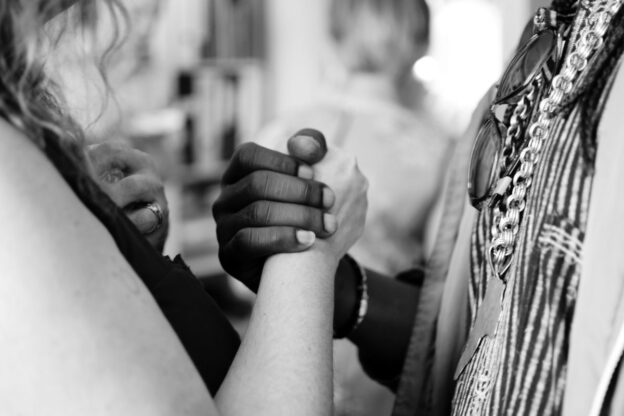
Selfies make us feel important. A quick snapshot with a mobile device and instantly our pictures are viewable by billions of people around the world. If we’re honest, we often take selfies with the intention of getting as many “likes” as possible by our followers.

Each year, Easter, for Christians, welcomes a different energy in our places of worship. Proclaiming with loud voices in song, “He Lives!” always stirs the soul!

What I did not realize, however, is that when I went to my office after Easter worship and checked social media, I would have an epiphany–Easter is the greatest “selfie” Sunday for Christians as well.

As I reviewed my timelines on Facebook and Instagram, the pages were saturated with selfies of worshipers in their Easter finest. Picture after picture of different colors and patterns from various denominations and cultures!

Religiously, we celebrate Easter because Jesus Christ rose from the grave, overcoming the power of sin and death and offering us the gift of eternal life and communion with God our Creator. Yet, because our post-modern culture has become saturated with the commercialization of major Christian (and non-Christian) celebrations, we must often approach those unfamiliar with centuries-old traditions with a new way of explaining the effect of the resurrection in the lives of human beings.

Here is the reality of Easter: Death and the grave are overcome. Good Friday is conquered by Resurrection Sunday. The Messiah lives and reigns. God’s Kingdom is here and now and is prepared for those in the eschaton (the life the come).

As a result, followers of Christ should be changed and transformed from the inside out. We should, in effect, have something glorious to capture–that is, a new life living in the power of the resurrection.

A few weeks ago I had the privilege of going to the Order of the Flame conference sponsored by World Methodist Evangelism. It was a gathering of around 100 pastors and their spouses from the Pan-Methodist connection. We had seminars around our responsibility as witnesses for Christ and were encouraged to remain Faithful Leaders as Mission Evangelists (F.L.A.M.E.) throughout our ministry.

Many moments during this conference were powerful, but perhaps the most touching moment happened when the entire group prayed for one of our brothers’ infant daughter who is battling a rare form of cancer. With our hands laid upon him, we prayed that the power that raised Christ would also heal his daughter.

It was a request for a miracle.

What makes us think we can make such an audacious request? My answer is clear, the resurrection of Jesus Christ.

In his book on the “Dynamics of Faith,” Paul Tillich says that, “faith is not an act of any of [humanity’s] rational functions, as it is not an act of the unconscious, but it is an act in which both the rational and non-rational elements of his being are transcended” (Tillich, 6).

Believing in a miracle, a rationally unexplainable occurrence, takes exactly what Tillich describes–a faith that transcends our comprehension without excluding our consciousness. In other words, we should know what we are asking for but not expect the miracle to come in ways we can understand. This is the great mystery and power of our faith.

Do we know how God is going to heal this little girl? No, we do not. But we believe God is able. The resurrection gives us this hope.

This hope reminds me of a “witnessing” experience I had during my undergraduate studies. It was late one night and my friends and I were leaving the library. We departed in my vehicle and proceeded to our dorm. I parked, and as we were getting out, a homeless gentleman approached my driver’s side door.

His clothes were physically torn and he carried a trash bag that I assumed contained his personal belongings. It was dark and late and from my perspective, an inconvenient time for God to place me in a witnessing situation – especially after the gentleman explained to me that he had just been released from the state mental institution for stabbing someone with a knife.

Ten dollars is what he wanted. But God showed me something different.

Standing in front of me was a brother in Christ who was not only physically hungry, but also emotionally and spiritually hurting. So I asked, “before I give you the $10.00, may I pray with you?” He consented.

I prayed that the power of our risen Lord would overtake his life and heal any past or present pain. After we prayed, tears were flowing from his eyes and he simply said, “thank you.” I gave him the $10.00 and we parted ways.

My hope was that our interaction would be the gateway to his experience of a new life in Christ. But I did not know what would happen.

Some would argue rationally that this man’s life was unsalvageable. But where some rely on reason, God’s message is always, “if anyone is in Christ, he is a new creation. The old has passed away; behold, the new has come” (2 Corinthians 5:17). Therefore, we believe that the power of Christ can change someone’s life–whether we witness it or not.

One Thursday evening about nine months later, I was leaving my father’s office which is close to the university. As I was getting into my car, a man yelled at me from across the street. “Hey, hey, brother!” he said, as he began running towards me. I asked him, “Sir, do I know you?”

He said, “You sure do! I am the man you prayed with in the parking lot at your university. I left that night and read the book you gave me; in fact, I still have it. I made amends with all of my family members that I hurt and now I am a changed man. I saw you and I knew I had to thank the man who led me to Jesus Christ, my Savior and Lord. But now I have to go, because I am volunteering today at the shelter up the street.”

He left jogging towards the shelter about a half-mile away looking and feeling physically and spiritually different. He had obviously experienced the power of the resurrection!

My only regret is that I didn’t take a selfie with him as proof of his transformation. But I finally realized that he had already taken plenty with Jesus on his personal Resurrection Day. They may never make it to social media, but Christ will assuredly remember them in his book of life.