Author Archives: Michelle Bauer

The Restorer of Souls by Michelle Bauer

“He restores my soul. He guides me in paths of righteousness for his name’s sake.” – Psalm 23:3 

We are so grateful to God for being our shepherd. Where in your schedule have you sensed green pastures and quiet waters? Ask for God to show you areas of your life that are parched or noisy. 

Slowly read through Psalm 23. You may want to experiment with reading it out loud. Pause in between each verse to allow time for the words to really sink in. Let’s focus our attention on verse 3 of Psalm 23.   

God offers you the gift of Sabbath today in order to “restore your soul.” In what ways does your soul need to be restored today? How would you finish the statement, “today, my soul is…” 

Sometimes it isn’t the big things in life that wear our souls out; it’s the little things that burden us little by little, over time.  Think about your phone’s battery being slowly but steadily worn down by apps running in the background. What things are wearing your soul’s “battery” down?

King David tells us in this verse that the Lord restores our soul. Your soul is the innermost part of who you are, where God meets with you. In what ways have you tried to restore your own soul? 

Verse 3 also describes the Lord as a kind trail guide. Have you ever been led down a trail by someone? What is that person’s role? What qualities and experience do you value in a trusted guide? Think of a time when you were on a “righteous path” in life and when you were on a dangerous path. What were those experiences like?  

One of a shepherd’s main responsibilities is to guide their flock from one place to another safely. When have you felt as if the Lord has led you from one place or season in your life to another?  What things, events, or people did he use to guide you? Ask God for guidance this week. 

Leave this quiet time in peace, knowing that it is not your job to restore your own soul, and that you never leave the Shepherd’s presence.

The Nature of Our Good Shepherd by Michelle Bauer

            Psalm 23 

The Lord is my shepherd,  

    I shall not be in want.

He makes me lie down in green pastures,  

    he leads me beside quiet waters,  

he restores my soul.  

    He guides me in paths of righteousness for his name’s sake  

Even though I walk through the valley of the shadow of death, 

    I will fear no evil, for you are with me; your rod and your staff, they comfort me.  

You prepare a table before me in the presence of my enemies.  

    You anoint my head with oil; my cup overflows.  

Surely goodness and love will follow me all the days of my life,  

    and I will dwell in the house of the Lord forever.  

I invite you to find a quiet spot in your home or outdoors where you can be alone with God for a few moments. Once you are settled, spend a few moments in silence.  Offer a prayer to God, thanking him for his presence and inviting him to speak to you.

Slowly read through Psalm 23. You may want to experiment with reading it out loud. Pause in between each verse to allow time for the words to really sink in. 

Focus your attention on verses one and two of Psalm 23.  What word or phrase stands out to you? 

Consider these questions:  

  • Does knowing that “the Lord is my shepherd” help you to lay down your work in order to rest? 
  • What is the job description of a shepherd? How do those things relate to God’s work in your life? 
  • Have there been times when it has been hard for you to know the Lord as your shepherd? What would it look like to be as certain as David was? 

“The Lord is MY shepherd.”  He is not just the shepherd assigned to the flock you happen to be in. The Lord is YOUR shepherd. How does that make you feel? In what area of your life are you grateful to have a shepherd today? 

What are the things that you want? Make a list and offer those things to your good shepherd. 

Why would a sheep look forward to lying down in green pastures? Do green pastures, and all they have to offer, sound refreshing to you? 

We have recently seen and heard in the news about the destruction that “un-quiet” waters can cause.  Think of a time when you were able to spend time near quiet waters. What effect did that time have on your body and soul? 

Thank God for the blessings of your day. Ask God for guidance as you live the rest of your day. And leave this quiet time in peace knowing you never leave the Shepherd’s presence.

When the Wine Runs Out by Michelle Bauer

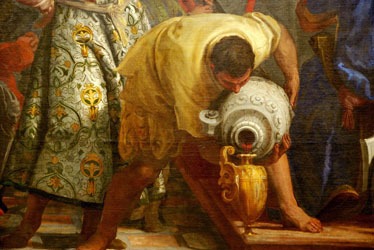
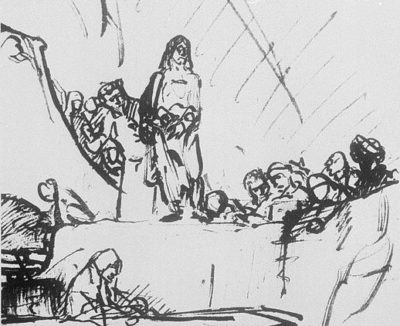
On the third day a wedding took place at Cana in Galilee. Jesus’ mother was there, and Jesus and his disciples had also been invited to the wedding. When the wine was gone, Jesus’ mother said to him, “They have no more wine.”

“Woman, why do you involve me?” Jesus replied. “My hour has not yet come.”

His mother said to the servants, “Do whatever he tells you.”

Nearby stood six stone water jars, the kind used by the Jews for ceremonial washing, each holding from twenty to thirty gallons.

Jesus said to the servants, “Fill the jars with water”; so they filled them to the brim.

Then he told them, “Now draw some out and take it to the master of the banquet.”

They did so, and the master of the banquet tasted the water that had been turned into wine. He did not realize where it had come from, though the servants who had drawn the water knew. Then he called the bridegroom aside and said, “Everyone brings out the choice wine first and then the cheaper wine after the guests have had too much to drink; but you have saved the best till now.”

What Jesus did here in Cana of Galilee was the first of the signs through which he revealed his glory; and his disciples believed in him. – John 2:1-11

Did you know that the average cost of a wedding in the U.S. is around $30,000?  Everyone these days wants a fairy tale, celebrity-style wedding. We have exchanged opulence for the sacred. Everyone once in a while, though, a couple comes along that understands that marriage isn’t just about falling in love and taking the next step.

As followers of Jesus, we believe that marriage is a sacred covenant between two people. In fact, God created marriage as a visual reminder of the intimate relationship that he wants to have with us. We are God’s bride and he is our groom. God not only invented marriage, he performed the first wedding in the Garden of Eden.

When you consider all of that, it’s fascinating to think that Jesus attended weddings while he was on earth.  To have Jesus physically present as a guest at your wedding must have been like having Mark Zuckerberg help you set up your Facebook account!

But that’s exactly where we find Jesus in John 2 – at a wedding. At this point, Jesus is just getting his public ministry up and running. He has been baptized, he has withstood the tempting by Satan in the wilderness and has started identifying his disciples.  And in the midst of all of these ministry-launching activities, Jesus takes a break to attend a wedding.

  1. The wine always runs out.

To run out of wine was a catastrophe.  In a time and place where we have a grocery store on almost every corner, it’s hard to wrap our heads around what a crisis this was. If we run out of soda or hot dogs at our cookout, what do we do? We send someone to the store.  It wasn’t that easy in New Testament times.   Hosts spent time planning and gathering supplies way ahead of time, especially for a party like this. Jewish weddings lasted longer than just a few hours. They could last as long as seven days.  That’s a lot of food and drink to plan for!

Making this situation worse was the fact that Jewish culture placed a high priority on hospitality.  Love and respect was shown by not only inviting guests into your home but by pulling out all the stops to make sure they were well cared for.  To not be able to refill someone’s cup with wine was an insult. It said, “I didn’t care enough about you to plan well.”

So, imagine the horror as the wine begins to run out.  Maybe more guests came than expected. Maybe a clumsy servant spilled some wine on accident. We aren’t told why the wine ran out, only that it did.

I can imagine the hosts of the party frantically whispering about what they were going to do.  They could have pretended everything was fine and filled the wineskins with water and continued to pour hoping no one would notice.  They could have attempted to hurriedly make their own wine. They could have just cut their losses and run, figuring they’d change their identity and never be seen again.

Have you ever been tempted to do any of those things when the wine ran out at your party?  I’m not talking about literal wine.  I’m talking about the panic we feel when the resources we brought to a situation start to run out.  When our “in love” feeling runs out and 50 years of marriage seems like a really long time.  Or our patience runs out and parenting becomes more hard than fun.  Or the ministry we’ve committed to isn’t fulfilling anymore and we are easily irritated by those we are meant to serve. Or school is boring and we’ve only finished the first quarter.  Has your wine ever run out?  Mine has, in a lot of situations.

And when it does I’m tempted to do all of those things: stick a smile on my face and pretend everything is fine and hope no one notices, try to reenergize myself with pep talks in the mirror or when all else fails, just walk away.  Instead, whoever was in charge of the wine at this party does a hard but wise thing. They tell someone. We don’t know who they told first but eventually word got to Mary and Mary knew to take them to Jesus.

The “wine” that we bring to any situation will eventually run out.   It’s not a matter of “if” but “when.” We will get tired. We will get frustrated. We will start to doubt our ability to pull something off. We will want to quit. Some of us have amazing amounts of discipline and will power and can push ourselves for a long time. Others of us have a track record of petering out at the first sign of difficulty.  But eventually, we all run out of whatever we brought to the party.

That’s the bad news but here is the good news – running out of wine is a gift. It doesn’t feel that way in the moment. As we feel ourselves about to burn out it is scary and we are certain it will end in embarrassment.  But regardless of how it feels, it is a blessing. Because running out of wine is what brings us to Jesus and when we ask him to, Jesus will begin to work.

In what situation are you “running out of wine”?  Where have you been running on your own steam and you just know it’s about to run out? You just don’t have one more pep talk in you. Fight the urge to pretend or hide. When the wine shortage comes into the light it can be resolved.

  1. Jesus turns obedience into wine.

As I imagine the scene, Mary has dragged Jesus into the kitchen and filled him in on the situation.  And we witness an exchange between a son and his mom that is so typical. Here is a mom who thought she knew what her son ought to be doing. And here was a son asserting himself as an adult who needed to be tuned in with God’s plan, not his mom’s.

So Jesus says, “I’m not sure I’m supposed to do anything about this…”  But Mary ignores all of that and starts giving orders to the servants: “Do whatever he tells you.”

If I had to preach this sermon in five words, this would be it. “Do whatever he tells you.”

When your wine runs out and you come to Jesus, do whatever he tells you to do.  In this case, he tells the servants to grab the jars sitting in the corner and fill them up with water.

What are the servants thinking at that moment? This makes no sense. Have you ever had Jesus ask you to do something that to you seems to make “no sense”?   But can you see the kindness in Jesus’ instruction?  He could have said, “Okay, if I’m going to fix this, I’m going to need 2,400 pounds of the best grapes you can find.”  (Which, by the way, is how many grapes he would have needed to make that much wine).  He would have lost them at step 1.

Instead, Jesus takes ordinary things, the things they have at hand – water and jars – and uses them to make something sacred.  The materials weren’t important, what he blessed was their obedience. They didn’t have to go on a search for rare ingredients or even go through a bunch of steps. They had to take ordinary things that were right in front of them and do what Jesus told them to do.  Sounds easy, right? But sometimes it’s the easy things that trip us up. These servants were willing to suspend their skepticism and their opinions and enter into the miracle that was happening around them. They didn’t ask Jesus to explain or defend. They simply obeyed.

In the same way, Jesus doesn’t demand that we hunt up magical ingredients to replenish our souls. He uses the ordinary things of our lives to do his work.  He uses things like forgiveness, rest, prayer, exercise, books, conversation, communion and music.  He turns our willingness to obey into wine that will keep us going in whatever situation he has led us into.

Are we willing to obey even when it doesn’t make sense or there’s not a clear connection between what he’s asked us to do and the outcome we are hoping for?

The servants filled the jars, drew out a ladle full and walked it over to the master of the banquet.   And somewhere in that process Jesus turned the water into wine.

  1. Jesus didn’t just give them wine, he gave them himself.

And not just any wine.  The master of the banquet is so amazed by the quality of this wine that he interrupts the groom’s celebration to have a conversation about it. “… you have saved the best for last.”

In this culture, hosts started these long parties with the good stuff while people were sober and could appreciate it. Then as the event went along and people started to get a little tipsy, a host would start to water down the wine to make it stretch or bring out a lesser quality wine.

I do this in my spiritual life too. I start something – a relationship or commitment, with lots of energy and excitement and then as it goes on I feel myself getting tired and resentful. I run out of wine. Pretty soon, I’m bringing out the watered down wine or stale chips to my marriage or children or my ministry.

The master of the banquet is amazed that the hosts would end the party with better quality wine than they started with.  “…you have saved the best for last.”  Jesus doesn’t make cheap wine to just get them through with the minimum embarrassment. He makes the best wine they’ve had so far.

Jesus didn’t just meet this need with quality but with quantity as well.  Verse six tells us that the servants filled up six jars which could hold 20-30 gallons each. Let’s err on the conservative side and say that Jesus made 120 gallons of wine.

Maybe a visual will help.

You know these bottles that we put on top of water coolers? They hold five gallons of water. Jesus made enough wine to fill 24 of them.  Or maybe this helps…120 gallons would fill over 600 wine bottles.

That sounds like Jesus, doesn’t it?  He doesn’t just provide enough. He brings an abundance.

See why it’s a gift when our measly amount of homemade wine runs out? In the moment it feels scary and we are out of control. But if we are willing to tell Jesus “I’m empty” and we are brave enough to obey, we get to partake in his abundance.

As I studied these verses, I found myself following the imagery of the wine.  Remember at the last supper with his disciples, Jesus offered them a cup of wine and told them it was his blood which would be poured out for them. He was using wine as a symbol to represent himself. Jesus didn’t just give this newlywed couple some crates of wine. He gave them himself.

When we run out of wine, Jesus himself is willing to enter into our situation and bring with him all of who he is. Now we aren’t running on our ability to love or extend grace. We have tapped into God’s supply of love and grace.

Verse 6 says that Jesus pointed to a specific set of jars that he wanted the servants to use – jars used for ceremonial washing.  Old Testament Law had given the Israelites lists of things that were considered clean and unclean. When a person came into contact with something or someone that made them unclean they went through a purification process that made them clean again.

By the time we get to the New Testament, though, the Pharisees and Teachers of the Law had convinced everyone that they should assume they were always unclean. So, every household had these stone jars on hand to hold the water they needed to go through the burdensome process of making themselves and everything they touched ceremonially clean.

We aren’t just talking basic cleanliness and hygiene here. The religious rulers had expanded on God’s law to the point that it became ridiculous.  That’s why one household needed that many large jars for holding water.

Do you see the connection? Jesus took these jars that symbolized burden and effort and a sense that you were never fully clean and he turned them into things that held joy and abundance. The ceremonial washing rituals cleaned just the outside of a person but the wine that Jesus made entered into a person and mingled with their body chemistry.

Jesus didn’t give them wine, he gave them himself and all that comes with being mingled with God including freedom from the burden of having to keep going when you just can’t anymore.

When we run out of steam, Jesus offers us himself. He is the provision that keeps us moving ahead.  That’s how we can begin the second half of a 50-year marriage with renewed commitment.  Or how we can finish a school year better than we started. Or remain present with a child who is struggling.  Because when Jesus shows up with his wine – it is always the best and there is always more than enough.

Jesus performed his first public miracle at a wedding. As John summarizes the event in verse 11 he refers to this miracle as a sign. A sign designed to announce to those who witnessed it that Jesus is the Messiah – the One they’ve been waiting for. He used this event to reveal who he really was. And the result was that his disciples put their faith in him.

That’s the whole point.  God replenishes our wine not just so that we can stay married of get good grades or keep our jobs.  These are all good things but we’ve got to think bigger. He makes wine in the face of our drought to reveal his glory so that people can believe.  This isn’t just about us… it’s about building his kingdom on earth as it is in heaven.

Jesus’ glory is not revealed when I grit my teeth and pretend.

Hanging on by sheer will does not build anyone’s faith.  But when we confess our lack and allow him to work through our obedience, then the miracle happens.

Jesus was at this wedding and able to fix this problem because he’d been invited. So that’s where we need to start. Have you invited Jesus to be a part of your life? Have you invited Jesus to be involved in every part of your life? Now is a great time to surrender. What is that last piece you are holding on to? Will you let it go?

Maybe you need to admit that you are running out of wine.  Maybe you’ve been pretending that everything’s fine while you scramble trying to figure out how to get more wine.  Now is a great time to just say, “I’m empty…”

Are you struggling with obedience?  Has God told you what to do and it just doesn’t make sense? Are you trying to figure out how filling jars with water creates wine?  Maybe this is the time to let go of your need for an explanation and make a decision to obey.

The Famine and the Lie by Michelle Bauer

Now there was a famine in the land. So Abram went down to Egypt to reside there as an alien, for the famine was severe in the land. When he was about to enter Egypt, he said to his wife Sarai, “I know well that you are a woman beautiful in appearance; and when the Egyptians see you, they will say, ‘This is his wife’; then they will kill me, but they will let you live. Say you are my sister, so that it may go well with me because of you, and that my life may be spared on your account.” When Abram entered Egypt the Egyptians saw that the woman was very beautiful. When the officials of Pharaoh saw her, they praised her to Pharaoh. And the woman was taken into Pharaoh’s house. And for her sake he dealt well with Abram; and he had sheep, oxen, male donkeys, male and female slaves, female donkeys, and camels.

But the Lord afflicted Pharaoh and his house with great plagues because of Sarai, Abram’s wife. So Pharaoh called Abram, and said, “What is this you have done to me? Why did you not tell me that she was your wife? Why did you say, ‘She is my sister,’ so that I took her for my wife? Now then, here is your wife, take her, and be gone.” And Pharaoh gave his men orders concerning him; and they set him on the way, with his wife and all that he had. – Genesis 12: 10-20

This morning we are going to spend some time talking about faith and fear.  As we look at Abraham’s life, we see him respond with great faith when God called him to leave his home.  Hebrews 11 says that Abraham, “obeyed and went, even though he did not know where he was going.”  That would be a hard one to swallow wouldn’t it, “Pack the U-haul and then I’ll tell you where your first stop is.” But Abraham accepts God’s invitation and sets off towards Canaan.

Following God doesn’t keep us from hard times.  It’s one thing to be obedient when life is great and the adventure is fun. But how do we do when things get hard and uncertain? As we study Abraham’s life, we see him make some good decisions and some really bad decisions. But before we judge too harshly let’s remember that Abraham is pretty new at this following God thing. He is learning what it means to follow God in all circumstances.  Just like we are.

When summer was underway at my house I became our children’s cruise director. Our seven year old son began most days by asking, “What’s the plan mom?”  What he really means is, “What are you going to do today to make sure I have fun?”

That’s how we ended up at the library watching a demonstration hosted by a group of people who train therapy dogs. The kids had fun seeing the dogs and watching them do tricks like jump over things and go through tunnels. I expected just to sit in the back, zone out and be grateful that someone else was entertaining my children for a few minutes. But then the presenter started to talk about how they train the dogs and something she said caught my attention.

She explained that the first step in training a dog to do unusual things is to get them to trust you.  This is the example she gave: If you want to train a hunting dog to go through a hollow log in search of prey, you don’t start out by commanding the dog to go through the log. You start in a familiar place and coach them through a fabric tunnel. This builds trust in the dog towards its trainer.  Then one day the dog will respond obediently to the command to go into the log – knowing that the owner can be trusted to be looking out for their welfare.

This provides a great picture of the journey God is leading Abraham on. If you are familiar with Abraham’s story you know that God is going to ask Abraham to do a BIG thing in a few chapters. A thing that will require amazing amounts of obedience that only comes through trust. But God doesn’t start there. He begins by leading Abraham through a series of exercises or situations intended to build Abraham’s trust in Him as a God who is looking out for the welfare of his child.

Abraham has responded to God’s call and left his homeland, all that was familiar, all that meant stability and moved his family to Canaan or what will someday be referred to as the Promised Land.  We get the impression that he hadn’t been there very long when an opportunity to exercise his new faith comes along.

Fear and Faith

At this point in the story, don’t you want to shake your head and say, something like “Bless your heart…” to poor Abraham.  How can he show such faith and then just 10 verses later be scrambling in fear?!  But let’s remember that we have the benefit of seeing Abraham’s life in its entirety – summarized down into a few chapters. We aren’t walking with him through famine and years of waiting and disappointment.  It’s a lot harder to live a life than to read about one.

We are all a mixture of fear and faith. We all have great moments of obedience when we sense that we are in the middle of God’s will and are sure what the next thing is.  And we all have moments of extreme doubt when we are sure God has abandoned us and we default to, “every man for themselves”.

We love and serve a mysterious God who refuses to be predictable or obvious. That is why we must allow him to build our trust. And trust is built as we walk with him through the stuff of life. It is not built in a class or by reading a book. Our faith is strengthened the same way our muscles are – by using them.

I would encourage you to pay attention to the moments where you are quick to show faith and the places where fear tends to creep in. Present me with a situation where my children are sick or hurting and I really have to fight back fear. I think for a lot of us, faith and fear come in patterns.  When fear shows up it is a sign that God has work to do in that place.  Celebrate where you are being faithful but don’t hide or minimize the places where fear is still leading.

The Promised Land is Dependent on God’s Presence and Provision

With great faith, Abraham has walked with God into the Promised Land but that faith is about to be tested because the Promised Land is fragile. It depends on God’s presence and provision in a way that is unique from the nations that surround it. The Promised Land or Canaan relies on two rainy seasons each year to provide enough water to maintain crops. If just one of those rainy seasons failed to come they were in immediate danger of famine.

Compare that to Egypt which was located on the Nile River. The Egyptians had a whole river as a constant water supply.  That set-up provided better protection from famine. The river may go up or down but it takes a lot to make a whole river dry up.

Isn’t it interesting that it is God’s plan to settle his people in a place that is dependent on fresh, continuous supplies of water? It reminds me of God’s provision of manna in the dessert. He could have parked them next to a Bi-Lo. But instead he builds their faith by putting them in a situation where they have to rely on Him. The Israelites had to trust God to provide food daily.

In the same way, God has promised to provide us with all the things we need for life and godliness but God doesn’t back the truck up and deliver a whole life-time supply at once. We have to trust that he will provide and keep on providing as we face each day’s challenges. It’s a risky way to live.  We live in a Costco world where we can buy 30 rolls of toilet paper at a time. But He whispers, “Stay close and I will provide what you need, when you need it.”

Sure enough, just as Abraham is getting settled a famine hits – and it was severe. It must be pretty scary to not be able to grow or buy food. Abraham has people depending on him to provide for them.  Faith or fear?  Abraham’s first response shows signs of a developing faith. He doesn’t turn around and go home.  He could have packed up his family, rolled up the tents and headed back to Haran – back to what had to have seemed like security and safety in a crisis moment.  Instead, Abraham heads to Egypt “to live there for a while” to wait for the famine to pass.

Egypt plays such an interesting role in the Bible. It is the place where God’s people go and keep returning to for safety:

  • Abraham is headed there for refuge from a famine
  • Joseph ends up there after his brother’s try to kill him
  • His whole family immigrates there during another famine
  • While in Egypt they grow from being a large family to being a nation
  • Mary and Joseph flee to Egypt when Herod is on the hunt to kill Jesus

Now I know what you are thinking…. But wasn’t it the Egyptians that made slaves out of the Israelites and kept them hostage?  How could Egypt be a safe place and enslave people?

Here’s what I wonder. Did the Israelites come to Egypt to avoid a famine and then get too comfortable? Did they stay long past when they should have returned to the land they knew God had given to them? Abraham’s plan is to live in Egypt “for a while” and then go back to the place where God had led him when the danger has passed.

When I was in Guatemala last summer, we met a pastor named “Shorty”. He’s a former gang member who has returned to his old neighborhood to tell people still trapped in gangs about Jesus.  At one point a few years ago, he made a gang leader mad and his church got word that his life was in danger. So, he agreed to move out of the neighborhood temporarily and stay in a secure apartment in a safer part of town.  Shorty shared with us that he began to really enjoy his new living situation. It was nicer than where he’d been living, in a new apartment building in a better part of town, and it was comfortable to feel safe all the time.  So, when the threat on his life passed he continued to live in the apartment. And his church encouraged him to live there indefinitely.  But he began to sense that being away from his people was not good.  He felt like it was time to leave safety and return to where God had called him to live and minister.

There is a time for seeking refuge and a time to return to where God has called us. Following Jesus will be a little bit scary. He takes us to the point where we are uncomfortable. Because that is where we start to rely on him. And as we rely on him we begin to trust him more and more.

The “I’s” Have It

Abraham’s plan is to stay until the famine passed and then head back to Canaan. For a guy who’s not planning to stay long-term in Egypt, he didn’t make a very good exit plan, though did he?

Here’s where we start to see the fear at work.

Abraham is nervous because he has a pretty wife and the Pharaoh has a reputation for noticing pretty women and insisting on marrying them.  Abraham also knew that the Egyptians felt more strongly about not committing adultery than they did about not committing murder. So, while the Pharaoh would not take Sarah to be his wife while she was married to Abraham, he wouldn’t hesitate to kill Abraham and then take her to be his wife.

At this point in their journey, Sarah was 65 years old, which for her was sort of middle-age because she lived to be 127. She apparently was a great beauty.   One commentator remarked that “She had had no children or other hardships to bring on premature decay.”  As anyone with children is able to attest, raising kids does take years off your life – not the bad ones at the end but the good ones in the middle – as my brother once said.

Abraham is afraid for his life and he begins to make some really bad decisions.

Did you notice all the “I’s” “me’s” and “my’s”?

I know what a beautiful woman you are…”

“I’m afraid they will kill me…”

“Say you are my sister, so that I will be treated well…”

He has forgotten hasn’t he? He has forgotten what God said when he called him. Someone wrote that, “He acts as though God’s promise had not taken place.”

Remember the promise God made to Abraham in Genesis 12: 2-3:

I will make you into a great nation

And I will bless you;

I will make your name great,

And you will be a blessing.

I will bless those who bless you,

And whoever curses you I will curse;

And all peoples on earth will be blessed through you.”

Do you see the pattern? God does the action and Abraham reaps the benefits.  God will make him into a great nation, God will make his name great, God will do the blessing and cursing as protection.

I’m not saying that Abraham was to sit by and passively watch the action. He was supposed to be obeying and following.  But God is the one who was controlling the circumstances and outcomes not him.

God is fine with us making a plan when we find ourselves in a crisis. What he is not fine with is when we begin to scramble. We’ve all done it right?! We’ve all had moments when we forget the promises and who is in control and we begin to think things and do things that attempt to put us in control.  We begin to manipulate situations and people and sometimes even the truth because fear is whispering in our ear that we are the only ones looking out for us.

Abraham has forgotten the promise and all of a sudden we begin to hear a lot of “I” talk. It’s exactly what happens when I forget and begin to scramble.

I start thinking things like:

“I have to figure this out…”

“I have to decide what’s next”

“I need to get on top of this situation. What I need is a really good list.”

“I better stay up all night Googling for answers.”

It was God’s responsibility to keep Abraham safe so that he could become a great nation, not Abraham’s. And what happens when Abraham takes over God’s job? It’s not pretty.

Abraham hatches a plan. “I’ll tell Pharaoh that Sarah is my sister – which by the way is half true. Sarah was Abraham’s half-sister. They shared a father.  But whole lie or half lie doesn’t matter here. What matters is that Abraham was not able to trust God’s promise to protect him.

So, Abraham marches into Egypt, turns his wife over to the Pharaoh and waits to see what will happen.  Wouldn’t you have liked to see Sarah’s face when he unveils his big plan?! I’m sure she especially loved the part about how her being “loaned” to Pharaoh would keep Abraham safe.  He should have been more afraid of Sarah than Pharaoh at that point!

Poor Abraham had given his life to follow a God who he didn’t think was even capable of protecting him.  In the grand scheme of history, protecting Sarah from the Pharaoh would have been one of the easier things God had done.  But Abraham doesn’t know that yet. He hasn’t had the experience with God to know that he was capable of acting and would act to keep the promise he had made.  Abraham was still in training.

In the end Abraham sees that God is quite capable of protecting him and his family.  All of a sudden Pharaoh’s whole household is sick. It’s bad when someone in your house is sick but isn’t it worse when your whole family is sick at once? Well, Pharaoh had lots of wives and lots of kids and lots of servants – all sick at once – so it got his attention fast.

Somehow he links the sickness to Abraham and he says “Go get him!”

Abraham appears in front of him and Pharaoh asks him,

“What have you done to me?”

Now no one is happy with Abraham. He has let fear rule and he has made a mess. He has endangered people’s lives, caused lots of people to become sick, almost lost his wife and made an enemy of a neighboring country.

Here’s my favorite part of the story though. God has been at work the whole time. While Abraham is scrambling and scheming, God is quietly working his plan.

  • God is prompting the Pharaoh to hand over his riches to Abraham in the form of sheep, cattle, donkeys, servants and camels
  • God is orchestrating an escape plan for Sarah
  • And God is clearing the way for them to return to the Promised Land

Why don’t we let God do what he says he will do?  Why do we try to be our own bodyguards?

  • Are you letting fear lead? Are you scrambling for control?
  • Have you remembered God’s promises? The ones that tell us that God is always working on our behalf? Or his promise that he is always with us?
  • Are you acting and making choices as if his promises are true?

I invite you to talk with God about the situations in your life. Where are you choosing faithfulness and where are you letting fear lead? Ask God to show you. Confess those places where fear has been allowed to call the shots and ask him to strengthen your faith.

Praying Past Politeness by Michelle Bauer

At the church I attend, we are faithful to ask “The Questions”:

“How is it with your soul?”

“Where have you seen Jesus?”

“How can we pray for you?”

These questions, when asked and answered purposefully, work to create community. They acknowledge that we are more than schedules and talents. We are souls on a journey.  These questions give us opportunities to talk about what we are learning and experiencing as we walk with God.  Which leads me to my favorite question…

“Where is God working in your life right now?”

So, this morning, I’m going to pretend that you asked me that question and I’m going to answer it.

God has been working in my life over the last few months, teaching me the value of honest communication.  By honest, I don’t mean that I’ve been lying.  I mean that I have a tendency to hold back. In certain situations, I will withhold my feelings, or responses if I think expressing them will lead to a hard conversation.

I absolutely hate hard conversations. I will do just about anything to avoid an awkward, tense or confrontational conversation.  I’m guessing I’m not alone in this… right?  I am always annoyed when people ask “Who dislikes confrontation?”  Who doesn’t dislike confrontation? If someone really does like confrontation – like looks forward to it – then something else is wrong with them, right?

For most of the world, our feelings about hard conversations fall on the spectrum of “Take a Deep Breath and Do the Hard Thing” to “I’d Rather Put My Own Eye Out.” (Which is where I am by the way!)

So, I have been guilty quite often of avoiding hard conversations by ignoring things, talking myself out of feeling hurt, assuming things were my fault or outright denying that there’s a problem at all, refusing to apologize and failing to do the true work of reconciliation.

But God is gently showing me that these choices do not lead to healthy relationships. What does lead to healthy relationships are honest conversations that express my feelings and reactions.

As we weigh our choices it is helpful to think about the “IF” questions and challenge ourselves to think through to the natural consequences of our choices.  So, let’s think through this one together.

“IF I choose not to have honest conversations about how I am feeling with those close to me then __________________________________.”

Most likely the thing you filled in this blank with is serious. Broken relationships, depression, unhealed emotions and isolation are all really serious things.  This choice to be honest or avoid honesty because it’s hard will affect our relationships.  And here is where God is really doing his work in me right now – if I refuse to be honest with Him, we will never be able to develop the intimate relationship that both of us desire.

Now don’t get me wrong, I’m not stupid enough to lie to God.  I know he knows everything so that’s pointless. What I do instead is stand back at a safe distance and have polite conversations with Jesus.  I thank him for lots of things, pray for other people, and confess sins. I am careful to add disclaimers like, “If it’s your will” and “whatever brings you glory” and I try to ask for things in ways that reflect what my theology teaches about God’s will. And all of those things are good things. We should speak to God respectfully.   But for me, all of that politeness is really just layers of protection I’ve put around me to keep it from getting too real.  It’s an example of how I am willing to bring my head into my relationship with Jesus but not always my heart. My head feels safe but my heart feels vulnerable.

Talking honestly with God is a choice. It’s a hard choice but it is a choice we can all make. You do not have to be a super saint to choose to talk with God as honestly and openly as you know how. We can all start today. So, really this morning’s sermon is an invitation. An invitation to begin having the kind of conversations with God that build deep, intimate relationship.

Earlier this year I was doing a study of all of Jesus’ interactions with women in the gospels. I was thinking a lot about how Jesus saw me as a woman. So, I printed off a list of places where he spoke specifically to women and I started working through it.  And then I got to the encounter with Mary and Martha that we are going to talk about this morning. And I saw both of these women accept Jesus’ invitation to have a real, unfiltered, and even raw conversations with him.

Mary and Martha

Their story is found in John 11.  Mary and Martha are sisters and they have a brother named Lazarus.  This sibling group have become close friends of Jesus – the kind of friends that feel like family. Jesus would come to their home in Bethany to be refreshed with good food and rest.  In fact it was on one of those occasions that Mary and Martha got into a snit about who was working harder to fix a meal and Jesus stepped in to settle it. Only a close friend would step into the middle of a sister-fight!

I’m guessing it felt kind of exciting to be able to tell people they were close friends of Jesus’. He had huge crowds clamoring to get close to him and they got to have him for dinner at their house.

And then one day, Lazarus got sick… really sick.  But the sisters knew what to do. Jesus was their good friend and he had been healing people all over the place. So, they sent someone to find Jesus and give him this message.

John 11:3 – “Lord, the one you love is sick.”

The sisters are hoping for a certain response. They don’t come right out and say it but their expectation is that Jesus will stop what he is doing, come to Bethany and fix this crisis.  But that is not what happens.

When he heard this, Jesus said, “This sickness will not end in death. No, it is for God’s glory so that God’s Son may be glorified through it.” Now Jesus loved Martha and her sister and Lazarus.  So when he heard that Lazarus was sick, he stayed where he was two more days, and then he said to his disciples, “Let us go back to Judea.” (John 11: 4-7)

So, even though Jesus loves Mary, Martha and Lazarus, he chooses to stay where he is for two more days. And while he is delaying, Lazarus dies.

We’ve all had this happen.  Moments when Jesus doesn’t act like we think he should. We know Jesus loves us and yet we find ourselves thinking, “That’s not how I treat people I love…”

Mary and Martha have experienced a tragedy – they have had to sit by and watch as their brother got sicker and sicker. And he wasn’t in a hospital. He was probably at home being cared for by them around the clock.  Then when they were tired to the bone from caring for him, they had to grieve his loss, and plan a funeral.

They weren’t just tired. They were confused too. Why would Jesus, the one they believed to be the Messiah, the one who had healed hundreds of people, why would he not make the slightest effort to save their brother?

I’m guessing they were a little embarrassed too. All their neighbors know that they are friends with Jesus. Are they all whispering about the fact that Jesus let Lazarus die?

All that to say, when Jesus arrives in Bethany the sisters are not planning a huge welcome home party for him.

They are ….. fill in the blank – mad, sad, frustrated, disappointed, exhausted, disillusioned, resentful.

Have you ever felt any of those things towards Jesus?

What happens next is fascinating to me because we see two common ways of approaching hard conversations in Mary and Martha’s responses to Jesus.  Martha goes first.

When Martha heard that Jesus was coming, she went out to meet him, but Mary stayed at home. “Lord,” Martha said to Jesus, “if you had been here, my brother would not have died. (John 11: 20-21)

I’m going to call Martha’s the honest approach.  She doesn’t stand back and say things like, “Well you must have needed another angel.”  Or “It must have been your will.”   She looks him right in the eye and tells him exactly what she is thinking. “You let me down. You did not do what I asked you to do. You could have stopped this from happening.” And the thing she doesn’t say but is clearly communicating is “I thought you loved us.”

I’m guessing that the disciples and other people around Jesus all sucked their breath in and waited for the wrath that was surely about to fall on Martha’s head. You can’t talk that way to God… can you?

Here’s what I have come to love about Jesus – He is about to fix this whole situation by raising Lazarus from the dead.  And that would have solved the need for all of the hard conversations he’s going to have that day. And it would have protected him from having to handle Mary and Martha’s sadness and anger and disappointment.  If it had been me, I would have said to Martha, “Stay right here. I’ll be right back.” And I would have raised Lazarus from the dead and commanded that the party in my honor begin.

Instead, Jesus takes time to process Martha’s experience with her.  He tells her that Lazarus will live again. But she just thinks he’s comforting her with the promise of future resurrection when Jesus will return someday. So he says again, “I am the resurrection and the life…”  And he asks her whether or not she believes that to be true.  He gives Martha the opportunity to confess her belief in him as the Messiah even in her disappointment with him.

Have you ever been there?  “I’m mad, sad, hurt but I believe you are God.” That is an okay place to be.

While all of this is going on Mary is still back at the house. She is feeling all of the same things Martha is but she is an avoider.  Again, you would think Jesus would say, “Whew, at least I only have to deal with one sister.”  But no. He tells Martha to let Mary know that he would like to speak with her.

After she had said this, she went back and called her sister Mary aside. “The Teacher is here,” she said, “and is asking for you.” (John 11: 28)

This is so special to me because I am Mary. I would have been hiding in the house. I would have been afraid of my own emotions and sure that Jesus didn’t want to be bothered with them. That they would have angered him. I would not have trusted him with my true self in that moment.

And again, Jesus could have skipped all of this pain and relational effort and just fixed the situation. But instead he seeks out Mary because he knows she needs to have a conversation with him.

And now she has a choice. Jesus has invited her to come and say how she’s feeling. She can stay in the house and hide or go to Jesus for release and comfort.  Each of these choices would have significant consequences for her relationship with him.

When Mary heard this, she got up quickly and went to him.  Now Jesus had not yet entered the village, but was still at the place where Martha had met him. When the Jews who had been with Mary in the house, comforting her, noticed how quickly she got up and went out, they followed her, supposing she was going to the tomb to mourn there. When Mary reached the place where Jesus was and saw him, she fell at his feet and said, “Lord, if you had been here, my brother would not have died.” (John 11:29-32)

Isn’t that fascinating that she says the exact same thing that her sister said. “Lord, if you had been here, my brother would not have died.”

What conversation do you need to have with Jesus?  “Lord if you had been here…this…wouldn’t have happened.”

I hold back on hard conversations because I don’t want people to be mad at me. I don’t want God to be mad at me. But look at Jesus’ response to these hard interactions with Mary and Martha.

When Jesus saw her weeping, and the Jews who had come along with her also weeping, he was deeply moved in spirit and troubled. “Where have you laid him?” he asked.

“Come and see, Lord,” they replied. (John 11:33-34)

Their suffering moved him.  Our suffering moves God.  Psalm 103:13 says “As a father has compassion on his children, so the Lord has compassion on those who fear him…”  When our children are suffering we are moved, aren’t we?!  Even if the suffering is caused by their own bad choices or they are suffering because they don’t understand our decisions.

We don’t know why Jesus didn’t come immediately to heal Lazarus. We don’t know why the plan was to do this the hardest way possible. But John 11: 4 tells us that what was going to happen was for “God’s glory so that God’s Son may be glorified through it.”

Jesus seems to be okay with the fact that Mary and Martha don’t understand all of that. He doesn’t respond with, “You’ll understand someday but until then buck up and cooperate with the plan.” No, he invites them to express their confusion and pain.

Maybe someday they did understand a little better what happened with Lazarus. Maybe someday they were able to wrap their theology around their suffering in a way that made sense.  Their emotions did not stay as raw as they were that day.  But that’s because they didn’t skip the step of having the honest conversation with Jesus.  I want to skip right to being Jesus’ brave little soldier. I think that’s easier for him and nobler for me. Instead, he invites us to make the choice to be honest about where we are today.

Jesus raised Lazarus from the dead that day.  He had the men roll back the stone from the opening of the tomb and he called to Lazarus to come out.  And Jesus was glorified that day. Verse 45 says that “many Jews put their faith in Him” after witnessing Lazarus’ resurrection.  It also got him in trouble with the Pharisees. It was the straw that broke the camel’s back. They couldn’t let Jesus go around raising people from the dead. It could cause even more people to believe he was the Messiah.

About a week before the crucifixion, Jesus comes to Lazarus’ house for one last dinner with his dear friends.  And while the men are eating, Mary comes into the dining room, pours expensive perfume on Jesus’ feet, lets down her hair and begins to tenderly wash them.

This interaction is the result of the choice she made to accept Jesus’ invitation to have an honest conversation. IF… we are willing to have honest conversations with Jesus, we will be able to be in intimate relationship with him. We will be able to worship him with our whole selves. We will be able to love and serve him wholeheartedly with nothing held back.

Response

What things are you experiencing right now because you have chosen to have “polite” conversation with Jesus?

  • Inability to trust his intention towards you
  • Resentfulness
  • Inability to forgive or move past a hurt
  • Hard-to-feel emotions
  • Deflecting pain: “Others have it worse”

What conversation do you need to have with Jesus this morning?

Do you need to ask:

  • Why weren’t you there?
  • Why didn’t you stop that thing from happening?
  • Why haven’t you healed me?

Or maybe you need to tell God:

  • Something that you are afraid of
  • “I don’t understand why you are doing this thing”

Having honest conversations with Jesus is not a magical formula. We will not get all the things we ask for. He will not answer every question we have. But the very act of being honest brings release and comfort and increased intimacy.

I want to end by showing you one more example of someone having an honest conversation with God. It’s found in Luke 22. Jesus has been betrayed by Judas and is waiting to be arrested and crucified. Listen to what he says to his Father.

“Father, if you are willing, remove this cup from me; yet, not my will but yours be done.” Then an angel from heaven appeared to him and gave him strength. (Luke 22:42-43)

This is Jesus having an honest conversation with God. One member of the Trinity having an honest conversation with another.  He’s says, “I don’t want to do this…”   Jesus knows that his crucifixion is The Plan. And yet he chooses to have an honest conversation with the Father about how he is feeling.  And does God respond with anger or even irritation that the plan is being questioned at the last moment? Does Jesus get a “sit up straight and get with the program” lecture? No! God sends an angel to strengthen him.

The world is not going to fall apart if we are honest with God about how we are feeling. Just the opposite is true: we will experience his presence, his comfort, and his peace.

Now is the time to choose.

What conversation do you need to have with Jesus this morning? What have you been holding back? He wants to hear it. Will you trust Him with it?

More and More by Michelle Bauer

As evidenced by his authorship of the book of Philippians, Paul was a joyful person – which is quite remarkable because he had every reason not to be joyful. God had given him a really tough assignment. He was tasked with spreading the Gospel throughout the Gentile world. This required him to travel into different areas, share the Gospel and when people believed he formed them into churches. Then when the Spirit instructed, Paul moved onto the next location and started the process all over again. Like a concerned father, Paul monitored the progress of these churches and communicated with them through letters.

Sometimes in these letters Paul comes across as being kind of intense or even gruff. But what we have to remember is that his letters are many times corrective in nature. Someone will come with a bad report about one of the churches and Paul will write a letter to correct a theological error or to settle a dispute or to give instructions to a community that’s damaging one another.

But then you get to I and II Thessalonians, and we see something a little bit different. Paul has received a good report about the Thessalonians and is writing to encourage them. But along with this word of encouragement, Paul is also going to issue a challenge. He is going to ask them to not only keep on living in a way that pleases God but to do it more and more.

The fact that this church is thriving is a remarkable thing. It was started in the middle of a city-wide riot. Paul and his partner, Silas, arrived in Thessalonica and they began to do what they have done all over the region. They go to the Jewish synagogue and begin to preach about Jesus. They open the Old Testament scriptures and they lay out a case for why Jesus is the fulfillment of the law and the prophets.

Acts 17:4 tell us that after hearing Paul preach, “some of the Jews were persuaded and joined Paul and Silas, as did a large number of God-fearing Greeks and not a few prominent women.” So, this is the good news. Some people responded to the Gospel and were saved.

But if you are Paul, there is always some bad news too. Verse 5 tells us that, “the Jews were jealous; so they rounded up some ‘bad characters’ from the marketplace, formed a mob and started a riot in the city.” The mob heads over to the house where Paul is staying which is owned by a man named Jason. When they don’t find Paul or Silas there they drag Jason in front of the city officials. Verse 6 says that they literally shout their accusations. They accuse Paul of spreading trouble all over the world and defying Caesar’s laws by acknowledging Jesus as the King. Now the mob, the city officials and the whole crowd gathered are “thrown into turmoil”. Paul’s friends convince him to flee for his life in the middle of the night.

So, he and Silas move on to their next stop – the city of Berea. It doesn’t end there though. Verse 11 says that the Bereans, “received Paul’s message with great enthusiasm”. But word eventually gets back to Thessalonica that Paul and Silas are preaching there and they get so angry all over again that they send people to Berea to stir up another angry mob. And Paul again is forced to leave.

As I read this in Acts, I was struck with what a crazy, over-the-top response this was to a simple sharing of the Gospel. Paul didn’t go into a biker bar to share the Gospel. He went to church and taught from their own Scriptures. And the response he got was extreme – some believed and reoriented their whole lives to follow the Gospel but many others flew into a rage and created city-wide chaos.

So, I was curious and I went back to the beginning of Acts and read the whole thing through. This is the response that Paul received almost everywhere he shared the Gospel. He started lots of riots. So, when this mob broke out in Thessalonica Paul and Silas must have looked at each other and said, “here we go again…”

The Gospel stirs things up.

If we have made a choice to believe the Gospel, it must have stirred something up in us at one point, too. Something convinced us to accept our need of a Savior and decide to follow Jesus. The question is, does the Gospel message still stir something up in us? That is what Paul meant when he asked the Thessalonians to move forward towards “more and more”. We read in Revelation that lukewarm-ness is what irritates God. At least in a riot people are hearing the Gospel and responding. That’s something that he can work with. When the Gospel seeps into a new place in our lives, will we allow it to stir us up?

Jesus, let the Gospel throw my life into turmoil. Let all the things in me that rebel against your truth get angryand stomp around. Let the gospel throw your church into turmoil. Stir us up. Let us rage and argue and then in your mercy allow us to submit to your loving rule. Amen.

Circumstances had forced Paul to leave this new church before he thought they were ready, and his instinct was to get back to them as soon as possible but he keeps being prevented. So, he sends Timothy instead to visit and report back. Paul fears the worst but Timothy returns with a glowing report. The Thessalonians are doing really well. Despite all of the opposition and all of persecution they faced, they are standing firm. Paul doesn’t get a lot of good news. Which explains how excited he is as he writes in chapter 3 verses 7-9.

You can hear it in his voice, Paul is thrilled that the Thessalonians are doing so well. But, as relieved as Paul is, he also understands people and how we operate. He gets that when things are going well we can be tempted to coast and “good enough” becomes the goal. Not just spiritually but in every area. I’m tempted to stop studying when I’ve learned enough to pass the test. I’m tempted to be nice enough to keep people from being angry with me. I’m tempted to follow Jesus out of whatever mess I’m in and then declare it far enough. Why am I ok with “good enough”?

So, Paul wraps up his congratulations at the end of chapter 3 and by the beginning of chapter 4 he is back to work. Let’s look at I Thessalonians chapter 4 verses 1-3.

Paul’s message for the Thessalonians is this: “we told you how to live to please God and you are doing that. Yay! Now do it more and more.” As I hear “more and more” I think about two dimensions: wider and deeper.

Wider means learning to do new things that please God. For example, more and more might mean joining a small group, or finding a place to serve or walking across the street to introduce yourself to your neighbor.

Deeper has to do with layers. Maybe I’m already serving somewhere. “More and more” might mean that I need to confess the judgmental thoughts I have about the people I’m serving or the people I’m serving with. Then I might need to be honest about the fact that I’m serving to earn someone’s approval. So, I keep serving but I allow God to work through the layers that exist underneath my service.

Notice Paul gives no indication about when they’ve done enough? There is always more and more. Always more that needs to be surrendered. Always more that needs to be transformed.

The Gospel is supposed to stir things up.

What area in your life right now is being stirred up by the Gospel? I have places in my life recently that have been in full-on riot mode because Jesus has brought the Gospel to that area of my life and said, “enough! This is next.” And those habits and sinful patterns are in full revolt. Dying is no fun but God can’t raise to life what hasn’t first died.

Look again at verse 3.

My husband and I are in a season where we are thinking a lot about what’s next – what is God’s will for us for the next part of our journey. And so when I stumbled across this verse it caught my attention. It is his will that I should be sanctified. It is God’s will that I let the Gospel message work its way through every part of who I am. That’s what sanctification means. It means that as I surrender new ground, God makes it holy as I respond in obedience to his working. Then we move onto a new part. And there is no end to it. Because just when I think I’m doing pretty well, he opens up a new door and asks permission to enter. That I pursue God and surrender to his working “more and more” is God’s will for my life.

So, when we pray the Lord’s Prayer and get to, “thy kingdom come, thy will be done…” we are praying a prayer of surrender to the sanctification process because that is his will. Sanctification is another way of saying “more and more”.

As we keep moving through chapter 4, Paul is going to mention 3 specific areas in which we can please God “more and more.”

My Body

The first is the area of our physical bodies. Let’s read verses 3-8. It’s interesting that Paul says that “we should learn to control our own bodies.” That he uses the word “learn” makes me think that it is not an automatic thing. Controlling our bodies is something we have to learn from the time we are babies – how to coordinate our limbs to crawl and walk and how to grasp things that we see. We teach toddlers how to use the potty and school age kids not to hit. But then we get older and the lessons get a bit more subtle.

In this passage, Paul specifically addresses the area of sexual immorality – which is ultimately a choice to not control our own bodies. Holiness in this area was new to the Thessalonians. They had come out of a culture of rampant promiscuity and a pagan religion that considered sex with prostitutes to be a spiritual discipline. So, it’s no wonder that Paul comes right out of the gate with this instruction. And we also need to hear it. We, too, struggle in our culture to maintain purity.

But I wonder if sexual immorality is the only way in which we choose not to control our bodies? This is going to pinch a bit. It’s been pinching me for a while now as I’ve prepared for this morning. And that’s ok because “more and more” is going to pinch a bit. Jesus is pretty honest about that.

What if “more and more” means that I learn to control what and why I eat? What if “more and more” means that I begin to treat my body well by exercising regularly? What if “more and more” means that I make sure that I am getting enough sleep at night?

I like to think that what I do with and to my own body only affects me. But verse 6 tells me this isn’t true. My inability to control my own body has ripple effects through my family, my church, my community. “More and more” means bringing my body under God’s control. My body wants to act like a two-year-old. It demands to be fed when it’s tired, cranky or bored. It says things like “I’m so tired” and “I don’t want to” when I consider exercising. It thinks a lot about what would feel good and how much it deserves to be spared the hard things.

Paul leaves us with a zinger in verse 8. He says if a part of us wants to pass this teaching off as mere suggestion, we need to remember that these instructions are coming straight from God. This isn’t a lesson in healthy living in order to avoid medical bills or increase our life spans. God’s will is that we bring our bodies under submission to his authority.

Are we willing to go more and more?

My Relationships

The next area that Paul urges us to consider surrendering is our relationships. Look at verses 9-10: again Paul is praising them for loving one another. But he can’t resist adding yet another call for “more and more.”

Paul has written a lot about what it looks like to love well in some of his other letters. The most famous is the Love Chapter that he wrote to the church at Corinth. But as he writes to the Thessalonians he includes a slightly different list. Look at chapter 5 verse 14.

Here Paul describes love as living well in community together. We do this when we help and encourage one another, when we slow down for those who need extra time, when we care enough to warn someone headed down a wrong path, when we are kind and patient and refuse to hold grudges. That’s what “more and more” looks like in relationships. We do a lot of “just enough” in relationships. But have we loved? We are pleasant and respectful but do we let love sink deep into the layers?

“More and more” means developing and committing to deep and intimate relationships. “More and more”

means venturing out of groups that look like us and feel comfortable to find community with those who need

to be included. “More and more” means allowing others to love and serve you.

My Daily Life

Finally, Paul gets very practical. He urges the Thessalonians to order their everyday lives in a way that pleases God. Look at verse 11 and 12.

If you have a chance to read through Thessalonians you will quickly find a theme running through it about the value of hard work. Paul talks about how hard he worked when he was with them. He tells the church how to deal with people who refuse to work. And he includes an instruction to work hard here in chapter 4. All this talk about work makes you wonder what’s going on in Thessalonica that’s keeping everyone from working. Well, apparently when Paul was with them, he talked so much and so enthusiastically about the “the Day of the Lord” or the time when Jesus would return that a group of people decided they would quit their jobs and sit around waiting for it to happen. In the meantime though, the rest of the community is having to finance their waiting.

These men and women are having a hard time living in the “in-between.” They’ve been rescued from sin and given new life and are now suffering for their choice – that’s their present reality. They’ve been promised that Jesus will return and right all of the mess they are living in the middle of and swoop them away to safety – that’s their future reality. The trick is to live “in-between” these two realities well. Paul seems to address that by telling them to work while they wait.

That’s a good reminder for me too. I’m not tempted to quit working, sell everything I own and sit on a mountain somewhere waiting for the Lord to return. But I am sometimes tempted to ignore a sin issue figuring God will deal with it when he returns. Or I’m tempted to overlook an injustice in the world knowing that God will right it someday. But God seems to be saying to us, work while you wait. “More and more” speaks of action not ignoring.

The Day of the Lord will be the grand finale of God’s work on the earth. But, in the meantime, the Day of the Lord also comes every time the Gospel is allowed to stir in a new area and when we invite him to work more and more in our world.

So, our daily lives are to be spent engaging with the world around us. Not retreating into ourselves while we wait for some future event. Our daily lives are also to be marked not by surface actions but by attitudes that are the result of the Gospel burrowing deep within us.

Look at chapter 5 verse 16…Be joyful. Be prayerful. Be grateful. These are not three keys to successful living. These are God’s will for our lives. And they cannot be faked. When we get serious about “more and more” we begin to make the choice to be joyful, prayerful and grateful and the effects of that choice are felt in more and more areas of our lives.

“More and more” means allowing God to sanctify all of us – spirit, soul and body. God is concerned with every part of you. “Through and through”. Every part. It is God’s will that we hold nothing back.

I like to watch those home makeover shows on HGTV? Usually they start with homeowners who don’t like something about their home. So, they hire designers and contractors to help them figure out how to fix a problem or how to improve something. I am always amazed at how skilled some people are at looking at one thing and being able to imagine what it could be and then outline a step-by-step plan to make the transformation happen. I’m ok at arranging pictures and knick-knacks to make a room look cozy but these people can look at a room and make it into something totally new.

This is what God wants to do with us. He isn’t concerned with how the knick-knacks are arranged. He wants to transform me in a process that goes down to the studs. That’s “more and more”! But I don’t want to go through the hassle and mess of a demolition. I just want to look and function better – Just enough!

Have you noticed what always happens in the middle of those shows? The homeowners get halfway into a project and the contractor comes to them and says, “We found a big problem with the foundation or wiring or we found termites.” Do the people ever say, Oh thank you, “How fortunate that you found it and that it can be corrected. That could have caused a lot of damage later on!”? No, the people always look really pouty and ask if they are still going to be able to get their granite counter tops. That’s me too. God in his mercy points out a place in my life that’s in need of a clean-up or repair and I say, “Oh man! That sounds like it’s going to cost a lot to fix. I just wanted to be a nicer person or stay out of trouble….” I have no patience for the process. Which is a problem because I will always be at some stage of the process if I am committed to “more and more”.

We should be begging God to do “more and more” in us and begging for the grace to be “more and more” obedient. But that kind of “down to the studs” project terrifies us. I know it does me. But be assured. Our contractor is a good, good God.

We often sing a song at our church called Ten Thousand Reasons. The second verse says,

You’re rich in love

And You’re slow to anger

Your name is great

And Your heart is kind

For all Your goodness

I will keep on singing

Ten thousand reasons

For my heart to find.

He is powerful enough to transform us and kind enough to not destroy us in the process.

What is your desire? Do you feel the Gospel stirring something in you? Can you feel a riot starting? “More and more” sounds scary doesn’t it? And “just enough” sounds safe. But that’s not true. In verse 23, Paul calls God the God of Peace. As you allow God to work “more and more” in you he is able to bring “more and more” of his peace. If we want peace in the core of who we are, we must allow God to go there.

I invite you to respond to this question, “Am I willing to let God have more and more of me?”

Connecting With God On The Journey by Michelle Bauer

The recommended reading for this sermon comes from Exodus 13-16.

I love to talk about spiritual disciplines.  Spiritual disciplines are the things we do to intentionally connect with God. In the classic work Celebration of Discipline, Richard Foster outlines 12 foundational disciplines. But these quickly become categories when we begin to think about practices such as journaling, truth-telling and caring for the earth.  Intention is the key that ties all of these practices together. When we do something with the intention to enter into God’s presence we are practicing a spiritual discipline.

I am a late bloomer when it comes to the disciplines.  I’ve been a Christian for decades but only discovered the importance of the disciplines about four years ago. I managed to sit through countless Sunday School lessons, memorized hundreds of verses at Awana and even went to Bible college and somehow managed to miss, or ignore, the truth that God and I could be connected on an intimate level.

Because God and I weren’t connected in that way, I got through life by sheer determination. But eventually determination has a way of running out and mine did. In 2010, our family moved from Fayetteville, North Carolina. We left a church that I loved and friends that were like family to me. I thought we would live in this place forever.  I was very sad and resentful that we had to move.  At the time of the move, we had three children under the age of four and our youngest was just a few weeks old. I was tired in every way possible – mentally, physically, emotionally. When we arrived in August we found a church home quickly and I dove into church activities desperate to think about something besides who needed to be fed or changed next.  But while serving was meaningful, it drained away the last little bit of determination I had.

The whole “grit your teeth and get through it” method wasn’t cutting it anymore.  I am very grateful that God chose that season to intervene. He prompted my good friend to give me a book for my birthday about the spiritual disciplines and I began to read it.

These were all things I’d heard of before – prayer, Bible study, fasting. But something about that vulnerable season allowed me to see, for the first time, the purpose behind why God invites us to do them. And it began to change me. The disciplines have opened up a whole new way of being with God for me. They’ve created a lot of mess too. But good mess. Like the mess of a demolition project before new construction can begin.

I am still a beginner at the disciplines but I’ve experienced enough to know they work. My hope is to share what I am learning about how the disciplines work and why they are necessary if we are going to follow Jesus.

And to do that, I need to show you “The Drawing”…

My pastor, Carolyn Moore, introduced our congregation to this drawing a couple of years ago and we refer to it often because it makes a lot of sense.  You and I are the stick person. God is shown at the top of the picture and God wants to pour all of who he is on us: grace, love, mercy, forgiveness, identity and a bunch of other things.

The problem is that we were born with an umbrella. Usually umbrellas serve a useful function – they keep the rain out.  But in this case, what the umbrella keeps out is God.  This umbrella came to us as a part of the curse.  It makes us feel like God is far away.

Since the fall of humanity, each person is born with an umbrella and the events of life work to reinforce the umbrella. Every time we are hurt, or sin or face a loss, our umbrella gets thicker and tougher.  I was teaching this lesson to a group of older school age kids a few weeks ago and when I got to this point, one of the boys raised his hand and when I called on him he blurted out, “the Devil’s a jerk!”  And what do you say to that except, “yes, he is…” The devil loves our umbrella and has a vested interest in keeping it intact.  Adam and Eve didn’t have an umbrella in the garden but Satan helped them construct one with his lies about God and his goodness.  And he’s all too happy to help us with ours too. That’s why dismantling our umbrellas is serious work.

Which leads us back to spiritual disciplines. When we do things that intentionally put us into God’s presence we are poking holes into our umbrellas. When, by faith, we choose to ignore our umbrella and talk to God and read his Word and confess our sins, our umbrellas get weaker and weaker until the rain of God’s Presence is pouring down on us.

That’s why the spiritual disciplines are necessary for all of us. Don’t hear “disciplines” and think nuns, monks and pastors. If you are a disciple of Jesus, he invites you to practice the disciplines. Because disciples are commanded to “Go!”  – to go someplace spiritually.   And we will need God’s presence on that journey.

In the Old Testament book of Exodus we read the account of the Israelites journey out of slavery, through the desert and into the Promised Land.  This journey provides the ultimate illustration for our spiritual journey and Moses as their leader, demonstrates that the disciplines provide the access point to God’s Presence.

As we pick up the story in Exodus chapter 13, Moses has just wrestled a whole people group free from Pharaoh’s grip and around 1 million people have found themselves in the desert with limited provisions, no protection, and no plan.  God’s presence is what stands in between them and death.  Across what will become a 40 year journey, God’s presence will provide them with guidance and rest and nourishment.   And God’s Presence provides those very same things for us when we become intent on dealing with our umbrella. It is his Presence that takes us from wandering through life, just marking time, to heading someplace with a purpose.

Those are the choices now facing the people of Israel. They are grateful to have been released but now they need to go someplace new and they don’t know which way to go. Moses has been back and forth across this desert before but not with this many people in tow. This time he will need a route that is safe and that provides access to resources like water and food. Moses will have to become totally reliant on God to direct this journey.

In Exodus 13: 17-18; 21-22, God’s Presence first appears to the people as a pillar of cloud by day and of fire by night.  For 40 years, when the pillars moved, the whole group moved and when they stopped, so did the people.

Now, I know what you might be thinking, because I think it too… it would be a whole lot easier to follow Jesus if he used the pillar system with me.  I have prayed so many times, “Lord, if you would just tell me what to do, I would do it.”  He hasn’t given us pillars but he has offered us his guiding presence through the practice of the disciplines.  Listening prayer and solitude gives God space to talk. A community that is willing to enter with you into a discernment process can bring God’s perspective through new voices.  Sometimes the disciplines don’t lead to specific answers but they transform us so that we begin to naturally know what the right thing is.

We are just as reliant upon God’s Presence to lead us through our lives as the Israelites were. It is easy to get off course and the results can be damaging.

My friend planned a scavenger hunt for my boys at the beginning of this summer. She hid clues at different locations at a nearby park and gave each of them a compass and a quick lesson on how to use it.  At each stop on our hunt, we found a new clue, read the directions and headed towards our next location.  It was lots of fun and the boys felt like great adventurers trekking through the woods but here’s the part of the experience that stuck with me.  The clues always started with these instructions, “Get back on the path and realign your compass to North.” At each stop along the way it was necessary for us to first make sure that we were heading in the right direction or the rest of the clue wouldn’t make any sense.

That is just as true of our spiritual journey.  We need to take frequent stops to allow God to realign our compass.  Even if I start my day heading due north, pretty quickly the challenges of everyday life hit and I’ve drifted a few degrees off.  It’s not so dramatic that someone else would notice. The really scary thing is that I might not even notice it. But if I go too long before resetting, I run the risk of getting way off track – in my thinking, my motivations, my desires – and ending up in a dangerous place.  Practicing the disciplines allows God to guide us and reset our compass.

Now the Israelites are following the pillars and heading in the right direction, but after three days the little bit of water they fled with has run out.
Everyone is quick to comment on the grumbly Israelites… But think of them as refugees – fleeing with only the things they could throw into carts or on their backs. They are marching their children and elderly relatives through the hot desert.  I would grumble too.  They had experienced God’s miraculous rescue at the Red Sea and that was an obvious high moment. But the high moments don’t last forever. Someone said to me recently that the “spiritual life cannot be lived only on feelings and moments.”  It’s hard to remember how excited you were a few days ago when you are dying of thirst today. In Exodus 15:22-25 we read that God provides water for the Israelites but not in a conventional way. He leads them to a place where there is plenty of water but it is bitter and undrinkable.

The journey God leads us on is complicated and confusing at times. God knows the Israelites are thirsty. So, why does he lead them to a place where they can’t drink the water?!  See! It’s confusing!

The lesson we learn here is that his presence is the only thing that can make sense of our experiences.  And, in that frustrating moment, Moses does the exact right thing – “He cries out to the Lord.”  He practices a spiritual discipline – he prays.  And God answers him.  He points out a specific piece of wood and tells Moses to toss it into the water. Moses obeys – which is another spiritual discipline – and the water turns sweet.

This reference to “a piece of wood” makes me think of another piece of wood – the cross. Jesus’ work on the cross makes the things in our journey that are bitter into something sweet. But we can only see that perspective when we have been in his Presence.

Once everyone has had enough to drink, they realize just how tired they are. They have had big adventures mixed with intense training and teaching. Journeying is hard work. God knows what they need next is a place to rest. Exodus 15:27 describes a beautiful oasis complete with 70 palm trees and 12 springs.

I’m not a big camper but if I was going to pitch a tent, this is where I’d do it! It has shade and water and beauty. This sounds like the perfect place to rest! Setting aside a day, or even a season to rest, is a spiritual discipline. God calls it Sabbath. The Israelites could have refused this oasis.  “No, no we’ve got this… let’s just keep going. We’ve got a lot of work to do as God’s chosen people… God needs us to keep going.”

Instead they submit to God’s direction and allow him to shade them with the palm trees, and refresh them with a never-ending supply of water from the springs.  Do you allow God to lead you into rest? Or do you consider rest a luxury for the weak?

My husband and I have had an ongoing debate throughout our marriage about when is the appropriate time to get gas.  He thinks it’s when the car is at a quarter-tank and I think we can wait until the empty light comes on. We often have a conversation that starts with him saying “I just noticed that the car is out of gas. We’d better stop.” To which I reply “No, it’s not. We still have a quarter tank. We could go for miles.”  And I’m technically right, but is it wise to watch the gas tank run down to empty? My husband likes knowing that the car is ready to handle any emergency, or that we can go a few extra miles if a gas station doesn’t magically appear at the exact moment we need one.

God sides with Chris when it comes to our spiritual gas tanks. Don’t wait until it’s empty or near empty to fill up again.  A crisis will come whether we are prepared or not and it stinks to have to stop at the gas station on the way to the emergency room. God has led his people to a place to rest and fill up and they gratefully follow him there.

As we pick up the Israelites’ journey in chapter 16, we read that they have now been on the road for about 43 days.  This is the point at which the bread they had brought with them as they fled Egypt has run out. One million people are out of food.  Exodus 16 tells the story of how God brings his presence to work in this new crisis.  He provides meat in the form of quail and bread which the people call manna.

God’s presence has provided the people with direction, water, rest and now meat and bread.  Just like the piece of wood in chapter 15 connects us to the cross, the flakes of manna spread across the desert floor reminds us of Jesus breaking a loaf of bread into pieces and asking his disciples to take and eat.

Here again, bread provided by God, is bringing life to his people. All the people have to do is go out and gather it.  And isn’t it fascinating that God understands the people’s instinct to hoard. To just take what we need for that day requires trust in the source and the supply.

God designed manna with a very short shelf life. By the next morning leftover manna was smelly and full of maggots. If the Israelites wanted to survive they had to develop the discipline of gathering the bread each day.

In this same way, we are continually drawn back into God’s Presence because our supply runs out. Our supply of love, grace, patience, forgiveness, humility, everything runs out.  So we are compelled to come often to gather the bread we will need to journey.  It is a mercy when our bread supply runs out.

In July, I had the opportunity to travel to Guatemala to take a class “Social Justice and Spirituality.” Early in the trip, a woman named Tita Evertsz came to lecture our group. She had to come to us, because the place where she ministers is too dangerous for us to visit.

Tita ministers in a slum called La Limonada which means “Lemonade” in English. La Limonada is considered to be the largest urban slum in Central America. It is less than 1 square mile in size and has around 60,000 people living in it. It is considered a Red Zone. Which means that the police have given up and gangs have taken over.

Tita came from that slum and returned as an adult after coming to Christ. She began working with gang members but quickly grew very discouraged by all of the senseless violence. In frustration she told God one day that she wished that she could prevent the killing instead of just trying to heal it.   God answered that prayer by giving her the idea to start a school. So she did!  Her goal is to give kids an education so that they can break free of the cycles that keep so many trapped there. But soon, the gangs started preventing children from crossing into other territories to go to school. So, she opened another school across the gang line for those children.  Our professors referred to her as the Mother Theresa of Guatemala.  While she was with us she shared the signs of hope she is seeing but she had many more stories of sadness and what looks to her like failure.

Someone in our group asked her, how she keeps her heart soft with all of the horrible things she sees.  Her face grew sad, she looked down at the ground and said “You know, it is very hard when children get hurt.” Then she paused, lifted up her head, smiled and said “but I am addicted to his Presence.”

Spending consistent time in the Lord’s Presence through spiritual disciplines, allows Tita to go back into the horrible world in which she ministers and serve from abundance.  It provides her direction and keeps resentment at bay.  I’m guessing it would not take 43 days for Tita’s own supply of bread to run out.   But she doesn’t have to worry about it running out because she can run to the source anytime and get fresh bread.

Exodus 16: 21 tells us one more important thing about manna… it melts. Can’t you sometimes feel your manna melting… when you have to have a difficult conversation with someone, or help a kid prepare for a spelling test or listen to someone’s criticism? These are the things that keep us going back to the source.

What would we do if we could collect all the manna we needed for a month in one sitting? We’d only think about it once a month. And for the rest of the month we’d feel pretty self-sufficient and in control.   Instead God calls us to come in and out of his Presence until it gets to the point where we are able to see that we never leave it. Then our umbrella is in tatters and blown inside out and we are soaking wet.

I want to close by telling you about my plant. I have a hard time keeping it alive. It needs a lot of water and unlike everyone else in my house, it doesn’t remind me when it’s thirsty. When it’s gone too long in between waterings, it will fall into this very dramatic droop. The good news is, as soon as I water it, it springs back to life.  But then I usually wait too long again and keep repeating the cycle.  What I’ve discovered recently, though, is that when I remember to water it regularly, it flowers.

Things that are kept on the edge of survival do not bear fruit. Are you able to hear that as a truth for your soul? God designed the spiritual disciplines to open us up to his Presence. And that is where we receive the resources we will need for our journey – guidance and rest and nourishment.

Remember the great old hymn I Need Thee Every Hour?  The chorus says, “I need You, Oh I need You, every hour I need you…”   Every hour… not every week or every month… we need His Presence every hour, every minute. But here’s the problem…  I don’t want to need someone that much. My temptation is to grit my teeth and get through life on my own power. But I just end up thirsty, out of gas and tired.  And my journey gets stuck and I stop flowering.  If you struggle with this too, the question God asks is, “Are we ready to surrender?” Are we ready to admit that we need him and humbly enter into His Presence regularly to receive the provision that he has for us?

Live Free by Michelle Bauer

In May, my husband and I celebrated our 20th wedding anniversary. Marriage and freedom aren’t often talked about together. In fact, our culture often tells us that marriage is the opposite of freedom. But my experience has been that being in a committed, intimate relationship with someone is the definition of freedom. I am free because I am secure in our relationship. A security not based on rules or unrealistic expectations and not based on the fact that I have given myself the option to leave anytime it starts to not be fun. I am free because I am loved fully and unconditionally and that creates a safe space for me to be who I really am.

God our Father creates that same kind of safe space for us. The question is – are we willing to live there?

Through Christ, we have been set free. Today I want us to think about what it means not just to be free but also to live in freedom.  It is possible to be free but to still live as if you aren’t. Paul wrote the book of Galatians to a church struggling with this distinction. They are dealing with the issues that come up when you attempt to integrate people from different cultures into one community. And of course everyone has an opinion about how to do that. They are hearing from Jews and Gentiles and even a group of agitators who are working behind the scenes to make this process even more difficult.

All of these people have been set free from the law’s restrictions and requirements but they are still trying to figure out what it looks like to live in freedom. The Jews especially are having a hard time believing they are really free. They are suspicious that if they fully relax into freedom the boom will eventually fall.

The issue at hand in Galatians chapter 5 is circumcision, and it is threatening to divide this new group of believers. Notice in our text how our ability or inability to live in freedom affects our community.

Consider Paul’s words in Galatians 5:1-15:

For freedom Christ has set us free. Stand firm, therefore, and do not submit again to a yoke of slavery.

 Listen! I, Paul, am telling you that if you let yourselves be circumcised, Christ will be of no benefit to you. Once again I testify to every man who lets himself be circumcised that he is obliged to obey the entire law. You who want to be justified by the law have cut yourselves off from Christ; you have fallen away from grace. For through the Spirit, by faith, we eagerly wait for the hope of righteousness. For in Christ Jesus neither circumcision nor uncircumcision counts for anything; the only thing that counts is faith working through love.

You were running well; who prevented you from obeying the truth? Such persuasion does not come from the one who calls you. A little yeast leavens the whole batch of dough. I am confident about you in the Lord that you will not think otherwise. But whoever it is that is confusing you will pay the penalty. But my friends,why am I still being persecuted if I am still preaching circumcision? In that case the offense of the cross has been removed. I wish those who unsettle you would castrate themselves!

For you were called to freedom, brothers and sisters; only do not use your freedom as an opportunity for self-indulgence, but through love become slaves to one another. For the whole law is summed up in a single commandment, “You shall love your neighbor as yourself.” If, however, you bite and devour one another, take care that you are not consumed by one another.

Maybe a first step in learning to live free is to understand what freedom isn’t. We often think of freedom in two extremes.

Legalism                                                                                                                                   License

Following the Rules                                                                                               Doing What I Want

Today, though, we are going to talk about the other end of the spectrum because that’s where the Galatians are struggling.
On the license side of the spectrum we think of freedom as getting to direct our own lives – like no one is the boss of you. When we tend towards this end of the spectrum we think that we are “free” to do whatever sounds good to us.  But when we stay too long at this end of the spectrum our lives can become empty or damaged. Addiction starts at this end of the spectrum. We think, “I am free to drink or try drugs or look at pornography or eat what I want or buy as many pairs of shoes as I want.” Freedom taken to this point often leads to the opposite of freedom – bondage.

The Jewish Galatians who find themselves at this end of spectrum would swear up and down to you that they are free but they really aren’t. They are hanging on to their old baggage and trying to bring it into the “new” thing that God is doing.

At the legalism end we live by rules – rules that we have made up and rules we have let others impose on us. When we are living down here, we think we are making free choices but really our decisions are a result of the fear and shame we feel.

So, if we have bondage on either end of the spectrum, where do we find freedom?

Legalism                                                                                                                                   License

Following the Rules                                     FREEDOM                                        Doing What I Want

True freedom is found in the middle.  If we can find the tension point between living under rules and doing whatever pleases us at the moment, then we have found true freedom.

Let’s take a modern day issue and see if this spectrum works. Let’s think about a person struggling with lustful thoughts for example. One day they get serious about rooting out the things that trigger these thoughts and they are able to be honest and say that a particular television show that they watch consistently starts the lust cycle in them. They now have some options. They can continue to claim their “freedom” to watch whatever TV show they want. God loves them. He’s forgiven them. And they march happily off towards the license end of the spectrum.

The other option is to decide to not watch that TV show. But that doesn’t seem good enough. So they go into the living room and rip the TV out of the wall insuring no one in their home will ever watch TV again. Now they are feeling pretty holy and it strikes them that other people should be as worried about the dangers of TV watching as they are.

So they start talking about their new rules in their small group and begin to lift them up as a standard of holiness. By now they have firmly planted themselves in legalism.

Do you see how dangerous both of these options are not just to that person but to their entire community? The person who’s watching whatever they want on TV and bragging about their freedom is just tempting others who are at risk of being badly damaged to join them. And the person trapped in legalism is just dragging more and more people into the same trap by offering quick-fix holiness.

In the middle, freedom allows us to prayerfully discern what step the Spirit is instructing us to take and do that. We may share our experience with others, but not to require that they do what we are doing but rather to inspire them to seek freedom.  Life in the tension of freedom is delicate.

Back in Galatia, the Jews are having a hard time letting go of the Law. They found the cross and freedom but in their fear and uncertainty they have run back to the bondage of rules. It is easy to do when the way ahead looks uncertain.

In our day, circumcision is performed routinely in the United States for many reasons. But in that biblical era it was not done unless you were an Israelite.  They had been commanded for thousands of years to circumcise their baby boys. It was not just a tradition but a physical sign of the covenant God had made with them. Their obedience to that Law was what literally marked them as God’s chosen people.

After Christ at the time of the Galatian letter, the Israelites, though, have now been set free from this requirement. The Jewish leaders want to get excited about this but they are hesitant – they are used to living life waiting for the boom to fall. But Paul isn’t going to give up on them!

Living Free

If you look again at Galatians 5:1, Paul was teaching that freedom many times comes in two stages: We are set free and then we have to learn to live free.

When we chose to enter into relationship with Jesus, he set us free – immediately and completely.

But Paul quickly reminds us that being set free doesn’t automatically lead to living like free people. He warns us to stand firm – let Jesus lead you to the spot in the middle of the spectrum and stand there. Don’t give your freedom away by walking in either direction.

Learning to live like a free person is a process especially if we have lived at the rules end of the spectrum for too long. Craig Haney is a professor of psychology at the University of California-Santa Cruz who has studied the psychological effects of prison life. He found that when someone goes to prison they begin a transformation process that takes them from being in rebellion to being totally reliant on rules. They go from license to legalism on our spectrum. The structure of prison starts out feeling very rigid and inflexible for a new prisoner, but over time it becomes their normal.  At this point they have lost the ability to live free.*

This transformation makes for a good prisoner but becomes a problem when the prisoner is released and expected to return to a normal life.

Listen to the words of a young man who has spent a lot of his life in and out of correctional facilities:

I have been in juvenile hall three times, did two years in the California Youth Authority, and have been to four different prisons since the age of 14, so I have encountered thousands of inmates. A common theme [I’ve seen] is a lack of control over their lives. Some people can’t control that little demon on their shoulder, so when no one is watching you constantly, like in prison, and you have all of the freedom of being on the “outside,” you miss the structure. I am accountable for every single thing I do in here and just the slightest slip-up can cost me my chance at freedom. I have a heightened sense of awareness now and I have no choice but to think about every action I make.**

Does that sound like freedom to you?  The sad thing is, this young man is at great risk of failing when he leaves prison and doesn’t have someone telling him exactly what to do.

Professor Haney is working with governments to develop reintegration plans for prisoners who are being released. In order to transition successfully, they need to learn how to live free.

The Galatian church leaders needed a reintegration plan. They were taught to treat the Law as their prison guard. Instead of finding the freedom God intended the Law to bring, they manipulated and expanded it to the point where they didn’t have to make decisions. They monitored themselves and others for the “slightest slip-up” and administered swift punishment to those who did not comply. They didn’t give themselves or others room to follow God and respond to him as their shepherd. Good shepherds don’t hand out rule books or keep their sheep on leashes. They call to their sheep and the sheep listen and follow. But you have to be free to follow.

What’s the Big Deal about Circumcision?

We don’t talk a lot about circumcision in church. It’s not the most comfortable topic to discuss. But I’ve decided not to let that stop me this morning!

Thousands of babies are circumcised every day; but unlike the time of the Galatian epistle, it is done in the sterile environment of a hospital. Sometime before you leave the hospital with a new baby the nurse comes and collects him and returns him a few hours later – swaddled and sleeping. The new parents know what happened but they try not to think a lot about it. That at least was our experience for two of our three boys. One of our sons, though, was not circumcised in the hospital.

We had to take one of our sons to a Jewish pediatrician who was also trained as a mohel. On the day of our appointment, we arrived at the doctor’s office and it all seemed pretty normal. The nurse led us back to an examining room. The baby was asleep in his carrier. Then the doctor came in and talked us through the procedure. That’s when we got the idea that this was going to be bad. The doctor then took our eight-day old baby, strapped him to a board and asked my husband to hold the board down. At this point, Chris was standing at alert next to the examining table. The doctor very gently invited him to have a seat. In retrospect, yet another sign that this was going to be bad.  I will spare you all of the terrible, terrible details – just imagine needles where you would never want them, clamps, really sharp circular knives, lots of blood and screaming (the baby and his parents). When it was over, the doctor gave us some instructions to care for the wound, wished us a cheery “Mazel Tov!” and left the room. We dressed the baby in a daze and stumbled out of the office like we had witnessed a war.

The question up for debate in the Galatian church was whether or not every Gentile adult male who came to Christ would have to undergo this procedure. Talk about a stumbling block! Aren’t you glad you don’t have to include that requirement when you talk to your friends about Jesus? Would the church have grown to include the whole world with the weight of circumcision hanging around its neck?

Signs of Bondage

These leaders had not found their way into the sweet spot of freedom yet.  So Paul began to point out to them signs that they are still living in bondage.

The first sign that they are not living free is the sense of obligation that they are experiencing.

Look at verse three: Paul speaks directly to the Gentiles in the group and warns them, “if you allow yourselves to be dragged out of freedom and into bondage then you will have to follow the whole Law.  That’s when it becomes obligation. Then you will no longer be living a Spirit-led life – responding to his movement and direction. You will be attached to a dead rule book – checking boxes that choke out any love relationship that you have with God. You will begin going through the motions because you have to, not because you get to or you want to.”

Do that for too long and you will end up feeling alienated from Christ. When we are attempting to strive for our worthiness we will feel ourselves slip further and further from God because we will never measure up. When we are trying to earn our own salvation by keeping rules it is like we have turned our back on the cross and are walking towards bondage.

And verse 15 shows us that a community held in bondage is a dysfunctional one.

This group of believers is attacking one another and in danger of destroying each other and their community. Why? Because I am often not content to beat myself up in isolation. The law I hold myself to I also hold you to. Nothing irritates a person in bondage more than someone who is truly free. It is driving the Jews nuts that the Gentiles are having an easier time finding freedom.

Instead Paul says, look at what freedom has to offer!

Signs of Freedom

In verses 5-6 we see words that make rule keepers nervous – faith, wait and hope. True formation happens from the inside out. If we are simply keeping rules that is not true formation. Think back to what the young prisoner said earlier. If he has to rely on prison’s structure to keep him on track has he really been transformed?  If we have been transformed on the inside, we can set the rule book on the shelf and let the Spirit lead.

True, internal formation takes time – that’s where the waiting comes in. It takes faith to wait while the Spirit works. It takes hope to anticipate what we will be like when we are done because sometimes, like any renovation project, it looks worse before it gets better.  But this is where freedom is found!

Love is another word that has tripped up religious rule keepers in every generation. We worry that if we love someone just as they are today the person will never change. So we withhold our acceptance until you are following the rules like we are. Until we have dragged you right into legalism. The Jewish leaders were happy to have the Gentiles join them but only after they had conformed to their idea of what it meant to love God.

But when we are free – we are free to love. We are free to be patient with others while their internal formation is happening.

Finally, freedom knows the difference between obedience and rule keeping. Remember, we do not want to drift from freedom towards license and start doing whatever we want to do. That’s just walking away from Jesus in another direction.

But now I am not following rules in order to be a good rule keeper. I am following Jesus and learning to be responsive to the directions he gives. That is the difference between obedience and rule keeping.

If my goal is to keep the rules, my attention will be on the rule book. If my goal is to follow Jesus, my attention will be on Jesus. That is where the freedom is!

I want to close by telling you an old Indian story about a farmer who brought a dozen pigeons to sell at a bazaar.  He didn’t have a cage. So, he tied a string around one foot of each bird. The other end of the string he tied to a stick stuck in the ground. The pigeons spent their day tethered to this post walking around and around. Most of the day had gone by when a man came along and asked how much the pigeons cost and then said to the farmer, “I want to buy them all.” The farmer was elated. After the money was exchanged the man said “now I want you to set them all free.” The farmer looked surprised and the man said again, “please…cut the strings and set them all free.” So, the farmer cut the strings.

The farmer and the man obviously expected the birds to immediately fly away now that they were free but instead they continued marching around and around in a circle. Finally the men tried to shoo the birds away. But even then the birds flew just a few feet away and resumed their marching around a post that wasn’t even there. Free, unbound, released, yet going around in circles as if still tied.

Being set free and living free are two separate things. But the good news is, you are not a pigeon! We can learn to live in freedom. We must learn to live in freedom. Only in freedom do we find the abundant life where God’s will is done and his kingdom is built.

The first step is asking the Spirit to reveal where you are not free. What place in you is still living in bondage? Ask God to show you. This spectrum makes it look all cut and dried, but it is very subtle. The difference between legalism, license and freedom is sometimes as small as our intention. We must have the Spirit showing us where we are not free. And then follow God to freedom as he leads you.


*The source for this material was a December 2001 paper written by Craig Haney, PhD titled “The Psychological Impact of Incarceration: Implications for Post-Prison Adjustment”. It was written as part of the “From Prison to Home: The Effect of Incarceration and Reentry on Children, Families, and Communities project.”

**This is a quote from a man named David Monroe who is an inmate at San Quentin and was taken from an article on ca.askmen.com.

I Must Go by Michelle Bauer

To be a follower is not a valued characteristic in our culture, is it?  If someone asked us if we wanted our children to grow up to be followers or leaders, I’m guessing most of us would say leaders. When we hire or promote someone at work are we looking for leaders or followers? Businesses and even ministries offer people leadership training. But have you ever heard of a group that offers follower training? When we are giving life lessons to our children we say, “don’t be a follower.” It’s even something we say as sort of an insult: “that person is such a follower.”

I wonder if that’s why we have a hard time following Jesus.

Following requires us to give up control and submit to the leader. Who wants to do that?!  I prefer to do things my way, plot my own course and figure it out. Following slows us down. It requires us to proceed at another person’s pace or take the long way if that’s what they prefer.

As I’ve pondered discipleship over the last weeks, the word that keeps floating past is “follow”.  Discipleship can be a scary word. It sounds really intense and serious. But it really just means to learn from someone through a process of listening and doing.

About 12 years ago before our kids were born, my husband Chris talked me into taking scuba diving lessons with him. I’m not what you would call an adventurous person. I have no need to bungee jump or sky dive. Riding a bike is about as adventurous as I get. So this was a big stretch for me. But he was excited and wanted us to do this together. So, I agreed.

To learn to scuba dive you have to go through a pretty structured certification process. It starts with a text book, classroom lectures and even tests. That was right up my alley!

The next step is to handle the equipment, put together the gear, the regulator and air tanks. Chris and I were the only students in our class. So, we had a lot of opportunities to ask questions and get really comfortable with how everything worked.

Then one day, we had to actually get in the water.

The dive center had a little pool right in their building. It was the perfect place to practice because it felt contained – you could see the sides and there was no wildlife. The regulator is the thing that is connected to your air tank. When you put it in your mouth you are able to breathe normally. What I discovered pretty quickly, though, is that it is one thing to read in a book about how a regulator works but it’s something altogether different to put it in your mouth and start to breathe as you go under water.

Let’s just say I had a few false starts and sucked down about a half a tank of air before I finally got all the way under. But the instructor was really patient and kept saying things like, “this is really normal.”  He stayed close by and that gave me a lot of comfort.

When it was time to do our certification dive, we drove out to an abandoned quarry that had been flooded. We got all of our equipment on and walked into the water. It was a really smooth entry, mainly because we could go at our own pace. We went down to about 25 feet and swam around for a while. When we surfaced, we were certified divers.

A few months later, we went on vacation to Mexico and Chris signed us up to do a drift dive over a coral reef with a group. I was a little nervous – this wasn’t a quarry and there wasn’t an instructor present. We were on our own. We had to get on a boat, ride out into what felt like the middle of the ocean and were then forced out of the boat.  As we are getting on the boat, they made the announcement that we would be going to a depth of 80 feet and they asked if everyone had gone to that depth before. I looked at Chris and we began this conversation using our eyes, like married people do. My eyes said “we have not gone to 80 feet before.” And his eyes said, “if you tell them that, they might not let us dive.” I was ok with that; he was not.

Eighty feet sounded like a different planet to me at that point. There is a big difference between 25 and 80 feet, at least for a beginner. At 25 feet, you can see the surface of the water. That is comforting. At 25 feet you can get to the surface quickly if there is a problem with your air supply. At 80 feet you cannot see the surface and you have to ascend in stages or you could hurt your ears. You can’t just panic and pop to the surface.

The other thing that was making me nervous was a movie we had seen called “Open Water.” The plot of this movie revolves around a couple that had gone scuba diving while on vacation in another country, and when they resurfaced, the group and boat had left them on accident. They bobbed around in the water for a few hours and then they got eaten by sharks. Oh yeah – and the movie was based on a true story. So I had all of this running through my non-adventurous mind as we were riding to the dive site.

I have a very strong flight or fight instinct. Except my instinct is always towards flight. Now if there is some sort of emotional crisis, I’m your gal. But if I sense that I am in physical danger, I flee every time. I don’t wait around to take others with me or even warn of danger. I go.

That day we were doing a drift dive, which means that we weren’t diving to look at something and then surfacing all in one spot. Once we got to the bottom, the guy leading the group would find the current and we would ride it for a few miles to another location where the boat would pick us up. I saw all sorts of opportunities for danger in this plan – I could get separated from the group, get disoriented, look around and find myself alone in the ocean – at 80 feet.

As I’m descending to 80 feet I’m frantically strategizing how I’m going to get out of this alive. When you dive, you always dive in pairs. You are supposed to stay close to your buddy and check in periodically to make sure they are doing ok and to offer assistance if they need it. Well, we got to 80 feet and I abandoned my buddy which happened to be Chris. “For better or worse” doesn’t count at 80 feet.

Instead, I found the professional diver master who was leading the group and I stuck to him like glue. I figured if something happened I wanted him to be the one coming to my rescue. And I figured the tour operators wouldn’t leave him in the ocean. They would know he was missing and when they found him, they would find me too. I would have gone anywhere with this guy and nothing or no one was going to get in between us. I was going to follow any instruction he gave me immediately and completely. I really wanted to live. If I could have tethered myself to him, I would have.

And my plan worked! We survived the dive. I had gone from reading a textbook about diving to actually diving at 80 feet!

The Invitation – “Follow”

I was able to get from a book to the ocean through a process.

There are a lot of similarities between that process and the process of discipleship. Through the gospels, we see Jesus leading his disciples through a very similar process.

Jesus didn’t originate the discipleship model. In the New Testament world, if you wanted to learn something – a skill or a subject – you became someone’s disciple. Disciples didn’t attend a course or a seminar; they attached themselves to their teacher and followed them around for as long as it took to learn what they wanted to learn. A disciple went through a series of steps on their way to becoming experts themselves:

  1. They began by reading, watching and listening.
  2. They asked questions – why did you do this that way? Or you said this, what does it mean?
  3. Then they progressed to doing the thing they were learning, under the master’s supervision. If something didn’t go well they could ask for clarification or more teaching.
  4. Finally, the master sent them out on their own and expected them to operate independently of him or her. It was also understood at this point that they were able to teach others what they had learned.

Before a person began this process, though, they had to accept an invitation to become someone’s disciple. The gospels tell the story of how Jesus gathered and trained his original group of 12 disciples.  We learn through their stories what it means to leave the life you know in order to follow.

After Jesus’ baptism and time of temptation in the desert, he begins his formal ministry. His first project is to assemble a group of disciples. He doesn’t ask for applications and pick the people who have the best resumes or credentials. He doesn’t pick the people who everyone else would consider “disciple material.” He picks the guys that didn’t have a chance in the world of becoming anyone else’s disciple. They had jobs like fishing and tax collecting and leading rebellions. Let’s look at Jesus’ invitation to Peter and Andrew in Matthew chapter 4 verses 18-22.

Peter and Andrew and James and John respond to this amazing offer by immediately accepting. They didn’t weigh their options or seek advice. They literally dropped their nets, got out of their boats and walked away with Jesus.

These disciples demonstrated for us the first lesson of becoming a disciple. In order to accept an invitation to follow, we will have to leave something behind. These disciples left behind the tools of their trade – their boats and nets – their profession, their businesses, their investment, their father and their father’s plan for their lives.

Sometimes, the call is to literally walk away from your life as you know it. Other times, we are called to keep living our same lives but in a different way.  Sometimes this is the harder call, because the nets we leave behind are the unhealthy things we do to make our lives ok. We leave behind addictions, habits, passive-aggressive responses, temper tantrums, denial and a thousand other things we do to get through our days. To go back to your relationships and your work as someone who follows Jesus can be very challenging. But so can following Jesus while dragging around our old life.

At the end, 12 men accept Jesus’ invitation to follow him. And he proceeds to lead them through the process of teaching them everything they needed to know and do to be like him:

  1. They follow him from village to village and listen to him preach. They have front row seats as he heals the sick and casts out demons.
  2. They have lots of opportunities to ask questions – they draw him aside after he speaks in parables and ask what they mean.
  3. Then Jesus starts to give them jobs to do. He asks them to feed the 5,000 people who’ve gathered to hear him preach. They’ve watched him do miracles and now he wants to see what they’ve learned about how he operates.
  4. Finally, in Mark chapter six, he gives them authority and sends them out in groups of two to minister in villages. He sends them out to be fishers of men.

This is very much what our journey of discipleship should look like. Learning to be like and act like Jesus should be the primary focus of our lives. He asks us to learn how to do the life we already have like he would. What kind of a spouse would he be to my spouse? How would he parent my children? How would he do my job?  What kind of a student would he be? Too many times, though, we don’t let being a disciple sink that deep.

Often our discipleship is focused on steps 1 and 2 – learning about Jesus. Think back to my scuba diving experience. If I told you I was a scuba diver and then you found out I’d only read the book and listened to the lectures but had never been in the water, what would you think? You’d think my statement was a bit of a stretch wouldn’t you?  Why? Because reading about something and doing something are two different things.

A discipleship process that stops at listening to sermons or even reading the Bible is not complete.

Those things are very important but we must add the “doing” in steps 3 and 4 if we are to be disciples. We must move through the steps like the disciples did. We need to ask questions and figure out what we believe. We need to start participating in God’s work through service. Once we know enough and have experienced enough we need to get into the water and start doing it.

We can put the brakes on this process at any time. I could have taken all the written tests and decided that was far enough. No one was going to drag me into the pool. And Jesus did not drag any disciples along against their will. At every step we have the opportunity to accept his invitation to go farther.

This is where trust comes in. As we follow him, we learn that we can trust him. He doesn’t ask us to dive in the ocean until we are ready. And when we are ready, he dives down with us and lets us swim right up with him.

Dallas Willard, a Christian philosopher and  a pastor for many years, wrote and taught some amazing things about what it means to follow Jesus. He once said in an interview, “the only thing that transforms us spiritually is the action of following Christ.”  Knowledge and experiences of feeling God’s presence only transform us if we do something with them.

That kind of talk can make us nervous. We believe in grace, right? We believe we do not earn salvation by works, right?  Absolutely. But salvation is not the end; it is the beginning. At the moment of salvation we are saying to Jesus, “yes, we want to follow you.” And then we start following him.

In II Peter chapter one verse five, Peter (who is a graduate of Jesus’ discipleship program) encourages us to “make every effort to add to our faith.” God does not want us to go through life burdened with the thought that we have to earn our salvation. But he does expect us to put some muscle behind our faith. Discipleship happens when we choose to put into practice what we are learning and experiencing.

When we begin to serve and make disciples things get interesting. I was not once nervous sitting in the classroom learning about scuba diving. I said things like “how interesting!” and took notes – sort of like I do on Sunday mornings at church. What requires effort is what happens as I take what I learn on Sunday morning and put it into practice.

A few months ago, I heard a song about following Jesus: “I will go with Jesus where he leads, no matter the roughness of the road. I must go. I must go.”

The person leading worship taught it to us. This is a fun song to sing. It’s catchy! And it caught me all week long. Whenever I was at a crossroads – the moments you decide, am I going to do what I want or go where God is leading – I heard that song in my head. Then the song went from something fun to a matter of obedience.

That’s the roughness of the road. For many of us it is not martyrdom or losing all of our possessions as we flee to the mountains. It is those moments when we have to take what we are learning and choose to obey.

Discipleship sometimes takes us to places that are new and hard and not our normal. And it is in those places that we are compelled to follow Jesus. I dove at 25 feet like a normal sane person. But when I was led to 80 feet, I followed as if my life depended on it.  Jesus takes us to places where we are forced to follow as if our lives depend on it. These are the places where our natural skills and abilities just won’t cut it. These are places where we are inexperienced and unsure.

In the book of John we see a great example. In chapter 11 verse 16, Jesus has just gotten word that his friend Lazarus has died and he tells his disciples that the plan is to go to Bethany.  The disciples say to Jesus, “normally we’d be all about that, but if you’ll remember, Jesus, the last time you were in Bethany, your enemies tried to kill you.”  Jesus insists on going, and that’s when we get to verse 16.

Lots of people will say that Thomas is the Eeyore of the group. “Well, if we’re gonna die, let’s get it over with…” But I think Thomas is courageous. He actually thinks he’s going to die and yet he follows Jesus to Bethany! Why would he do that? Because he realizes that Jesus is Lord and that to follow him is the best thing he can do with his life – even if he loses it.

Not many of us will be asked to follow Jesus into physical death but there are a lot of things that feel like death – fighting addiction feels like death sometimes, and so does walking away from a damaging relationship, and loving someone who has wounded you and choosing peace when all you want to do is fight.

That’s what “no matter the roughness of the road” means.

The Commission – “Go!”

When Jesus invites you to become his disciple his desire is for you to complete this whole process. And he’s really honest about that. Let’s look again at Matthew 4:18.

When Jesus finds Peter and Andrew they are fishing because they are fishermen. What we “do” flows out of who we “are”.  Jesus’ invitation to these men is an invitation to change not only what they “do” but who they “are”.

In verse 19, Jesus tells them exactly what he wants to change them into – fishers of men. There is no bait and switch here. From the moment they are called to follow, Jesus is very clear about the purpose – in order that they might reach others with the good news. Every master wanted their teachings or their craft to live on after they were gone. They were deeply invested in the process of teaching others and then setting them loose to teach still more.

So, after three years of being his disciple, when Jesus tells them, “Go! Make new disciples,” they should not have been surprised at all. He was very clear from the beginning.

In Matthew 28:16 Jesus tells his disciples to go to a mountain outside of town and wait for him there. This passage is known as the Great Commission. To commission someone means to grant them authority to accomplish a task.  This is the disciples’ graduation and commissioning ceremony.

Jesus says to them, “I have taught you what you need to know, I give you my authority, now go and find your own disciples and teach them to make disciples and through this process we will reach the entire world.” And Jesus’ plan worked. The gospel started with 12 people on a mountain in the Middle East and that same gospel has spread around the world.

And yet, there is still work to be done. Has the good news reached your work place, your neighborhood, your school?

This was a command given first to the 12 disciples, but if we want to be disciples of Christ it is also a command for us today. It is not a suggested add-on for those who are super Christians or for pastors.

The purpose of God calling and forming you is to reach others.

Of course he reaches out to us because he loves us; but he also loves the person you are called to reach out to. His desire is for them too. You are here because someone obeyed God’s call to “Go!” It might have been your parents or a pastor or a friend. But we are all here as a result.

I never got the chance to dive again after that vacation. We started having our family and my certification lapsed. But I wonder if the next time I went to 80 feet it would have been as scary? Or the twentieth time? I’m guessing the more we follow Jesus into the deep water of telling our stories and calling others to follow, the less scary it becomes.

How do we know when we are ready to start making disciples?  I would never have considered myself ready to go to 80 feet. I could have read a thousand books about diving, but until I went to 80 feet I wouldn’t have thought I could do it.

We will never feel ready. And that’s ok. When we head out to make disciples we don’t have to know everything or have all the answers. We are called to share our stories and invite people to follow Jesus with us. If you have learned one thing about Jesus or had one experience of him – you are ready. Someone you know may need to hear that one thing that you have learned.

What are we supposed to teach those we are discipling? We are to teach others to follow Jesus.  The invitation we give to others is not to believe and observe. It is an invitation to follow and obey. 

Let’s go back and look at the Jesus’ discipleship process:

  1. Listen and watch
  2. Ask questions
  3. Serve
  4. Make disciples

Here’s where Jesus’ discipleship process and those of other New Testament scholars differ. By the time you got to step 4 it was expected that you would begin to operate independently of your master.

But look again at Matthew 28:20. Jesus tells the disciples “I am with you always.” We always have our instructor with us!  Jesus left his disciples on that mountain when he returned to heaven but he sent the Holy Spirit who is the constant presence of God in our lives. Jesus never sends us off on a solo mission. If he sends us to 80 feet, he is right there with us.  And he loves the idea of us following him so closely that we can reach out and grab onto him at any moment.

Do you see yourself in this process somewhere? Or maybe you see yourself in a couple of places all at once? It is possible to be at step 3 in one area of your life and back at step 1 in another.  I can be making disciples and yet back at the learning and observing step as God deals with me about a specific issue.

This is why the process of discipleship never ends. Our whole lives are to be marked by following. I have made a decision to follow Jesus. But there are parts of me that haven’t gotten the news yet. As soon as God calls me to follow in another area of my life, I must be ready to go.

Are you ready to follow Jesus wherever he leads you? Are you willing to let him take you to the place where you really need him? The place where you have to follow as if your life depends on it?

The song “I Have Decided to Follow Jesus” does not say, “I will follow Jesus perfectly” or “I’m not afraid to follow.” We will not follow perfectly and we will often follow Jesus afraid, like Thomas did.

But we must follow Jesus – no matter the roughness of the road.

The Promise Of Silence by Michelle Bauer

See Luke 1:5-25; 57-79

During Advent season you hear the Songs of Christmas from Simeon and Anna, Mary and the angels. Before those songs were sung, however, the people of God sang “O Come, O Come Emmanuel.” They sang it and sang it, but did they really mean it? Or did they sing it like we tend to sing that song? – O Come, O Come Emmanuel and stand right over there where it is safe. We want him to come, but not close enough to disturb our comfortable existence. We want him to come like a Christmas card in the mail and not like the roaring lion he really is.

But let’s hear the Advent song Zechariah sang. Zechariah has been waiting and waiting but when Emmanuel finally comes he hesitates. As we read Zechariah’s story we will see how God uses the tool of silence to make Zechariah ready to sing “O Come, O Come Emmanuel” and really mean it.

I want you to take a moment to think about the last time you experienced silence. By silence I mean that you weren’t talking, no one around you was talking, the television was off, there was no music playing, you weren’t reading, playing a game on your phone or surfing the internet. I’m guessing for a lot of us those moments come few and far between. We live in a really noisy world and we have been trained to feel like we need background noise – even in places like elevators and the grocery store. So, when we do find ourselves in a rare moment of silence it can feel a little uncomfortable and we scramble to fill in the dead space.

A few months ago NPR aired a story about a group of scientists who were curious about the lengths people will go to in order to avoid silence. They put together a study in which people were invited to sit in a room alone without any phones, electronics or reading material. Before the scientists left the room they pointed out a button and told the test subjects that if they pressed it they would receive a pretty serious electrical shock. The scientists explained that they didn’t have to press the button. They just wanted them to know what it was. The researchers backed out of the room and, of course, watched what happened through a two-way mirror. As they suspected, the test subjects immediately became uncomfortable in the silence. But here’s the part that they hadn’t predicted: person after person, in fact a large majority of the people tested, chose to press the button and give themselves the electrical shock. They were so uncomfortable that they were willing to do anything to distract themselves from the silence.

The silence that sometimes makes us so uncomfortable is actually a tool God uses to teach and guide us to the next place on our journey.

The Waiting

You are going to like Zechariah. If you haven’t heard his story before, I’m glad, because many of us who have heard it have come away with a picture of Zechariah in the role of bad child. People tend to view him as the bad boy of Christmas – the one person who wasn’t willing to immediately get on board when the angel showed up with the game plan. But as we look more closely at Zechariah we begin to root for him. As the story starts, he is a good guy who is following God the best way he knows how.

God wanted to expand Zechariah’s spiritual world. He wants to do a new thing in Zechariah’s life and it scares him. It is scary, isn’t it, when we’ve got the old thing worked out? We know what’s expected and it’s comfortable. Sometimes we get a glimpse of what’s further ahead on the road and we get wistful thinking about it but then we come back to our safe place. But God is a merciful shepherd who calls to us to move. And then one day we begin to sense God gearing up to do something new. And it’s unsettling.

God entered into Zechariah’s comfortable state and started stirring. Zechariah’s world wasn’t perfect. But he had figured out how to survive in it and now he’s nervous about leaving it behind.

Luke is the only one of the four gospels to include this story about Zechariah. It’s interesting, because what happens to Zechariah is the event that gets Christmas rolling. Even before the angel appears to Mary, Zechariah’s story unfolds. This is the moment that breaks 400 years of silence as the people of God wait for the Messiah.

Right away we learn some things about Zechariah. He lived in the time of Herod. This is the Herod, the one who met with the wise men and killed every male child two and under in Bethlehem in a failed attempt to kill Jesus. Herod was a sociopath who had a pattern of killing anyone who might get in his way, including his father-in-law, a few of his wives and a couple of his own sons. Living in Israel under this man’s rule was scary.

We also learn that Zechariah is a priest. In the Jewish religion, you didn’t wake up one morning and hear a calling to become a priest. If you were a man born into the priestly line, you automatically became a priest. That means Zechariah was raised in a house of priests, his dad, uncles, and brothers were all priests. He even married a woman, named Elizabeth, who was the daughter of a priest.

Starting in a few chapters, Jesus will have some really harsh things to say to the religious leaders of the time, including priests. But look at how verse six describes Zechariah and Elizabeth. They observe all the Lord’s commandments and regulations blamelessly. That’s high praise. This involves more than just the 10 commandments. It would have included rules about how they ate and dressed and worshipped and worked – every aspect of their lives. And they kept them blamelessly. It also says they were upright in the sight of God. Jesus’ problem with the majority of the religious leaders was that they were content to be upright in their own eyes or in the eyes of other people. But Zechariah and Elizabeth faithfully lived their lives in a way that pleased God. They were the real deal.

The last thing we are told about Zechariah and Elizabeth is that they have experienced a great sadness. They have been unable to have children. Verse seven describes them as “well along in years” – in other words, that door is now shut and they’ve been forced to give up the dream of ever having a child of their own.

If you are ever tempted to believe the prosperity gospel, I want you to remember Zechariah and Elizabeth; they have done everything right and yet they are not spared this great sadness.

Let’s see how Zechariah and Elizabeth get mixed up in the Advent story.

Because a new priest was born every hour, there may have been as many as 18,000 priests in Israel but there was only one temple. So the priests were divided into divisions and each division was assigned two weeks a year to serve at the temple. While they are on duty, the priests’ job was to offer sin sacrifices and teach – mostly quiet, behind the scenes tasks. Each day though a priest was chosen by lot to perform a special task – to burn the incense.

Burning the incense was a great honor made even more special because you were only allowed to perform this duty once in your whole life. After you had completed your turn your name was removed from the drawing. The priest who was chosen would take a hot coal from the altar in the temple’s outer courtyard where the sin sacrifice had been made and would carry it into a special room in the temple and use it to heat the incense. As it burned, the incense would rise up towards heaven and represent the people’s prayers for forgiveness. They were asking for God to accept the sacrifice that had been made. This task was done alone. Just the priest in a closed room in front of the altar.

Zechariah, by this point maybe as old as 80, has been serving as a priest for perhaps 60 years. He is finally chosen to be the one to burn the incense. He’s probably a bit stunned but doesn’t have time to fully process his emotions because he has to get to work. No time to update his Facebook status! He’ll just have to tell everyone later.

With great reverence and nervousness, Zechariah begins the ritual. If it had been me I would have been thinking, “Don’t drop the coal. Don’t drop the coal.” He gets into the temple.  Can’t you hear the angel thinking, Oh great, here we go again! If I could just give my messages without having to take time to calm everybody down first I could get a lot more done. “Okay Zechariah, head between your knees and take deep breaths…”

This angel’s message is a little different than the others though. The messages to Mary and the shepherds were announcements, but this angel came with a response to Zechariah’s personal request. The angel says, “your prayer has been heard.” What has Zechariah been praying about? He wants a child.

You might be thinking, if this is an advent story why isn’t the angel announcing Jesus’ birth? We will see that this baby being born is all tied up in the story of Jesus. Doesn’t this give a glimpse of our kind God, a God who in the process of launching a plan to save the whole world takes the time to answer someone’s deepest prayer? God could have given John to anyone. But he chose Zechariah and Elizabeth.

Now the angel is going to let Zechariah in on who John will be and how he will be connected to the coming Messiah. Wow! Zechariah is going to be John the Baptist’s dad! His child would grow up to lead a revival in Israel and baptize Jesus at the start of his public ministry. Jesus will say of John in Luke chapter seven, “among those born of women there is no one greater than John.” To be told of your child’s greatest accomplishments before they are even born would be a lot to take in. Remember, this started as a normal day for Zechariah. This is all coming pretty fast. But he has now composed himself enough to think of a few questions. Look at verse 18.

I love how he describes himself as “an old man” but refers to Elizabeth as “well along in years.” Spoken like a man who’s been married for a long time! “How can I be sure of this?” This sounds like a reasonable question. Zechariah has been comforting a sad wife for a lot of years. He would like to hear some specifics before he starts passing out the cigars.

Can’t you hear what Zechariah’s soul is really saying? “We are trying really hard to put this behind us. We’ve figured out how to live this existence and we are doing a good job. We are serving you. We are obeying you. What more do you want from us? We are finally comfortable here. Please just let us be.”

Have you ever had that conversation with God? “God, I can’t do any more. I can’t go any farther. I’m doing pretty well. I’ve come a lot farther than a lot of other people I know. I come to church. I attend a group. I’ve stopped drinking. This is far enough” We can envision the Promised Land that God wants to take us to. But the path there seems hard and long and scary. Maybe where I am is good enough?

The Silence

Let’s see what God thinks about this in verses 19 and 20: if Zechariah needs proof, he’s going to get proof. The angel begins by telling him his name – Gabriel. I can’t think of many times when an angel arrives on a scene and announces his name. Angels exist to make God famous, not themselves. But the name Gabriel would have been familiar to Zechariah from his story in the book of Daniel where he appears and interprets prophetic dreams. Hearing that name would have made Zechariah take notice.

If that’s not enough, Gabriel reminds Zechariah that he stands in the presence of God. Let that sink in a moment. While you sit here, angels are standing in the presence of God awaiting his command.

Finally Gabriel says “I’m trying to give you good news!” This is what you wanted!

Zechariah is having a really hard time letting go of the existence he has carved out for himself. He knows how to do life where he is. Letting go of what he knows for the unknown ahead is very hard.

But God is not content to let Zechariah stay in his current place. Gabriel delivers the prescription God has written to heal Zechariah of his disbelief – silence. You know, the thing we are willing to give ourselves an electrical shock to avoid. Nine months of silence.

We need to be careful here not to confuse teaching with discipline. God is not angry at Zechariah. Remember God considered Zechariah upright. If God wanted to punish Zechariah he could have easily done it. The pronouncement could have been “because you dared to question me, you will not receive the child.” God is much more concerned with healing and leading Zechariah than he is with punishing him. God is much more concerned with healing and leading you than he is with punishing you.

It’s easy to read the Bible sometimes and hear an angry, disappointed or irritated voice in your head. That might be the voice of a parent, a teacher, a coach or even your own condemning voice but it is not God’s voice. As you open his Word ask him to let you hear his voice. God is in the process of healing Zechariah and moving him to the next place he has prepared for him. So we need to hear his tone as kind and loving.

Why silence? Because it is when we are silent that God gets a chance to talk. We rush into God’s presence like a nervous person on a first date. We feel the need to fill up all the space with noise. Talking and talking, we unload our worries and requests. Give a quick thank you and excuse ourselves. We might feel better momentarily because we’ve gotten things off our chests. But we have not heard from God or learned anything.

When we refuse to be silent we are saying that we have nothing left to learn or that God has nothing left to say to us. We’ve heard it all. We know it all. Do we really believe that God has something he wants to say to us? Do you really believe that God has something he wants to say to you – something new and fresh? Not the thing he said 10 years ago or even last week. Something new today, even if it’s just that he loves you. If we do, then we need to be quiet.

Not every time we spend a moment in silence will the heavens open and God descend. But when we begin to intentionally build time into our routines for silence we will experience a greater sense of his presence. Sometimes we walk away from those moments knowing that we have heard from God. Other times we shrug our shoulders and wonder if anything happened. And then weeks later we see fruit appearing and we know it is a result of our time spent in silence.

God has written this same prescription of silence for all who follow him. The good news is that we don’t have to start with nine months of it, or even an hour. But we do need to plan for it. Silence doesn’t usually find us. We have to find it. Here are some ideas to get you thinking about where you might find some in your everyday life:

1. We all spend a lot of time in the car. Are there times when you can turn it into a quiet place?

2. Instead of a spoken prayer before a meal, spend a few moments in silence.

3. Perform a household chore in silence.

4. Take a walk or exercise in silence.

5. Don’t turn on the TV at bedtime. Fall asleep in silence.

6. Read a verse of Scripture or other devotional material and sit silently with it fresh on your mind.

7. Be honest about whether you are numbing yourself or being silent at the end of a stressful day.

Pick one thing on this list and try it this week. Next week add another or try a different one. Try not to get frustrated if heaven and earth don’t move every time you are silent. Silence and waiting go together. Zechariah had to wait nine months.

Here’s another thing to remember: God does not announce everything he is doing in us as he does it. He does not show up at the door with a punch list. “Today I’m going to give you more patience, dig out that root of bitterness and heal a memory.” That’s not how it works. When we are surrendered, he dives into our beings with his tool belt on and he heals and refreshes and creates new things in us. The evidence we see that he has been at work? The fruit of the Spirit. One day you won’t react the same way you would have before in a situation and you suddenly realize – God has been at work.

That’s what he was doing during the nine months that Zechariah sat silently. Zechariah finished his assignment at the temple and went home. The specifics of what happened in Zechariah’s soul are a mystery, perhaps even to Zechariah. But we do know that silence proved to be an effective tool.

By the time his baby is born, Zechariah has been re-born. God has done a new work in him.

The Song

Elizabeth has had the baby and their family and friends gather when he is eight days old for his circumcision. It’s a party! No one can believe that this has happened. Every baby is celebrated but it is clear that this baby is special.

Now this special baby needs a name. Of course the crowd gathered wants to name him after Zechariah. Isn’t this what Zechariah has been waiting for, a son who bears his name? But apparently Zechariah has communicated to Elizabeth exactly what the angel said because she knows his name is supposed to be John.

The crowd is confused and motions to Zechariah to jump in and agree with them. He asks for a tablet and with four words demonstrates the work God has accomplished in the silence – his name is John.

Zechariah has given up his right to pass on his name, his need to have control, and his desire to have his expectations met. This is not the fruit that punishment produces. Zechariah was not punished. He was given a gift – the gift of silence.

Zechariah’s last words in the temple are questioning and disbelieving. His first words recorded in verse 64 are of praise.

Now Zechariah is ready to sing his song of Christmas. He picks up his son and as he is praising God, he is suddenly filled with the Holy Spirit and begins to prophesy.

The words to this beautiful song are printed below. As you read this song, would you underline the words that jump out at you? Sometimes God’s voice is just that soft. He can make a word or phrase come alive as you read. When that happens, don’t over think it, just underline it.

Praise be to the Lord, the God of Israel,

because he has come and has redeemed his people.

He has raised up a horn of salvation for us

in the house of his servant David

(as he said through his holy prophets of long ago),

salvation from our enemies and from the hand of all who hate us-

to show mercy to our fathers and to remember his holy covenant,

the oath he swore to our father Abraham:

to rescue us from the hand of our enemies,

and to enable us to serve him without fear

in holiness and righteousness before him all our days.

Now, Zechariah looks down at the baby in his arms and sings the second verse of his song.

And you, my child, will be called a prophet of the Most High;

for you will go on before the Lord to prepare the way for him,

to give his people the knowledge of salvation

through the forgiveness of their sins,

because of the tender mercy of our God,

by which the rising sun will come to us from heaven

to shine on those living in darkness and in the shadow of death,

to guide our feet into the path of peace.

Zechariah got to sing a song of Christmas but he had to be silent first. I just want to skip the silence and get right to singing the song. And I want to sing the song that I wrote. A song that tells of the life and purpose I have envisioned for myself. Zechariah sang the song the Holy Spirit gave him in the new place that he was led to.

I want to give you an opportunity to experience a small taste of silence. This week will be noisy, won’t it? Will you let yourself be quiet for just a few moments and let God fill your heart with his peace?

Here are some ways you can use these minutes:

1. Take your copy of Zechariah’s song – the one that you underlined. Pick one of the words that stood out to you and ask God what he wants you to hear in that word. Then sit silently.

2. You may want to ask God, “where do you want to take me next?” Or you may be ready to say “I will go wherever you are leading.” Then wait in silence.

3. If you feel uncomfortable, tell God and ask him to show you why.

4. Or you may welcome the opportunity to enter into his presence and rest quietly.

God, I wonder if we avoid silence because we are afraid that you will not speak to us. We worry in our deepest places that you are not real. Do we avoid silence because we worry that you are angry with us? That if we give you a chance to speak it will be with angry words? Heal that in us so that we can sit at your feet and hear what you have to say to us. We want to trust you; take us to the place where we are able to trust enough to sit silently with you.