
Tag Archives: Interview

Centering Prayer: Interview with Dr. Brian Russell

Dr. Brian Russell is the author of Centering Prayer: Sitting Quietly in God’s Presence Can Change Your Life, a uniquely rich resource for spiritual formation that draws on meaningful traditions of the church across centuries. For those sensing the need for fresh practices to widen or deepen their prayer habits, Centering Prayer beckons with wisdom that outlasts stale New Year’s resolutions. As Lent begins to appear on the horizon, Centering Prayer is poised to enliven the pilgrimage to Easter with practical, theologically nuanced guidance.

Recently Wesleyan Accent delved into the topic of centering prayer with Dr. Russell, who is Professor of Biblical Studies at Asbury Theological Seminary.  


Wesleyan Accent: At times, folks who are most familiar with Christianity as it is practiced in North American Protestant churches are surprised when they encounter something that seems new but is actually shared ancient tradition. Or people can spend thirty years active in a local church and still feel uncertain about how to pray privately. How would you describe contemplative prayer to them? And how would you describe centering prayer as part of that tradition?

Brian Russell: I can include myself in your example. I grew up in the church. I was forty-two years old (and thirty-six years into my Christian experience) before I learned about the contemplative tradition and began to practice centering prayer.

I think it is critical to emphasize that contemplative practices in no way replace traditional forms of prayer or the other means of grace that help us to grow in our relationship with God. I still pray with my own words or with printed prayers from Scripture and modern worship resources. The foundation for centering prayer is the faith delivered to the saints as witnessed in Scripture and embraced by believing communities.

Contemplative prayer is a form of prayer that focuses on being with God rather than using words to talk to God or make petitions of God or even to listen for God. Contemplative prayer is practiced in silence. We simply sit in silence apart from our own thoughts, desires, and concerns. Our intention is to experience God’s presence and love. In his book The Deeper Journey: The Spirituality of Discovering Your True Self, Robert Mulholland, Jr. defined contemplation as, “the practice of stilling ourselves before God, moving ever deeper into the core of our being and simply offering ourselves to God in totally vulnerable love.” (p. 97)

Centering prayer is a method for stilling ourselves for the potential of a deeper encounter with God through contemplation. God’s presence is always a gift; centering prayer is not a way of manipulating an encounter with God’s love. It is simply prayer done in silence without words.

But as soon as we sit in silence, we discover that our minds remain active and caught in continual thought loops. Silence is literally deafening because of our mental chatter. Centering prayer as a technique teaches a way to surrender our thoughts as we become aware of them. The goal of this surrender is the opening of ourselves to experiencing God as God beyond our thoughts.

How do we practice centering prayer? It’s simple to describe, but it takes patience and practice. Here are the basic instructions:

  • Select a prayer word that you can use to recenter whenever you become aware of your thoughts. I recommend that we use “Jesus” as the prayer word as it is Jesus before whom we are sitting in silence. However, others find words such as “love,” “surrender,” “Father,” and “Spirit” among others to be powerful.
  • Find a quiet place where you can sit comfortably for the duration of your prayer time.
  • You can practice centering prayer any time of day. I typically spend twenty minutes in centering prayer as soon as I finish my first cup of coffee in the morning. My wife Astrid and I sit together as a way of beginning our day.
  • Set a timer. I typically practice centering prayer in twenty-minute blocks. Select whatever time period you are comfortable with. I started with short three to five minute sessions and slowly worked up to twenty minutes.
  • Close your eyes and simply sit in silence. Whenever you become aware of a thought, feeling or image, simply say “Jesus” (or whatever word you chose) in your mind as a means of surrendering the thought. The goal is not mindlessness. It is not possible to shut off the mind. However, you will begin to experience short “gaps” in the endless stream of thoughts. It will be in these gaps where you may experience God’s presence in new ways. I say may because we cannot control God. We simply sit in silence with the intention to be open to God’s gift of contemplation.
  • At the end of the centering prayer session, relax for a few moments. I find it helpful to offer prayers of gratitude and then pray the Lord’s Prayer or one of my own.

WA: A while back I heard a great interview on the “economy of attention,” about how much your attention, my attention, is worth to companies. When there’s so much noise, when notification pings compete for our attention, when screens dominate our days, “centering prayer” seems exceptionally counter-cultural – and also seems like a way to quiet sensory bombardment. How does centering prayer help remind you you’re a human, not just a commodity?

BR: The practice of centering prayer is about being. There is no doing involved. Centering prayer teaches us to surrender our attention. We embrace the intention of sitting in silence in order to be with God. When our practice becomes habitual, we slowly become even more aware of the chatter in our minds and all of the noise in the world. But there will be a key difference: the disciplines of “resist no thought, retain no thought, react to no thought, and gently return to Jesus with our sacred word” go with us into the world.

Overtime, we begin to be mindful and present even during the busy-ness of our lives. The same discipline of learning to surrender thoughts to God in silence will carry over to how you listen to a colleague, family member, or friend who needs your attention; how you respond to the inevitable interruptions of life; how you react to conflict; and how you focus on your work. You will slowly find that you notice small details and experience the world in richer colors. Others will likely observe a more calming presence and availability in you.

In terms of the noise of our world, I’ve found that the more I practice centering prayer the more conscious I am of the subtle ways that our world robs us of our most precious gift to God and others: our time and our attention.

WA: Early in the book, describing the season in which you discovered the deep value of centering prayer, you comment that during your personal dark night of the soul, “my ability to think clearly had departed.”

What a word to so many people right now who are in shellshock from the past couple of years: nurses, doctors, pastors, teachers, those who are drowning in grief from the loss of loved ones. Alongside mental health tools like trauma-informed therapy and medication, what in particular might people find in centering prayer when they feel fractured or numb or horrified in their own dark nights of the soul?

BR: For me, centering prayer allowed me to find freedom from a mind that would not shut off. At the darkest parts of my season of the “dark night of the soul,” I didn’t need more information or mental stimulation. I ruminated non-stop on negative thoughts and worst-case scenarios. I was inconsolable.

But I found silence or, better put, silence found me, and in the silence I rediscovered the God who created me and who loved me unconditionally. Experiencing God’s unabashed loved for me when I felt at my lowest was transformational. God’s love cut through the noise. While I still experience times of incessant worry and anxiety, I gained an awareness of the excess and often negative chatter in my mind. In these moments, I sometimes encountered God’s loving presence directly; beyond words. I think that centering prayer can serve as a type of “Divine therapy,” as Fr. Thomas Keating described it. It does not substitute for human-to-human therapy or medication, but I believe it can work in tandem to increase their effectiveness. I’ve personally received tremendous benefits from trauma-informed therapy. In my case, I am certain that my long-term commitment to silent meditative prayer and deep intentional journaling greatly enhanced the results of therapy, as the Divine Healer had already broken up the soil of both the conscious and unconscious wounds that I carried.

WA: You mention in one place that in centering prayer, “surrendering our thoughts to God is our sole contribution.” I could imagine that statement causing some squirming; Americans so often take pride in our ability to put our best foot forward or feel that somehow we’ve paid our own way. We’re not always gracious recipients, preferring to be the ones building or giving. What do you think Christians need to learn or re-learn about our own poverty?

BR: Centering prayer allows us to see ourselves as God sees us. But to experience this level of awareness requires that we surrender even our thoughts (good or bad) to the God who loves us.

There are two deep and helpful truths that exist in a sort of paradox. These truths are expressed in the form of two prayers that I say daily. The first is the Jesus Prayer. It has ancient roots in the early church: “Lord Jesus Christ, Son of God, have mercy on me a sinner. Amen.” The second is a modern prayer composed by Macrina Wiederkehr, a Benedictine monastic: “O God, help me believe the truth about myself no matter how beautiful it is. Amen.” I learned of this latter prayer from Maxie Dunnam.

The Jesus Prayer reminds us of our core lostness and ongoing necessity of God’s grace and mercy. There is no way to earn grace and mercy. We come before God empty-handed, with a posture of surrender.

But we also need to understand that God breathed life and abundance in each of us too. Wiederkehr’s prayer opens us up to the beauty and potential of a life surrendered to God in which we walk moment-by-moment in grace as persons created in God’s image. We are free to embrace our gifts and talents without the fear, guilt and shame that tends to either paralyze us and make us play small or drive us to earn or prove our “enoughness.”

WA: Traditionally, there’s this beautiful pattern of retreat and engagement, solitude and companionship, that push and pull spiritual formation like the coming and going of the tide. In centering prayer, when you brave silence with God and sit with what you find there, how does that shape the way you then go out and engage with others?

BR: One of my favorite quotes that I live by is from my mentor Alex McManus. He taught me: “The Gospel comes to us on its way to someone else.” The prayer of silence allows you to see yourself as God sees you. We discover both our need for grace as well as the beauty and potential within us. When we experience the gaze of God on our souls and discover God’s deep love for us as his sons and daughters, we begin to see others in the same light. In fact, encountering God in the silence and accepting the reality that we’ve personally been unconditionally loved and accepted transforms the way we see others. We are freed to love others as God has loved us. My mentor and former colleague Bob Tuttle taught me this: “Show up, pay attention; God has way more invested in our ministry than we do.”

So instead of silence and solitude being a practice that excludes mission, it is one that empowers engagement with the world. What I’ve experienced must be shared. Moreover, as God has changed me through the sanctifying work that occurs during centering prayer, I am free of more of my own “junk” that previously marred my witness and ability to serve as the hands, feet, and mouthpiece of God’s abundant and holy love.
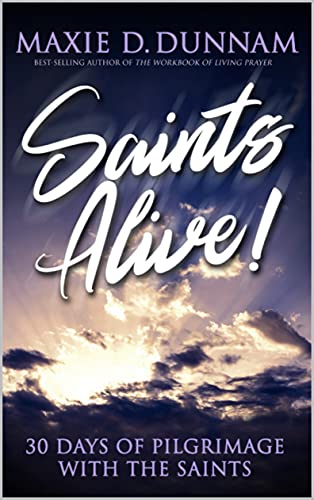
Saints Alive! A Conversation with Maxie Dunnam

This summer, Dr. Maxie Dunnam released a new devotional resource he developed while at home during the initial wave of coronavirus shutdowns. Saints Alive! 30 Days of Pilgrimage with the Saints is a rich, month-long set of readings; daily reflections aren’t just inspired by those who have come before; they have the tone of being in dialogue with these spiritual giants. Dunnam brings his own insights into conversation with names both familiar and unfamiliar: writers like William Law, Thomas à Kempis, Francis de Sales, Evelyn Underhill, John Wesley, and Bernard of Clairvaux. Decades ago, Upper Room Ministries published a collection of small booklets under the title Living Selections from the Great Devotional Classics – what Dunnam continues to refer to as his “box of saints,” a set of writings that has shaped his spiritual life over the years.

What becomes abundantly clear throughout this book is the ongoing need for timeless insight when the present feels urgent. The more pressing current events become, the more pressing the need to drill down into the very core of the gathered wisdom of the saints of the Church. When a plague surges and wildfires burn and levees do not hold, we need the voices of Christians who knew plague and burning and flood. What feels like uncharted territory for many leaders is not wholly uncharted in the life of the Church. Thankfully, as the rhythm of life together was profoundly disrupted, Dunnam reached for those who know how to sink into life in Christ, however near calamity strikes.

Recently, Maxie answered a few questions about his “box of saints” and the timeliness of their wisdom today.

Wesleyan Accent: In the introduction, you describe having what you think of as your “box of saints” – a set of booklets featuring spiritual writings from Christians across centuries. What do you think it is that makes their insight so enduring, across time and continents and language?

Maxie Dunnam: First of all, the issues they dealt with. They took our daily life seriously and dealt with everyday issues that are common to us: pride, envy, jealousy, selfishness, loneliness, relationships, illness, death and on and on. They also dealt with the issues that trouble us if we are serious about living the faith: the necessity of discipline, worship, prayer, a meaningful devotional life, silence, living with Scripture, mutual faith sharing, companionship, confession.

WA: You invite readers to spend thirty days on soul pilgrimage with you as you engage with these profound Christian voices. During periods of crisis like we’ve experienced the past couple of years, you turn toward the “communion of saints,” the Body of Christ across time. How can remembering our fellowship in this wide span of the Church help give perspective in the middle of pandemic, wildfires, injustice, war, and hurricanes?

MD: The big dynamic is the communion of saints. I experience a wonderful mystery when I sit and reflect with these persons. I may or may not know the circumstances of their lives, but their thoughts and words give me a kind of oneness with them. The fact that others have valued their thoughts and words enough to preserve them through the centuries tells me that I need to pay attention to what they have to say. Our needs, suffering, questions, and problems make us one in our humanity; our faith makes us one in hope and Kingdom certainty.

WA: I was surprised to encounter a few writers I’d barely heard of, if at all. Sometimes the scope of spiritual insight from those who came before us around the world is just mind-boggling. Of those you interact with in these daily devotionals, is there one you most wish you could sit and talk with for an afternoon? (in addition to John Wesley, of course!)

MD: I would like to spend an afternoon with Saint Francis and Bonhoeffer. I am so unlike both. They both came from wealth and material privilege, which is foreign to me. Francis gave up his wealth, but Bonhoeffer never did. I’d like to talk about that. Both were passionate in their expression of the Gospel; I feel I am likewise. It would great, leading them to share with each other about how and why their passion was expressed. If I had to choose a time alone with one or the other, I would choose Francis, to talk about how I can be in but not of the world.


Saints Alive! 30 Days of Pilgrimage with the Saints works well both for personal use as well as small group or band reading discussion. It is available in both print and Kindle format by clicking here.

Language About God: Interview with Dr. Jackson Lashier

Note from the editor: I first met Dr. Jackson Lashier when we were both seminary students. Unlike many of the students who were pursuing degrees to become local church pastors, he and I found ourselves in many of the same classes as we worked toward degrees that prepared us for ministries in academic contexts. At the time, I knew him to be thoughtful, bright, and adept in handling resources that sometimes felt remote across the vast stretches of centuries and also abstract in their presentation of concepts. For pastors or academics or laypeople, the combination of remote and abstract can seem forbidding; but Jackson’s strengths lend themselves to bringing the remote and abstract both near and accessible. He’s the kind of person who comes to mind when you want to talk about the language we use when we talk about God. How we speak about God matters, and his point of view and expertise are valuable resources in exploring why we speak about God, and how.

Jackson is now a theology professor; he is also a John Wesley Fellow, about which you can read more at A Foundation for Theological Education. He has a passion for connecting the historic doctrines of the church to everyday lives of Christians (see his short video on “Why Church History Matters for Discipleship”) and authored Irenaeus on the Trinity and numerous scholarly articles. Currently, he is Associate Professor of Religion and Chair of the Social Science Division at Southwestern College in Winfield, Kansas.

Initially we began this discussion before the pandemic hit, and I appreciate his sustained efforts through that upheaval. It’s a gift to welcome his insight today.

Elizabeth Glass Turner, Managing Editor


Wesleyan Accent: So – Americans talk about God, or describe God, in a lot of different ways. American Christians often share some commonality in the language we use about God, but even within Christianity there can be different emphases or language employed. Is there any point in trying to use common language about God, or does it matter how we speak about God? If so, why?

Dr. Jackson Lashier: I think the language we use when speaking about God or to God matters greatly. First, it reflects our beliefs about God. So to call God gracious or loving or simple or immutable or Father, to name a few common examples, is to reveal convictions about the nature of the particular God we worship that cannot be implied from the word “God” alone. Second, and related to this, when used in the liturgy or in a common place of worship, our language proclaims a shared understanding that both unifies us as the Church and marks us off from communities of other faiths.

Now, having a common language of God does not mean we must have a uniform language of God. So many times I hear in public prayer people using the same title or titles of God over and over again (“Father God,” for example, seems really popular among American evangelicals). There is nothing necessarily wrong with repeating the same titles, but this practice fails to engage the vast treasure of names and language for God provided for us by Scripture and tradition. Using names for God that we are not familiar with helps open our minds to other aspects of God’s nature that we can praise and think creatively about.

WA: In systematic theology classes, students delve into Trinitarian theology – that God is three in one, not just one God with three masks or not three Gods who are best friends. God is three persons, and often we use personal, relational language to attempt to convey that – language that is found in Scripture: Father, Son, and Holy Spirit. Yet Christians have also classically believed that God is spirit, which gives a different understanding of God than may be implied in the Trinitarian language which is exclusively male. Why might it be important to remember that Christians classically haven’t affirmed belief in what Marge Simpson called “Mr. Lord” or the common phrase “the old man in the sky”?

JL: I like your images, particularly the Marge Simpson reference, and I agree with you that assumptions that God is inherently male, even when we say otherwise with our qualifications, is a problem and skews our understanding of the nature of God. Because God is absolutely unique, completely unlike anything in creation (according to the basic distinction that God is the eternal Creator and everything else is contingent creation), our human language – even language used by Scripture – always falls short of fully encapsulating God.

Theological language is, as Thomas Aquinas taught, “analogical.” That is, it refers to God only by way of analogy. This is easy to grasp when we call God “a rock” or something of that sort, but it even holds true when we say that God is love. When we say that God is love, we mean that God is in some way like our human concept of love even though the love that is God’s nature transcends even the highest human examples of love. The analogical nature of our God language is crucial to keep us from bringing God to our human level and thereby to falsely and somewhat idolatrously assume the ability to completely know God in human terms.

This subject bears directly on the question of gendered language for God and male images of God that we seem to hold de facto. The Scriptures and the majority of church tradition use male titles for God (primarily Father and Son) as well as male pronouns for God. If we keep the analogical nature of theological language in mind, we can affirm that these male titles and pronouns demonstrate God’s personal and relational language (God is “Father” and “he” as opposed to an “it”). Yet we can affirm these titles without falling into the mistake of thinking that God is literally male. If we think that God is literally a male, we have failed to honor the transcendent nature of God, which, as your question rightly expressed, is affirmed in the Scriptural teaching that God is spirit.

WA: Some Christians seem to think, however, that in the Incarnation God becomes a man and so that affirms the inherent maleness of God and justifies our exclusive use of masculine titles and imagery. Does your argument here implicitly deny the reality of the Incarnation?

JL: Not at all. It is absolutely true, both historically and theologically, that at some point in history, God entered human experience and was born a man, Jesus of Nazareth. But to conclude from this that, as a whole, God is male, is to be extremely confused on our Trinitarian language. Scripture affirms not that God in total becomes human but that the Word or the Son (who the tradition will come to refer to as the Second Person) becomes truly human. The Father and the Spirit (who the tradition will come to refer to as the First and Third Persons) remain spirit, as you noted in a previous question. Moreover, the orthodox teaching of hypostatic union states clearly that Jesus’ human and divine natures exist in perfect union though remain unconfused and unmixed (indeed, certain authors like Julian of Norwich will refer to the Son as our Mother). So the incarnation in no way compels us to think of God as male. At the same time, we do not have to somehow deny the historical reality of the maleness of Jesus for fear of that reality making God male.

WA: Your use of the title “Mother” for the Son may sound odd to our modern ears. Despite numerous examples of very maternal, female imagery of God throughout Scripture, many Christians might think it arises from a theology of the Divine Feminine that isn’t rooted in classic Trinitarian theology. How can we walk a path in which we celebrate shared belief in the Trinity and value the Trinitarian formula – Father, Son, and Holy Spirit – while affirming that while Jesus Christ experienced humanity in a male body, the Trinity is not inherently or eternally male?

JL: I think you’re right that many Christians have an immediate aversion to feminine language. I doubt whether there is a good reason behind it so much as the cumulative effect of using exclusively male language and thinking of God in exclusively male images. Indeed, it so forms our thinking about God that we cannot even recognize the many feminine images of God in Scripture —the mother hen, the woman who sweeps her floor looking for a coin, to name a couple off the top of my head. (Sometimes these images are wrongly dismissed by people who argue that God is not being “called” a feminine name [as God is called “Father”] but only compared to a feminine image; this argument makes no sense if we remember that all language and titles of God are analogical.) So for these reasons, we must reject the exclusive use of male imagery and language for God. However, for these same reasons, it is also insufficient to simply switch to using exclusively feminine language as I’ve seen some theologians and churches doing. Scripture reveals, and the tradition draws this out, that the transcendent and unique nature of God is neither male nor female but encompasses both male and female.

The path forward, then, is to remember the central teaching of the Trinity. It is not that God is male. It is that God is relational in God’s essence. Thus, God’s one nature is actually constituted by three “relations” or “persons.” This makes God eminently personable and that reality is more clearly expressed in relational titles like “Father” and “Son” than it is in titles like “spirit.” But “Mother,” for example, is also a relational name. And so I believe, along with Julian (and Gregory of Nazianzus and other Orthodox writers) that this title and other feminine titles can be used without sacrificing Trinitarian teaching in any way. Indeed, as I’ve argued elsewhere in print, I think “Mother” more faithfully retains the central Trinitarian realities than does reverting to “Creator,” “Redeemer,” and “Sustainer” often used today.

Of course pragmatically any new introduction of unfamiliar titles and imagery of God should be paired with preparation and teaching, so that congregations understand where they come from. But having said that, the use of titles like “Father” and male pronouns should also be explained better.

WA: You mention titles like Creator, Redeemer, and Sustainer – in terms of how we speak about God, a popular means of representing the Trinitarian formula without relying on gendered titles. However, it seems that this formula reduces the persons of the Trinity from Scriptural ways in which they relate – Father, Son, Holy Spirit – to function, and what humanity experiences them doing. Is affirming personhood of “God in three persons, blessed Trinity” more essential than reconfiguring gender-specific language for the persons of the Trinity, even if that language had its origin in patriarchal societies?

JL: I believe in altering our language, attempts that guard against the misguided conclusion that God is literally male are admirable and needed. Nevertheless, I would answer yes to your question about this recent attempt. The formula “Creator, Redeemer, Sustainer” is simply an insufficient Trinitarian formula as it removes any inherent relational connection among the three persons that is the basis in traditional Trinitarian theology for maintaining the Oneness of the Three. Effectively, this formula implies a worship of three gods. Or, alternatively, the formula could be taken in a modalist sense, which means that the one God at one time creates, at another time redeems, and at still another time sustains. But here again, there is no eternal relation of persons. So, both conceptions are not fully Trinitarian. As I mentioned before, it is for this reason that I am much more comfortable with “Mother” language of the Divine because it maintains the essentially relational character of the Triune God. And while the tradition creatively engages such feminine language, it uniformly rejects such modalist or tri-theistic formulas.

WA: I’ve heard some theologians and pastors refer to the Holy Spirit as the “she” within the Trinity. What are your thoughts about this approach?

JL: Honestly, I don’t like it very much. For one thing, it seems to render the feminine aspect of God as secondary: masculine images still outnumber feminine images 2-1, so it seems to me there is not much to gain by this approach. But more problematically, this approach assumes that the persons of the Trinity are literally gendered. So it could be thought that Father and Son are literal male members of the Trinity, and Spirit—by virtue of not having a masculine title—is the female member of the Trinity. As we have discussed, all persons of the Trinity are fully God and together they are one God.

WA: If in God’s infinite transcendence as Creator, the nature of God encompasses male and female, then this impacts our understanding of what it means to be human, yes?

JL: So many implications. First and foremost is the question of the image of God as reflected in humanity. Genesis 1:27 clearly states that male and female are together created in the image of God. Because of the Adam and Eve story of Genesis 2, however, this primary anthropological teaching is often missed; some assume that only the man is created in the image of God, which of course undergirds all sorts of problematic teachings related to hierarchies in marriage and ministry. But male and female together created in the image of God makes sense if we think about God in the ways we have been discussing. It means that they are equal and that they need each other to fully reflect the image of God. This truth, it seems to me, grounds an egalitarian view of marriage and the full participation of women in ministry. Another implication is that humans are inherently communal creatures. This does not mean, of course, that everyone needs to be married; it does mean that everyone needs to be in human community to realize fully who they were created to be. We can’t be good disciples and be solitary.

WA: Pragmatically, I’m reminded of a time I read a description of someone’s expectation that God’s voice would sound like Morgan Freeman or Sean Connery. Both made me smile, yet I was startled by my internal response: what if God’s voice sounded like Cate Blanchett’s character, Galadriel? This funny, simple thought reminded me of the importance of how we conceive of God when we pray. What are some important principles that should shape our imagination when we pray or talk to God?

JL: This is such an important question and really gets at the heart of what is at stake in this question. It is clear that if we reduce our images to masculine ones, then we will likely fall into the trap of thinking of God as male. Perhaps the most important principle is creativity with the wealth of images in Scripture. Encourage yourself to think of God using different images. At one point, imagine God as the Father of the prodigal son running to embrace you. At another time, imagine God as the mother hen who enfolds you in her wings.

The great monastic theologian, Dionysius the Areopagite, encouraged his readers to focus their imaginations on comparisons of God to inanimate objects precisely because there is less danger mistakenly thinking that God is literally a rock, for example, than there in thinking God is literally a Father. Ultimately, every Christian must explore images that resonate. But in general, Scripture and tradition allow for more freedom and creativity here then people often allow themselves.

WA: When it comes to drawing from Scripture and tradition, do you think people of faith can affirm the value of believing that God – out of the Divine nature of holy love – really reveals the very real, actual nature of God? That our language isn’t just a Rorschach test in which we make God everything we think God should look like? At the same time, is there space to acknowledge that sometimes we think about God or speak about God in ways that are incomplete or less rich than they might be?

JL: Great questions that have been wrestled with for centuries. I agree there is a danger here, which is why I think we are wise in our creative imaginings to remain within the range of images provided by Scripture and developed by tradition. Thankfully, there is more than enough there to occupy our imagination in prayer and worship; we have just scratched the surface in our engagement with these treasures.

In answering your broader question about the tension between knowing the revealed God vs the mystery of God, I follow the Western tradition as represented by Thomas Aquinas, as opposed to the Eastern tradition as represented by Dionysius or, more recently, theologians like Vladimir Lossky. The Eastern tradition has generally said that God in God’s essence is unknowable, so the only way we can really speak of God is to say what God is not. This is the so-called “negative” approach or apophatic theology. From it we have derived such important concepts as God’s eternality (God is not limited by time boundaries), God’s simplicity (God does not have parts), and God’s immutability (God is not changeable). I understand the impetus behind this apophatic tradition and see its value, though I move away from it precisely because of your point that God has revealed Godself to us.

The Western tradition has generally been more positive in its approach, so-called cataphatic theology. It affirms that we can speak of God positively, such that when we say God is good or God is love or God is Father, we mean something like what we know of as “good” or as “love” or as a good “father.” Personally, this way helps me connect better with God through prayer and thought. It seems consistent with the Incarnate movement of God to bring Godself to our level.

Yet as we mentioned in our discussion of analogical language, even this way of doing theology insists that we cannot fully know the essence of God: God is infinitely more loving and more good than even our highest human notions. So while we can know God truly and authentically through God’s revelation to us in Christ and as recorded by Holy Scripture, we can never know God fully and comprehensively. Incidentally, this means that eternal life will be spent growing deeper and deeper into the knowledge of God’s essence. I don’t know about you, but that sounds a lot more compelling then singing “Open the Eyes of My Heart Lord” over and over for eternity!

“Overwhelmed”: How Our Pastors Are Coping With The Pandemic

A Note From The Editor: Recently I asked clergy members from several Wesleyan Methodist denominations in the United States about what it’s been like coping with a pandemic. Ministers in other parts of the world have experienced these dynamics before, and pastors a hundred years ago went through this in America. For many church leaders in the U.S., these have been uncharted waters, new territory. A number of pastors answered my questions, and their time is an especially valuable gift right now. I watched as more than normal intended to reply but could not, pummeled by to-do lists and coping with news cycles demanding last-minute updates from clergy, denominational leaders, and churches. One pastor unable to participate was busy responding to a crisis outbreak in their rural community – a town with one of the highest per capita case loads in the country.

Church leaders are finding unexpected support, bright spots, or new skills; many pastors miss seeing their church members face to face; and many are grappling with uncertainty, overwhelming demands, or the need to quickly implement new platforms and tools.

In addition to basic questions on how church leaders are coping, I also asked some pastors, “If you could travel back to December and leave a Post-It note for past-you, what would you say to prepare yourself or your people for the current situation? One pastor reflected, “The Church is not the building. We all know that, but we are about to live it.

We are grateful for the glimpses into leadership life right now.

Elizabeth Glass Turner


Coping: “How are you?

  • I am anxious about what the church may look like in the next few months. People need community, and online platforms – as helpful as they may be to keep us connected – can’t take the place of mutually sharing and experiencing physical presence. I am constantly preoccupied and thinking about what we need to do. This often leads me to feel overwhelmed and inadequate, as I try to anticipate what we need to be doing next.”
  • “I’m learning it’s best not to ask on Wednesdays. I’m not sure why this is the day I feel least on top of ministry, and the most fragile.”
  • I miss my people. I love being a pastor; pastoral care may be my favorite part of ministry, so I am really missing that connection. But personally, I have enjoyed being able to spend more time with my family. It has been nice to just have lazy time with them. Going into the living room and joking with my kids during breaks. Time from all the pressure of activities at night. That has been life-giving for me.”

Discerning: “What’s been an unexpected source of guidance?

  • Learning from what others are doing and reaching out to friends to ask their views about concerns and ideas I have. Reading articles about our current challenges and how we can use this time as an opportunity to create a new future dimension of ministry.”
  • “The World Vision pastors group, “We the Church.” The Barna Group’s Covid tool kit.”
  • Unexpected friendship. There are pastors in our conference who I admire, but I’ve never really had much of a relationship with them. It’s been a joy to get to know them better and turn to them for advice in difficult situations.”

Equipping: “What resource do you wish you’d had?

  • A break. More clear guidelines or suggestions for funerals at this time. ‘How to transition appointments during pandemic’?”
  • “I wish I had better tech skills. I’m pretty good, but there are so many things that I don’t know and haven’t had the time or patience to learn.”
  • “Instead of ‘playing catch-up,’ I wish we would’ve had a well-organized and implemented digital ministry in place. I wish we had these online tools we are using now already at work. Now, in addition to created online content, we also need to train our leaders and laypeople on how to access them.”

Enduring: “What’s been a source of sanity for you?

  • Good friends and family. I’ve got a text thread with a couple of pastors; we turn to each other for advice. That’s been a real blessing and source of hope.”
  • “This will be one of the most cherished times for my children. As much as they miss school and friends, they loved being at home and spending quality time with mom and dad. We started new activities together like biking and going for walks almost daily, and that has transformed how we relate to each other. We are no longer ‘on schedule’ but have liberty and flexibility on how we use our time together. This has been a blessing to us as a family, one that has provided me with healthy feelings and thoughts.”
  • Solidarity – knowing so many others are going through the same ministry challenges.”

Expressing: “What do you wish your denomination or church members understood better?

  • “Just the emotional energy pastoring takes right now. I’m not sure what leaving well looks like.”
  • “I don’t think I can speak to what anyone is doing, or could have done better. Everyone is trying their best to figure out ministry in this challenging season. I am grateful for the hard work my colleagues and others are doing to provide us with resources.”

Grieving: “If you could have or do one thing right now, what would it be?

  • Have a gathering of my graduating seniors; have regular youth gathered for fellowship.”
  • “Between Zoom meetings, homeschooling, creating online content, writing Bible studies and sermons, I wish I could see everyone every day to talk about how they are really doing and to encourage them. It is hard to feel so powerless to support my congregation in their struggles. We have an active pastoral care ministry. I just wish I could visit with every one of them.”

Praying: “How can we pray for you?

  • “I ask for prayers of encouragement, strength, and good health. But most importantly, I ask for those same prayers for my congregation.
  • That I would clearly hear the Holy Spirit’s guidance for ministry and family. I don’t know the best way to navigate these uncharted waters, but I know the One who does.”

Hindsight: “If you could travel back to December and leave a Post-It note for past-you, what would you say to prepare yourself or your people for the current situation?

  • “I would make sure that I prepared my teams to view online resources as essential and not secondary. We had just completed a shift in our online giving platform and moved to PushPay. Had it not been for this move, we would be seeing a significant financial challenge. As for other platforms, I would have prepared our leaders to see digital platforms as an essential (not supplemental) resource for ministry, as there are already many people waiting to be reached via these platforms. We are reaching nearly twice as many people weekly through our worship services and 8 times (you read that right) as many people through our discipleship classes. I would have done crisis management training for all of my leaders.
  • “I think I would say, ‘Pace yourself‘ and ‘Go see your mom and dad in early February.‘”
  • “Ok girl, big changes are coming. No weddings, no dining out, and no church in person. So here’s what you need to do: Don’t cancel your hair appointment for the last week in February. You are going to miss a lot of things. But you are going to gain a lot of perspective on what’s most important: family, friends, the warmth of an embrace. The Church is not the building. We all know that, but we are about to live it. And embrace the deep connection that stands even when we are socially distanced. Sharpen your media and tech skills. You are about to become a videographer, editor, sound technician, and production guru. Get ready for all the kids to crash into your nest. Try not to get too bent out of shape about any of this. Enjoy it if you can. It’s a strange season we are passing through.”
  • “Good computer and editing skills, basic internet skills, Zoom and Conference Call 101 lessons for my members and myself!
  • “Let’s prioritize our media ministry and start livestreaming our worship celebrations. Part of who we are in the community means having online presence. We can do so much ministry online through these digital platforms. True story: Prior to March 22, we had little to no online presence. We went from in-person worship on March 15th to Facebook Live from my living room on March 22nd!”
  • “Expect the unexpected. You can build community online – software that allows response is better than software that doesn’t (so, as beautiful as watching the service at the National Cathedral is, I probably get more out of wonky Zoom with my 20 congregants). Christians have been here before and the church survived. Your theology meets reality when you have to decide whether you are afraid of dying.”

As the well-documented extended-crisis adrenaline slump continues to hit caring and serving professions – from ER physicians to nursing home aides to church leaders – there are sure to be resources emerging for coping with the fallout of crisis. Pastors drained from an extraordinary season of unexpected challenges still face uncertainty, changes, conflicting perspectives, and health ramifications, while shepherding church leaders and members through those same dynamics.

“We Too”: Interview with Mary DeMuth


I grew up in a faith community where abuse was not spoken of, where sex was a taboo topic in any context. So as one can imagine, my understanding of sexual abuse was quite simplistic well into adulthood. How could a man or woman of God do such horrific things? I confess that it was easy to feel smug when scandal rocked the Roman Catholic Church, because somehow I felt like Protestants were different.

They’re not. At all. How arrogant of me to think so.

It took a little longer for the corner of that rug to be lifted, but all that filth is the same. Sexual abuse is a darkness that has pervaded the Church for centuries. No branch of faith is above another when it comes to the pervasiveness of sin. The flames of sexual abuse have scarred people I love. People who trusted and were burned.

For this reason I jumped at the chance to review We Too: How the Church Can Respond Redemptively to the Sexual Abuse Crisis. We Too is now available for purchase, and it was written to help those in ministry leadership to understand the far-reaching effects of sexual abuse and how to support to those on the healing journey. It was truly an honor to interact with Mary and to hear her thoughts on a topic so vital for our ministry leaders right now.

CARRIE CARTER: For those who might not be familiar with you, tell us a little bit about your story.

MARY DEMUTH: I am a sexual abuse survivor. When I was five years old, neighborhood teens repeatedly raped me over the course of my kindergarten year. My father was a predatory man as well. And I found myself during a lot of my childhood being approached by predators. I spent a lot of time running away from those who wanted to steal from me. I met Jesus when I was fifteen through the ministry of Young Life. I have been on a decades-long healing journey since then.

CC: Was We Too: How the Church Can Respond Redemptively to the Sexual Abuse Crisis written as a response to the recent issues that have been exposed to light in the evangelical world, or was it a work that was already in process?

MD: In some ways it’s been in process for decades. I have been speaking about this issue a very long time, but it has finally gotten teeth because of the evangelical scandals of late. I am grateful that Harvest House Publishers took a huge risk in publishing this book.

CC: Was there anything during the research and writing of We Too that you didn’t already know? If so, what impact did this new knowledge have on you?

MD: I’ve been seeped in this for decades. But I was particularly surprised at the numbers outside the United States. In other cultures, the numbers are significantly higher percentages of women and children being exploited. Consider this: “Some 35% of women globally have experienced some form of sexual violence, though because of the nature of secrets, this number is most likely underreported. For some countries, the statistics are even more shocking: 57% of Bangladesh women, 77% of Cambodian women, 79% of Indian women, and 87% of Vietnamese women and 99% of Egyptian women have experienced some form of sexual harassment. Remember, harassment is not the same as sexual violence. Harassment involves innuendo, inappropriate comments, and unwanted sexual solicitation. 120 million girls globally have experienced forced sex. 750 million girls will be married before their eighteenth birthday.[1]” (Excerpt)

CC: What was the most difficult section of We Too to write? What made it difficult for you?

MD: Recounting the first story in the book where I was abused by a doctor, and then telling the story at the end of the book of when I returned to the scene of the crimes [that occurred] when I was a five year old. There are so many fears in making those stories public, and the shame still looms.

“We all know someone affected by sexual abuse. Sadly, the secular media has shown more compassion than the church toward sexual abuse survivors. There is a holy reckoning unfolding before us in the church. People are fed up with secrecy, covering up, and the sheer proliferation of abuse—both inside and outside the church. It’s time for the church to become what it should be: a place of security, not shame; humility, not pride. By standing with survivors of sexual abuse, we can build a community of kindness and restoration—a place where God’s people are healed and made whole.” – Excerpt, We Too

CC: As the spouse of a ministry leader, I received no training on practical ministry, let alone how to minister effectively to sexual abuse survivors. What do you feel is the most important thing for us, as ministry spouses, to know?

MD: That, most likely, everyone you minister to is affected by this issue. It either happened to them, or they love someone who has had this story. The best thing you can do is err on the side of belief, listen, weep alongside, and pray. If there is an outcry from a minor, you must report this to the authorities. Instead of viewing sexual abuse survivors as drains on your energy, look at them as tutors to teach you what it means to turn to Jesus and lean on him for sustenance and strength. They have SO MUCH to teach us about discipleship.

CC: After reading We Too, I feel it is going to be a vital tool that needs to be on the shelf of every ministry leader’s library. Have you written any supplemental material or do you have recommendations for other resources to help navigate this crisis?

MD: I am in the process of writing a video study and guide. Two other great resources: The Child Safeguarding Policy for Churches and Ministries by Boz Tchividjian and churchcares.com.

CC: For churches that are ready to put protocols in place for the protection of children, is there an organization that you recommend for assistance with those protocols?

MD: Yes, netgrace.org. I also have an extensive list of resources for pastors and ministry leaders.


[1] Meera Senthilingam, “Sexual harassment: How it stands around the globe,” CNN, 29 Nov 2018, https://www.cnn.com/2017/11/25/health/sexual-harassment-violence-abuse-global-levels/index.html

Interview: The Advent Mission with Omar Al-Rikabi

Recently Wesleyan Accent spoke with Rev. Omar Al-Rikabi, an occasional Wesleyan Accent contributor and author of The Advent Mission, a new Christmastime devotional from Seedbed Publishing. 

Wesleyan Accent:Why the Advent “mission”? Is this about missions? Global missionaries? Do I have to give money? Hey, is this a sneaky way for churches to take an extra offering?

Omar Al-Rikabi: I think it helps to look at the meaning of the two words “Advent” and “mission.”

The meaning of the word “mission” is “a sending to go perform a specific duty.” In the creation story, humanity was given a specific mission: to walk with God and tend to creation. But we know what happened: mission failure.

Because of this God had a new mission, a rescue mission, summed up in the mission statement of our faith, John 3:16: “For God so loved the world that he gave his one and only Son.”

And the meaning of “advent” is “the arrival of a notable person or event.” So then, the Advent Mission is about preparing for and celebrating the the arrival of Jesus on that mission. But not just in the manger as a baby, but also his second arrival when he returns.

So yes, the arrival of Jesus’ mission should impact what we consider “missions,” which is ultimately sharing the good news of Jesus, and the book addresses that.

WA: Why are we talking about end times at Christmas? Is that like a zombie holiday movie mashup? When you mention the second coming of Christ, are you talking about Left Behind?

OAR: That’s the funny thing about the Christian Calendar: it begins at the ending, but once you see how it all fits, it makes sense. I describe it in the book like this:

Advent begins with the return of Jesus to the world in final victory, because of . . .
Christmas: the birth of Jesus into the world, which leads to . . .
Epiphany: the manifestation of Jesus to the world, which leads to . . .
Lent: Jesus’ journey to the cross for the world, which leads to . . .
Easter: the resurrection of Jesus in the world, which leads to . . .
Ascension: the enthronement of Jesus over the world, which leads to . . .
Pentecost: Jesus sending his Spirit into the world, which leads to . . .
Kingdomtide: proclaiming the good news of Jesus to the world, which leads to . . .
Advent: the return of Jesus to the world in final victory.

And as far as Left Behind, that’s something that I do address in a chapter called “Apocalyptic Anxiety.” Basically, as Wesleyans we don’t subscribe to “Left Behind” theology and all the fear it fires up. The larger goal of the book is to put together a better, and more hopeful, idea of the return of Jesus.

And to be clear, it’s not just about Jesus’ return. The last week of Advent makes the turn to the manger and gets us ready for Christmas, and so does the book. And what makes this Advent book unique is that it doesn’t end on December 25th. It goes all the way through the 12 Days of Christmas and ends on Epiphany, January 6th. I did this because I think we separate the two events, the two seasons. But that’s why the Church follows seasons and not days, because we need the time to prepare and embrace what Jesus is doing, and that takes time.

WA: What are some practical ways I can prepare for Advent besides taking advantage of Black Friday (or better yet Cyber Monday)?

OAR: Well obviously the first thing you can do is get the book! But in all seriousness, the goal of the book is to be a primer for Advent. So the first part of the book talks about what Advent is and what it isn’t, then makes a turn to how we participate through prayer, fasting, relationships, and acts of mercy and justice.

WA: Who is this book for? Grown ups? Families? Sunday morning discipleship groups? What are some of the most fruitful ways you envision it being used?

OAR: Yes and yes. Obviously we’re talking about Jesus coming back, and being born, to put an end to sin and sickness, so some of those sins and sicknesses are named in certain parts (i.e. pornography, slavery, etc.)

When I first wrote the material that eventually became this book, my context was campus ministry. And the thing about working with college students is they’re gone during most of Advent and Christmas. I imagined giving them something they could take with them to keep them connected in the season.

And when I got to the local church, I found that most folks don’t think about Advent the way I’ve described at all. And it’s hard to preach about it from the pulpit, because it takes more storytelling that you can do in a couple of sermons, especially if (as in my appointment) two of the Sundays of Advent are filled with children’s musicals and Christmas cantatas. Plus so many folks go out of town. None of these are bad things, but they do make it challenging to preach, teach, and prepare for what this season is really about. So I imagined what I could put in their hands that they can take with them that tells the story.

Prepare for the holiday season today by buying The Advent Mission today here.

Interview: Women Called to Lead with Roberta Mosier-Peterson

Note from the Editor: Recently, Wesleyan Accent interviewed Rev. Dr. Roberta Mosier-Peterson, an ordained Elder in the Free Methodist Church (USA) who is currently Senior Pastor of Oakdale Free Methodist Church in Jackson, Kentucky, and contributor to www.juniaproject.com. She completed her D.Min. dissertation at Northeastern Seminary in 2016 on the topic of women in ministry. A documentary, “Lived Experience,” based on the dissertation and featuring the accounts of women in ministry debuted in April 2018.

Wesleyan Accent: This spring, a documentary about women in ministry debuted, based on your dissertation at Northeastern Seminary. What inspired your dissertation?

Roberta Mosier-Peterson: I have always enjoyed listening to life stories. As I was considering topics for research, several people mentioned that most of the themes that interested me came from my own story or the stories of women who serve in ministry. It seems as though I have been informally collecting a lot of these stories even before I researched them. The stories of women in ministry inspire me.

 WA: In the past, you’ve noted that, “Our church says beautiful things about being fully affirming of women in all levels of leadership,” but that “women are sometimes treated as less qualified and desirable for church appointments.” Why do you think that is?

RMP: There are a few reasons that women are viewed as less qualified and less desirable for church appointments. One is that a lot of congregations lack exposure to women serving in church leadership. Perception is powerful. It is often said that women do most of the work in church, but that the lead pastor is male. If this is how you picture the church, you automatically assume that this is the way church should be.

Another powerful dynamic is that women often hear and internalize mixed messages about what others expect of them. There are church cultures that define ministry leadership as bold, risk-taking and independent. Women have been told that these are not lady-like. Women who are gifted and graced with this sort of courageous leadership are criticized. As one pastor says, “I can speak – but don’t say it with too much authority.” There is a grievous double-bind that exists.

WA: For your dissertation, you collected life stories from women clergy in the Free Methodist Church. What surprised you about what you found? Were women forthcoming or reluctant to share their experiences?

RMP: All of the women clergy who offered their stories were told that their identities would be protected. They were excited to share their stories and felt free to do so with incredible candor because of the anonymity. The surprise came in sorting through data and sending out requests for participants.

Specifically, I received several enthusiastic responses from women serving in the Midwest. As it turns out, many of these women were in the same age bracket as well. It is often thought that Southern and Midwestern mindsets are set against women in leadership; however, it was not the case with the potential participants that expressed interest in my study. This discovery was helpful because it supports the truth that barriers exist everywhere. The challenges take different forms, but even in areas of the country that seem to be more likely to empower women, there is plenty of work to be done.

WA: You have stated that, “women ‘don’t see sexism as being the big, bad evil unless you get them together and they share their stories’ and find ‘this subtle, unconscious bias that women cannot or should not do certain things.’ What are some examples of bias or sexism shared by the women in your dissertation and documentary?

RMP: The women in the study shared stories about feeling isolated when they were the only woman in districts, conferences, and boards.  In such situations, women are burdened with representing their whole gender. There were situations where those in authority felt threatened by women when they were thriving in their area of giftedness. There were times when the women were offered less compensation than others in comparable roles. A few women expressed how diminished they felt when they were not considered a “good fit” for senior leadership roles and were not given any specific reason or feedback. Almost all of the women spoke about the impact of the “mass exodus” when they were appointed in positions of senior leadership. Instead of blaming the inequity that remains in the church, these women often blamed themselves and were blamed by others.

WA: After gaining financial support from the Board of Bishops as well as conferences and individuals, your dissertation has been made into the documentary “Lived Experience,” which debuted at the Wesleyan Holiness Women Clergy Conference in Colorado. What do you hope to achieve with this documentary? What do you hope women and men both will take away from seeing it? Has it impacted you in ways you didn’t expect?

RMP: It is my hope that the church can be a place of healing and empowerment for women. It is God’s intention that the church be about the Gospel, which is God saving, healing and restoring the world. I’m praying that from the film, the church will start imagining how we can be more faithful to this essential calling. I’m hoping that women will resonate with the stories told, find the courage to share their stories, and be faithful to what God is calling them to do. I’m hoping that men will see tangible ways to champion the called and gifted women around them; I’m praying that they will commit to empowering these women even when it means self-sacrifice.

The making of the film impacted me in so many ways that it difficult to condense.  I may need to write a book! There were some moments when I thought I would lose my nerve, but God gave me confidence that I was called to do it. I was called to do it because I love Jesus and I love the church.

Watch “Lived Experience” below. Because of potential repercussions to the women clergy who honestly shared their experiences, actors were chosen to represent them in order to protect their anonymity. All quotes and statements were given by women clergy active in ministry in the Free Methodist Church (USA).

Lent: Interview with Bishop Debra Wallace-Padgett

Wesleyan Accent shares the opportunity to explore the Lenten season with Bishop Debra Wallace-Padgett, who serves the Birmingham Episcopal Area of the Southeastern Jurisdiction of the United Methodist Church in the United States.


Wesleyan Accent: Growing up, Ash Wednesday was something vaguely Catholic-ish printed on the calendar; I didn’t observe it until later in life. What role has Ash Wednesday played in your life? How has that changed (if at all) depending on what season of life or ministry you’re in?

Bishop Wallace- Padgett: I was first introduced to Lent as a child. Ash Wednesday was a big deal to me during the early years of my Christian walk because it was the day when I would “give up something for Lent.”

As a child I usually eliminated chocolate or candy from my diet as my “sacrifice” for the season. I thought my practice had much more integrity about it than what my buddy did. He gave up peas- a vegetable he didn’t like!

As I grew into young adulthood, Ash Wednesday became more to me than the day that launched Lenten observances. Though I still observed a Lenten fast, Ash Wednesday was the entry way into a 40-day experience of penance and reflection. I found special meaning in the imposition of ashes as a powerful reminder of my mortality and brokenness.

WA: What’s been one of the most surprising or poignant Lenten experiences you’ve had personally? Have you ever had a particularly difficult Lent?

Bishop Wallace-Padgett: My most poignant Lenten seasons have occurred when I have fully engaged in observing multiple Lenten practices such as reading a daily Lenten devotional, observing a Lenten fast, participating in special Lenten and Holy Week worship services, giving money to an outreach ministry and adding an extra act of service to my weekly routine.

I have discovered that there is a correlation between the depth of my Lenten journey and the height of my Easter experience. Lenten practices do not make me “holier” and thus more ready for Easter. Rather, like other holy habits, they increase my openness and readiness to experience Christ’s presence in my life.

WA: Some of us have been on both sides of the altar during Lent – receiving ash or bestowing it, observing Lent or planning sermon series for the season. I would imagine that there are a couple of layers of additional swapped roles when you find yourself in a place of ministering to pastors from the episcopal level. How has your perspective on Lent changed as you’ve moved from role to role? 

Bishop Wallace-Padgett: My perspective on Lent has changed over time. This has been affected more by changes in my own personal spiritual journey than by the different roles in which I have served. As my relationship with Jesus Christ has deepened, my Lenten journey has grown more meaningful. I loved journeying through Lent as a local church pastor with a specific congregation. This was a rich and bonding experience.

In my current role, I am journeying with an entire Annual Conference through Lent. I preach often during Lent, including Holy Week services. I also attend as many special services during Lent as my schedule permits.

On another level, it feels appropriate that much of our appointment-making work happens during Lent. The reflective, prayerful posture required by the appointment-making process fits with the mood of Lent.

WA: Lent always seems like a strange play between individuality and community – it’s highly personal on one level, and yet a communally shared experience of traveling the church calendar together. How do you think this dynamic is beneficial to Methodists?

Bishop Wallace-Padgett: One of the strengths of Methodism is the dynamic between individuality and community. On one hand, John Wesley’s heart was strangely warmed, indicating a deeply personal experience with Jesus Christ. On the other hand, he developed a system of accountability within the context of community through class meetings and bands. We are a community of people who are on our way together in our relationship with Jesus Christ.

Lent and Ash Wednesday have survived as Christian observances because we need them. Our souls long for a deeper faith. While these special days are sometimes misused and trivialized, for those believers who observe them earnestly, they are a powerful influence for growth in our walk with Christ.

Lent is a season that calls us to personal introspection. It also is a time that accents our life together in community. You are right. Lent brings with it a unique dynamic that emphasizes both the individual and the communal nature of our life together.

WA: And as always, is there something we should have asked but didn’t? Do you have any other reflections or comments?

Bishop Wallace-Padgett: Thank you for inviting me to participate in this conversation. My prayer for us both and for those reading this interview is that we will have deep, meaningful and life-giving Lenten experiences that prepare us for a joyful and powerful Easter.

Testify: Many Voices, One Song

A Note from the Editor: Wesleyan Accent is pleased to share a rich chorus of voices who have answered questions posed in honor of Martin Luther King, Jr Day.

Elizabeth Glass Turner


In the United States, today we celebrate Dr. Martin Luther King, Jr Day. Many within our Wesleyan Methodist family observe this holiday in a variety of ways. Today, we share these reflections from voices across multiple Wesleyan Methodist denominations in America.

Wesleyan Accent: Growing up, who did you look up to? Who did you want to emulate?

Rev. Yvette Blair Lavallais, Associate Pastor at St. Luke’s Community UMC, Dallas, Texas: Growing up, I wanted to emulate my mother. She had such amazing style and strength. She grew up in the segregated South, the daughter of an interracial couple (a black mother and a white father). She was always involved in our community, speaking out on issues, and taking a stand.

Rev. Marlan Branch, Pastor at River of Life AME Church, Milwaukee, Wisconsin: Years ago my uncle, who was a history teacher at Evanston Township high school, had a picture of Dr. King on his wall. And there was a snippet of a quote. “The time is always ripe to do right.” For years that line always stayed in my soul, even when I didn’t really know what it meant. I looked up to my uncle. I would often help him organize all of his classroom papers. He would talk to me about black history. I was always fascinated with the “Eyes on the Prize” series. That’s where I really began to understand the struggle of African Americans in America.

Makayla Burnham, Student Leader at The Wesley Foundation of Wichita Falls, Texas: I looked up to my grandmother because I thought she was the funniest, hardest working, craziest person ever and all these people that would come to her house or we would run into somewhere genuinely loved her, so I wanted to be her.

Dr. Kevin Murriel, Senior Pastor at Cliftondale UMC, College Park, Georgia: Definitely my father. He taught me to be proud of who I am as a black man, to work hard, and get an education so that I would not be overlooked for promising opportunities. One of the most valuable lessons learned from my dad was that as a black man in America, I always needed to work twice as hard just to be somewhat equal to my white counterparts; and three times harder to get ahead. But his Christian example in our home and his savvy business sense is why I will always seek to emulate my dad.

Rev. Karen Bates, MDiv, Alabaster Box Ministry Services, Bowie, Maryland: Growing up, I most wanted to emulate my mother. She showed incredible strength in difficult situations — most notable being a single mother to five girls. No matter what obstacle came her way, she had the strength to overcome it. She was a praying woman and before most people knew anything about a “War Room” my mother had dedicated one room in our house to prayer. I wanted to be like her, a woman of strength and prayer.

Wesleyan Accent: What is your first memory of the name “Dr. King”?

Rev. James C. Simmons, Senior Pastor at Baber AME Church, Rochester, New York: Because I’m from a rural and conservative hometown in south central Pennsylvania, it was rare to learn about black men and women who were whitewashed from our textbooks outside of home or church. So my first lessons about the Civil Rights Movement and the men and women who led it like Martin Luther King, Clarence Mitchell, Thurgood Marshall, Daisy Bates, Rosa Parks, Joseph DeLaine and so many others were from my Grandmother and Mother. They demanded that I emulate these men and women and commit my life to justice as well. Because of their model, I continue to work to establish and maintain a nonviolent culture on the streets of Rochester, New York where I serve.

Steve Beard, Editor-in-Chief at Good News Magazine: I don’t remember the year that I first learned about Dr. King, but I do remember the story that surrounded the introduction. I vividly recall the time my dad, a United Methodist pastor, told me about his first time being confronted with “Whites Only” drinking fountains and restrooms while on a road trip during his years at Wesley Theological Seminary. The year was 1961 and my dad was returning to Washington, DC from spring break in Florida when he stopped at a gas station to use the restroom. Appalled at the condition of the restroom, my dad complained to the service attendant. “That restroom is a mess,” he reported. “It is?” replied the attendant. “Oh, you went in the wrong restroom. That is for ‘Colored People.’ You were supposed to go into the ‘Whites Only’ restroom.”

Raised as a farm boy in rural Pennsylvania, my dad had never been exposed to “Colored Only” restrooms or “Whites Only” water fountains. My dad’s traveling companion from seminary counseled my dad to just get back in the car and forget about the ugly experience. No such luck. In no uncertain terms, my dad made it clear to the attendant that the conditions of the restrooms were inexcusable and that the restrooms should be open to all men. My dad’s scolding may have only had a temporary effect on the attendant who grew up in a segregated culture, but that lesson was etched deeply into my soul.

Makayla Burnham: My first memory of the name Dr. King was from a movie that’s called, “Our friend, Martin” and I thought the man speaking gave great speeches – but I also thought at a young age, from that movie, that Dr.King really liked walking!

Rev. Yvette Blair Lavallais: My earliest memory of Dr. King is when I was four years old attending preschool at Bethel AME. I was born the year after King was assassinated. Our church wanted to make sure we knew who King was and what he stood for. Back then, TV went “off” every night around 11 pm and each station would play excerpts from Dr. King’s “I Have A Dream” speech.

Dr. Kevin Murriel: My first memory of the name Dr. King was in church. Each year we had to recite a speech during Black History Month and our Sunday school teachers made sure we knew about the significant contributions of Dr. King and others to American history. Church taught us things about the Civil Rights Movement and its heroes that our school system never took the time to teach us.

Wesleyan Accent: If you could do one thing in the next year to impact national and international race relations, what would it be?

Rev. Karen Bates: The one area of national race relations that I hope to impact this year is helping people understand that Black Lives Matter is not about race, but about justice. Until all lives are given the same value, there is an inequality that exists in this nation and it must be addressed. We have to understand that it is a continuation of the work of Dr. King and a reminder that all men are created equal. Until the scales of justice balance, there is work to do.

Rev. Daniel Szombathy, Senior Pastor at Journey Church, Robinson, Illinois: If there was one area of national or international race relations I could directly impact this year, it would be the attitude of evangelical Christians towards immigrants and refugees. My feeling is that much of the anti-immigrant and anti-refugee sentiments that came from many Christians this past year (especially in Facebook posts!) finds its origin in racism. While many of these Christians claim they just want to keep America safe, ironically the best thing they could do to make America safe is by showing love to our “enemies” (people different than us). I love this quote from Martin Luther King, Jr.: “Love is the only force capable of transforming an enemy into a friend.” If Americans were to feed, clothe, and educate Muslims around the world, it would be a lot harder for IS to recruit them to harm Americans!

Makayla Burnham: One area of race relations that I probably could impact this year would be awareness of an individual’s culture, religion, or background, so there’s a level of accountability to respect another person’s history.

Rev. Yvette Blair Lavallais: One area of race relations that I’d like to directly impact is the disparity in our educational system. Hispanic and African American students in lower socioeconomic neighborhoods often are not exposed to the same textbooks, learning opportunities, and academic information as their white counterparts. Just because children are on the free or reduced lunch program does not mean they should be treated with reduced learning opportunities. I’d like to see intentional investment in the academic excellence of all students regardless of race, ethnicity and socioeconomic status.

Rev. Marlan Branch: “The time is always ripe to do right” – that quote is really where I wish I could get people to begin to work out, especially in race relations: there are so many on both sides who know the truth but for whatever reason choose to stay silent and not speak. I dream for the Beloved community, the community that King began to speak of right before his death. We will not heal as a people until we believe that we are all God’s creation, equal in potential and promise and presence.

Dr. Kevin Murriel: There are many areas of concern, but I truly want to help the Church better understand its role in racial reconciliation. The Church should be leading the effort towards greater race relations. It is the prophetic voice of the Christian collective that has the power to transform the world following the example of Christ. My personal mission and commitment is to keep this perspective in front of the people of God in hopes that our culture of racism and prejudice will change as the Church stands for what is righteous.

Interview: Dust in My Mouth with Katie Fisher

Recently Wesleyan Accent chatted with visual artist Katie Fisher about her project illustrating the struggle and grief written in the Old Testament book Lamentations.  

She shares in her bio that she works as a graphic designer, writer, and visual artist. As a farm kid from the Great Plains, she learned to run wild with the wind and live in the trees. Now in Dallas, she and her husband grow as many plants as their house can hold. In her writing and visual art, she explores what it means to be human and how our very existence depends on and interacts with the world around us. 

Wesleyan Accent: How do you approach your artistic process? How do you delve deeply internally to express your perspective? Where are the borders of what you experience internally with how you want to communicate it and how you hope it will be perceived? 

Katie Fisher: My process of getting into a project starts with research. I try to create a base of readings, experiences, conversations, and resources that I can connect together. From this base, I start to build connections using my own voice. In the beginning, I try to find a path or catch the scent of the project.  

Dust in My Mouth came out of a personal question. I had read, discussed, and heard a lot about theodicy—why bad things happen to good people—but answers to that question did not give me tools to deal with the reality of suffering in life. Even the most eloquent and thoughtful explanations of theodicy remain cold explanations of God’s interaction in the world. I wanted better tools to respond to my own suffering and pain as well as God’s response to me. In gathering resources I looked for anything that hit on that nerve. Often before getting into a work session, I had to take a deep breath. Trying to hit a nerve never feels good. Rather than diving inside myself, I tried to bring my own vulnerability to the reading, drawing and reflecting.  

I hope others will open themselves to this work in a way that allows them to interact with the rawness and struggle found in the book of Lamentations, Dust in My Mouth, and our lives. 

WA: Your art project centers around “lament.” What does lamenting mean to you? What has your experience been with how lament is expressed in faith communities? 

KF: My thoughts and experiences about lament have changed so much through doing this work. The research started by looking at Lamentations but I wasn’t sure where it would end up. The communal expression of lament provided some form of an answer to my initial question of what to do with my sorrow and suffering.  

This project on lament has many parts and the initial work came as part of a collaboration with literary critic and theologian Tim BasselinDust in My Mouth shows my portion of the work. Through conversations with Tim, I realized much of my focus lined up with the poems of Lamentations. I decided to follow their outline and push into the text more. Each poetic movement I drew sketches around forces me to wrestle with God’s response to unanswered pleas for help. I learned from my drawings while drawing and grappling with lines of the poems.  

Through the first four poetic movements the woman, Zion or Jerusalem, goes back and forth with the poet as they both express anger and deep pain while their lives and worlds fall apart. At every turn, I asked, “What substance of hope does she have in the face of such excruciating circumstances?” If a substantive hope exists in the extremes, like the violent siege of Jerusalem, surely it would apply to me as well. Many times people want to locate hope of Lamentations in the poet’s expression of the goodness of God in Lamentations 3:21-24.  

The title of the overall body of work Dust in My Mouth actually comes from Lamentations 3:29: “let him put his mouth in the dust— there may yet be hope.” (ESV) At every turn of the project, I had to wrestle again with this line. I have written more on this perplexing image here 

The poet’s expression in Lamentations 3 failed, for many reasons, to work as a balm of hope I needed. In looking elsewhere in the poetic expressions of Lamentations, I saw a functional, tangible hope in Lamentations 5. The people of Jerusalem come together in their suffering and express not just their individual pain but the pain of their community. Finally, for the first time in the book they come together as their dancing turns to sorrow and they sing and dance a dirge of lament. 

The book of Lamentations comforted me long before I started working on Dust in My Mouth. I found refuge in the honesty of the lines and a permission to put my own anger, hurt, and pain into my prayers. Taking those honest prayers, however, and sharing them with a community scared me. Yet, the poet leads the women of Jerusalem into communal lament. And in such a lament I find a tangible hope.  

I see lament as an outward expression of pain, sorrow, or even anger. Or, to put it more succinctly, a confessional dance of give and take. In lament, we come together—exposed and vulnerable. Deep life-giving hope activates in the dance of the corporate lament. The final drawing which sprang from Lamentations 5 shows that vision of hope and lament.   

WA: You say, “Dust in My Mouth has been a long, painful, and yet deeply joyful labor for the past two years. So many edges of the drawings were made wet with tears.” In your opinion, how does artistic expression function as prayer? What is it about the visual arts that function differently than spoken words or written language? 

KF: Our senses activate us at our core. Speaking or putting things into words requires us to go into that core area and draw out an abstraction. It seems, at least in Western philosophies, that words have a “higher” status than our perceptual reality. I disagree with that notion and instead place the higher function in our senses. 

As Lin Yutan says in his book The Importance of Living, “we all labor under the misconception that the true function of the mind is thinking…” For Yutan, the brain functions more like the tentacles of an octopus feeling for truth and eating it. Reducing prayers to words limits my prayers to the realm of abstraction. In visual art, I can pray with my whole body—not just my words.  

The visual arts affect our senses. And, again along with Yutan, I would say the education and development of ourselves on a sensual level will allow for better prayers with our words. 

WA: For you, where does lamentation fit in the seasons of Christian living? It seems like many North American people of faith expect empowerment, self-help, health, and well-being to be the norm. 

KF: Many people do expect celebration as the norm of life. Their experience, however, contrasts their expectation—pushing them toward bitterness and isolation in response to reality. Often when people see my work on lament they comment on the relevance and name some event happening either in their lives or the lives of people around them. They assume the human experience exists as a parade of goodness and this one isolated event has temporarily obstructed their parade. I could say a lot about the need many people have for celebratory parades to go on unhindered. In researching for Dust in My Mouth I read Soong-Chan Rah’s book Prophetic Lament: A Call for Justice in Troubled Times. Rah writes directly about the desire for some branches of the church in North America to have a constant celebration. I encourage everyone to pick up a copy.  

I think of lament as both a season and also a constant state. At times we enter into a season of lament and other times we lament alongside others—but always we dance. I think the church moves and lives in a dance of lament. That’s not to say that I see life or the church as sad. Again,  I find the tangible substance of hope in the give and take as we move together in vulnerability, honesty, and grace.  

WA: How would you encourage people to express their own lamentation? What insight about grief do you hope people will walk away with? 

KF: I long for this work to invite others into the dance of lament and hope it prompts people to seek out a community to share their lives with. Pain in isolation leads to despair. I know it takes courage to move toward others in an exposed way. The human experience leans more toward suffering than celebration. Even people living the most protected lives will experience the death of loved ones. At the end of Prophetic Lament, Rah uses one of the poems from Lamentations to write his own lament. If you don’t know where to start look to the examples in scripture and write your own experience into that framework. 

Out of my work on Dust in My Mouth, I created a six-panel visual show as well as a book and prints. Look for all of that on my website after November 15th.

If you enjoy the spirit of Fisher’s writing check out her visual work at katiefisher.us or follow her on twitter at @katiefisher_km