
Author Archives: Aaron Perry

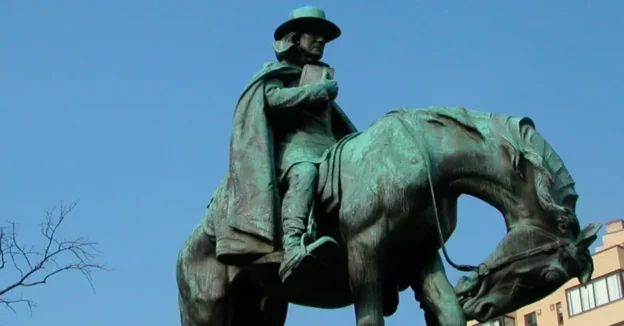
Francis Asbury: Mission Beyond Conflict by Aaron Perry

Regardless of your politics, but dependent on the plans of God, there will be a November 9, 2016. Do you know the day? It’s the day after the United States of America will choose between Donald Trump and Hillary Clinton. Between now and then, there will be a lot of debate, discussion, and Tweeting. But that day will come and, regardless of the victor, the church’s mission in the USA will continue.

Do you have a vision beyond November the 8th?

It’s hard to imagine a more polarizing political atmosphere, but Methodism may have already faced one. John Wesley, no supporter of democracy, was a sharp critic of the war between the colonies and the crown. On the other hand, Francis Asbury was the only British-born itinerant minister to stay in the colonies during the war. Asbury then remained for 30 more years, dying this side of the Atlantic, seeing the Methodist movement become a powerful force; ministering while there were arguments for individual freedom and corporate unity and conflicts between people of Irish and English descent. (For more information, see Bryan Easley, “The Leadership of Francis Asbury,” from Leadership the Wesleyan Way, Emeth Press.) Asbury realized that in spite of the short-term conflict, there would be a long-term mission.

Likewise for any Christians in the USA, without minimizing the importance and efforts that will lead up to November 8, there will be a November 9. There will be a mission that continues. And it is vital that missional seeds are sown even before November 9. This essay tries to outline the current political atmosphere in order to create empathy across political lines to provide space for a November 9 mission, an Asburian vision of a mission beyond the conflict.

Let me begin with a quick historical recount, helping to frame how we have arrived at today. The Modern period is captured in the Enlightenment, the intellectual spirit of the age that reason was the highest authority. It championed critical thinking. The Enlightenment promised a better life through better government, greater personal freedom, medicine, and scientific discovery. It delivered in huge ways. It produced a lot of wealth, health, and possibility.

But not as much as expected. And at times it ran aground. There was WWI and WWII. There was a Holocaust. The great advancements of the Enlightenment also created the possibility for great conflicts and great destruction and death. In light of these derailments, a new spirit, a Postmodern spirit, emerged in the late 20th century. Whatever this age would be, it would not succumb to the arrogance of the Modern period. It challenged the big, bad rationalist account of the world. It saw that all our understandings of reality (even scientific ones) are from certain points of view. It is not that each perspective is not true, but that each is incomplete.

To avoid this arrogant, rationalist, outward turn, the Postmodern period turned inward. Discovering truth in the objective world had led to the control and death of human beings—Berlin Walls, Israels/Palestines, concentration camps, industrialized work and abuses. The inward turn would not let other people discover what it meant to be human; it would allow—even demand—that each person find what it means to be human for him/her/vem/xer/perself. Here was the beauty of Postmodern movement: If the Modern period had the Enlightenment where “rationalist” was the only lens, then the Postmodern period would apply multiple lenses to everything. Each person has a lens and each lens is valid.

The multiple lens approach meant that we would value every lens we could identify: the lenses of being a woman, being gay, being Black, being poor, being an immigrant, being native, and so forth. The more lenses, the better. Many lenses proved to sharpen focus and to examine things from multiple points of view, holding the potential for growth in knowledge, understanding, and progress. However, one unnecessary result was that the value of those sociological lenses that were previously established (wealthy, white, male) were now disregarded—officially, at least. Those lenses were to blame for violence, abuse, and control. Let’s bring this back to the political realm. In politics, the advantage of having a lens that was previously unconsidered was called being an “outsider.” If you weren’t part of the “political establishment,” then you brought a fresh perspective and a citizenry would benefit from such leadership.

Through all of this cultural development, four very important things (among others) happened:
1. Global migration
2. 9/11 and global terrorism
3. Social media
4. Seven Billion Cell Phones

Suddenly, things that were happening all over the world were brought not just into our homes, but into our faces; and not from a framed perspective by news media, but from multiple perspectives from various amateur videographers; and not only were these perspectives from other countries, but they were shared by other people who now lived up the road from us and who worked next to us and who received a burger from us at McDonald’s and who fixed our computer and who built our house and who married our Dad, daughter, or cousin; or who became our MP, Senator, Governor. Suddenly, diversity was not simply a theory that could help bring beauty, technological advancement, and new restaurants; it became a next door reality that became, at least for some people, scary. The world that was imagined in the 1980s and 1990s—a world of peace through multiple lenses—was being threatened. The promise that some had read into Postmodernism—a progressive peace through diversity—was being challenged. Rather than peace, there was more war, closer war, unframed war.

In light of this quick historical recount, let me frame the two political candidates who will be voted on November 8:

1. Donald Trump. The Republican nominee is the result of some who want to be heard again, whose lenses were discarded when others were rising in importance. President Trump represents for many the white, male voice. I know some think the white, male voice has never stopped being heard, but their perspective has lost all power. Remember the credit crunch? Don’t trust the bankers! Down with CEOs! Has anyone ever heard of someone studying “Masculine” or “Man Studies” in University? Mr. Trump is all of the things that capture what people thought stopped being important in the Postmodern turn—and he is a political outsider. Some people remain surprised he has a chance at being President. Quite the opposite is true. If he—the wealthy, white, male, political outsider—hadn’t become an option for President, we should have been surprised.

2. Hillary Clinton. The Democratic nominee is the politician who has moved with the spirit of the age. She works (very hard!) to use every lens that she might encounter—every gender, every woman, every sexuality, every economic sphere. But here’s the irony: The belief that one can hold every perspective means a rejection of those perspectives which do not believe certain lenses exist or that certain lenses are helpful or that holding every lens is advisable or that do not share desires that people with other lenses do. This conflict results in, say, a basket of deplorables problems. Suddenly, lots of people feel unheard, unconsidered, mistreated, and disrespected. Why didn’t they get to participate in what it meant to be human like everyone else did? Why doesn’t their lens count anymore?

Now, note the irony. Mrs. Clinton is herself a fresh lens—the first potential woman president—who purports to value multiple lenses, but she is also the consummate political insider. She is the archetype postmodern politician.

On November 9, the issues that were used to frame opponents, reject candidates, and solidify voting blocs will remain. The election will be decided; the mission will continue. Will we have any Francis Asburys who can see beyond the conflict, to craft the next 30 years of mission advancement? Will we have any Francis Asburys who ministered in the midst of conflict, gave up his status, “[e]mbracing humanity [by] being vulnerable in relationships, finding appropriate ways to connect and relate to others, and learning from their perspective”?

Let me offer several kinds of persons that Asbury might relate to in our day:

People whose previously strong, bustling city has turned to garbage and decay over the last 30 years, while no one has cared to listen to their opinion;

People whose home as a child was far better, safer, and joyful than the house they’re providing for their own children;

People who have started feeling increasingly heard and valued in the last 20 years but who fear it will all be taken away;

People whose life and meaning have been based on ancient values that are now increasingly threatened while they are called hateful and legally forced to separate their personal convictions from how they make their living;

People who have escaped cycles of poverty but who still see their extended family stuck in drug abuse and economic poverty; who worry that they might be drawn right back into these cycles once their playing career is over.

These are people often on different sides of the political fence, but who stand before God’s people for missional service. Will we have any Francis Asburys on November 9, people with a vision for a future beyond the conflict? People with courage of conviction that Jesus is raised from the dead, is the definitive word of God, and whose lives have been transformed and empowered by the Holy Spirit, yet people with humility to sacrifice their status, empathize with another, and relate to those whom God brings into their lives?

Asbury had a vision beyond the war and we are part of his vision bearing fruit. May we emulate his ability to see beyond out immediate conflicts, as well.


Leadership In The Wesleyan Way: Interview with Aaron Perry

Recently Wesleyan Accent spoke with Dr. Aaron Perry on Leadership in the Wesleyan Way, a volume he edited with Dr. Bryan Easley.


Wesleyan Accent: This summer, you and Bryan Easley published a 450-page collection of essays on “Leadership the Wesleyan Way: An Anthology for Forming Leaders in Wesleyan Thought and Practice.” It’s been praised by notable voices like Dr. Jo Anne Lyon and includes essays from familiar names like Lovett Weems, Will Willimon, Laceye Warner and…Calvinist Richard Mouw? Wait, how did you get him on board?

Aaron Perry: Often Wesleyan discomfort with Calvinism  centers on double predestination without considering that there actually is much more to Calvinism.  I heard Professor Mouw speak about holiness and Wesleyan thought at a gathering of graduate students in Indianapolis in 2014. Professor Mouw’s insight in terms of political theology would clearly help form Wesleyan values and effectiveness in mission and, as a result, leadership. I find this unique article a helpful appreciation and challenge of forms of revivalism and how it can be a help and hindrance to leaders. Yet, Dr. Mouw clearly appreciates the theology of a warmed heart and how personal transformation is vital to the leader’s effectiveness.

WA: What inspired you to collate thoughts particularly on leadership in the Wesleyan way, rather than to write a book on leadership and Wesleyanism? Why a collection; why leadership?

AP: I was preparing for my comprehensive exams for my PhD in Organizational Leadership. I envisioned a collection as getting the best of the preparation I was doing—having others write in their interests and strengths while I was studying! When people write in their strengths and interests, they often utilize their own experience, as well. During my doctoral work, I taught adult ministerial students. I encountered students who were bright, focused, and motivated, yet they were apprehensive about formal education. I saw an opportunity to combine scholarly work that would engage a variety of readers. We wanted a book that would help practitioners think and thinkers practice.

WA: How would you describe John Wesley’s leadership? How would you describe the impact of his theology on the practice of leadership?

AP: John Wesley modeled a deep connection between practice and reflection. One cannot be a Wesleyan and sit idle in the face of brokenness in the world. John Wesley’s leadership was intensely practical, aimed at making differences in the lives of everyday people. At the same time, Wesley’s leadership led to long-term strength through the bands, classes, and societies. Wesley’s belief in the whole gospel for the whole world had a deep impact on the wideness of leadership potential he saw in a variety of people.

WA: The book includes sections on “Wesleyan Leadership in the Postmodern World,” “Biblical and Theological Reflections,” “Historical Perspectives,” “Leadership Theory and Principles,” and “Leadership in Ministry.” Why do you think Wesleyan theology especially has resources to contribute to these discussions? Do you think Wesleyan contributions have been overlooked in the past?

AP: I am more convinced that Wesleyan theologians have something to say on the topic, beyond simply Wesleyan theology. There have been strong and important Wesleyan voices in the past, but the nature of leadership is that a new word is always being spoken in light of God’s ongoing activity in the world, building on established structures, tackling problems that could not have been tackled before, and engaging challenges that have not previously existed. Wesleyan theologians must speak from their roots and tradition, but while being aware of their own contexts—geographical, economic, cultural, etc. The result, I believe, is a variety of perspectives and emphases from a common tradition and set of values.

 WA: Was there anything that surprised you both as you edited this collection-insights or reflections you didn’t anticipate? What did you learn about leadership in the Wesleyan way?

AP: I was not surprised by anything—by which I mean, I found what I expected to find: Wesleyan scholars and practitioners who had reflected deeply on the subject of leadership beyond quick-fixes or simple solutions, while at the same time with a deep appreciation for actionable insights. I found scholars who were deeply involved in the formation of persons into the image of Christ and were interested in leadership as it could facilitate the global parish vision. I was, however, pleasantly surprised at the way the book was received and promoted—and, of course, I hope that continues!


Dr. Aaron Perry is Assistant Professor of Christian Ministry and Pastoral Care at Wesley Seminary in Marion, Indiana. He is an ordained minister in The Wesleyan Church.

Metaphor And Love by Aaron Perry

I can still see them. More than that, I can still sense them: The images from the first horror movie I encountered, unwittingly, at five or six years of age. This is more than a little disconcerting considering the images are rooted in the organ with which I make life’s major decisions. My brain is shaped, literally, with these images. Our brains contain images that, whether we want them to or not, facilitate our decisions and interpretations. Images are not simply pictures—which is why I can sense more than see the images from that horror movie. Including pictures, images are ideas, concepts, and representations. We try to harness image-power by using them to form our thoughts, to convince others, to explain to our children. We deploy these images everyday and often without thinking. They are called metaphors.

Metaphors are gifts of God.[1] Depending on their quality, metaphors either help us to think well or to think poorly. As a result, we must be careful which metaphors we use and which metaphors are already embedded in our thinking. Sometimes metaphors are found in just one or two words, shaping our thoughts and theology without us even realizing it.

This use of metaphor happens in our theology of love and law. How does love relate to the law? Or, to put it another way: What is the expert in the law doing when he answers Jesus’ question about the contents of the law, by saying we should love God with all our heart, soul, mind, and strength and neighbor as one’s self (Luke 10:26-27)? Or, what is John Wesley doing when he described love as “all the commandments in one”?[2] He was not original in the description, but merely following Paul’s famous words that all the commandments may be “summed up” as “Love your neighbor as yourself” (Romans 13:9).

It’s a challenging question—this, “What are they doing?” question—because we do not think without metaphor and, having grown so accustomed to metaphor, we may not recognize one when it is present. Perhaps Paul’s answer helps us see how metaphor influences our love and law theology. Paul’s metaphor is clear, even if we missed it. He uses a mathematical image to explain how the law relates to love: the commandments are summed up as love.[3] It is the metaphor Wesley wisely used. And it should challenge our metaphors of love and law.

It is tempting to shift metaphors when it comes to love. Have you ever heard the expression, “It all boils down to….”? The phrase is meant to capture (another metaphor!) the simplest reading of a complex situation or text. And boiling is a metaphor—a picture that may slip into our minds without us being aware. When my wife makes a sauce, it often involves boiling. Into the pot go the tomatoes or the apples and the combination of heat and water refashions the fruit into another (soon to be delicious) form. You may have heard—or even used—this metaphor to relate the law and love. “The law all boils down to love.”

But this is not the metaphor Paul uses. It is not a good metaphor. It is a dangerous metaphor. The boiling process, if left unchecked, will not stop at apple sauce, ready for my pork chop. No, unchecked boiling produces a charred mess—black, indistinct, unrecognizable as the fruit it once was. When we relate love to the law as a “boiling down,” we risk making love unrecognizable—removed from actions and form which it once entailed.

The temptation to boil the law down to love is strong for Christians in a pluralistic world, especially as we seek common ground with people of other faith—or no faith. The metaphor of boiling makes clear what happens with one strain of improper metaphors, but there are others. Whenever love promises to be the base reality of the moral law, then a boiling metaphor is in use. It can be expressed as, “it all comes down to love” or “love is the common ground.” “Love” promises to be the grand unifying theory of humanity. “At the heart of the matter,” (another metaphor) we are tempted to think, “is love. By focusing on love we can find unity with anyone and everyone.” The Beatles, perhaps, said more than they intended with the catchy refrain, “all you need is love.” The song’s verses are replete not with descriptions of love, but with negative phrases: “There’s nothing you can do that can’t be done / There’s nothing you can sing that can’t be sung / Nothing you can say but you can learn to play the game / It’s easy.” Hidden within the song is the boiling metaphor: everything you do can boil down to love—regardless of the form.

But here’s why the metaphor is so wrong: the law does not boil down to love. Love is the summary of the law. When you add 3+5+7 you get 15 and if you take something away from the left side of the equation, you don’t get 15 anymore. Likewise, if you take something away from the law, you don’t get love anymore. Love is the summary of the law. Love contains all components of the law. If you want to love, put all these things together. If you want to love, it means not having gods ahead of the true God and honoring your father and mother and not bearing false testimony and not coveting, etc. These commands do not boil down to love; they add up to love.

The law is perfectly put together—fulfilled—in Jesus. Love is not the unifying trait of human beings; it is the nature of the Triune God. Love is not the vindication of a human race that really is, deep down, at one; it is the vindication of the Three-in-One God. The unity of the moral law, fulfilled as love, is not found when the law is stripped away but when the law of love lifts our eyes to the unified God.[4]

Do you see why the metaphors we use are important? If the law all boils down to love, then the distinctive of the Ten Commandments and the moral law and the life of Jesus are inconsequential to the form of love. Not only inconsequential, but potentially misleading. Everything but love can and must be removed for us to get to love. We’ve got to boil the law out of love. But in this boiling process, love is left without form, without taste, without color, without texture. It is left, as the boiling process eventually does, as a scorched mess. But if love is the summary of the law, then the commands of God and the life of Jesus are necessary to understanding love. And as the life of Jesus is shaped in us, we will be formed in love and “[t]he one perfect Good shall be your one ultimate end. One thing shall ye desire for its own sake—the fruition of Him that is All in All.”[5]


[1] Colin Gunton’s brilliant, The Actuality of Atonement (New York, NY: T.&T. Clark, 1988) helps in two ways, first to show us how metaphor is used constantly in everyday language and, second, to remind us that metaphors are gifts of God to help us, not human inventions to strive for God.

[2] John Wesley, “Circumcision of the Heart,” http://wesley.nnu.edu/john-wesley/the-sermons-of-john-wesley-1872-edition/sermon-17-the-circumcision-of-the-heart/.

[3] Oliver O’Donovan, Finding and Seeking: Ethics as Theology vol. 2, Grand Rapids, MI: Eerdmans, 2014, pp. 199-200.

[4] Oliver O’Donovan (Finding and Seeking) writes, “The teaching of a unified moral law is the vindication of monotheism” (p. 201).

[5] John Wesley, “The Circumcision of the Heart,” http://wesley.nnu.edu/john-wesley/the-sermons-of-john-wesley-1872-edition/sermon-17-the-circumcision-of-the-heart/

Do We Create Ourselves? What It Means To Be Human by Aaron Perry

The global West’s current fundamental battle of narratives is whether or not there is a context to being human. The Christian (and Jewish) narrative, of course, affirms a theological context: human beings are made in God’s image. The conflicting contemporary narrative, growing with uncritical acceptance, is the denial of God’s image—or any image. Instead, this competing narrative argues that human beings invent their own image. The only context that exists for being human is that there is no preceding context for being human.[1] Not biology, not theology, not genetics.

This open context is what sets humans apart: in order to be human, one must be able to invent what it means for one to be human. Even more, it seems: the greater the reinvention, the greater the humanity ascribed to the one doing the self-inventing. The lionization of euthanasia as the final courageous act; the mixture of sympathy with sadness for the one who chooses suicide; the trumpeting of Choice! in the abortion debate all affirm that one’s ability to invent his or her own life—what it means for them to be human—is of ultimate importance. Even if the choice being made is not widely understood, we see value in the person being able to decide for themselves. It also means that if one is very young, very old, or very sick—and hence without the power to (re-)make oneself, then their purchase on being human may not be worth as much as it once was (or would be, given time).

This is not a battle of narratives in which one may tell and let-tell. No, these are competing narratives. And they are at war. The activity of the hard left, meant to empower the person to act without restrictions, necessarily curtails all forms of authority—parental, governmental, ecclesial—so that the individual may flourish. This is a fundamentally atheistic theology: in order for there to be an authority in the individual to select their own human-making image, there must be the death of any and all outside authorities. Sartre’s legacy lives on!

With this in mind it is clear to see why, in the postmodern world, there is a rejection of, or at least decreasing interest in, the afterlife. Since death is the end of one’s human life, then it is the end of one’s ability to invent him- or herself. If there is life-after-death, then there is a greater context than simply one’s absolute autonomy. Note the dilemma: If there is an afterlife, then the self is not free to invent their own image (because death has not been the end of the self); if there is no afterlife, however, then the self may be free to invent the self, but without eternal meaning. In the face of this dilemma emerges the Facebook selfie with the caption, “YOLO!” (You Only Live Once).

The reinvention of human beings in light of sexuality provides the clearest example. Bondage. Submission. Power. Flesh. Sacrifice. The words are as powerful today as when John Wesley was using them with frequency, but for something radically different.

Wesley used the words to describe humanity’s fallen state, death in sin, and inability to love God and others. Wesley saw submission to God as the way to freedom from bondage, and the sacrifice of one’s fleshly desires as the way true power. Today, however, submission, bondage, and flesh do less to describe the spiritual life and more to describe one’s sexual desires. The stronger drive is not to rid oneself of inappropriate desires, but to find ways such desires can be fostered in secret and/or with willing participants.

We have modified the Kantian ethic that we should never treat people as means and always as ends, by adding a short rider: People should never be treated as means and always as ends, unless they desire to be a means. Human beings ought not to be means to ends unless they so choose. People can choose to be means if that is their way of being human. There is no moral guideline but the affirmation that one can choose their own context for being human so long as it does not impede another’s context—unless an outside impediment is the context they want. (Take a moment, listen to Hozier’s “Take Me to Church” and you will hear what I mean.)

In the face of these developments, we can turn to Wesley. Specifically, we turn to Wesley’s critique of reason.[2] One of the critiques Wesley leveled against reason was that reason could not produce faith. By this critique Wesley meant that reason cannot produce a firm conviction in or understanding of the invisible world. He suggests his readers put reason to the test, urging them to try reason out for this purpose: see if reason can produce a conviction of the unseen!

Perhaps Mr. Wesley would urge a similar undertaking for those attempting to understand or invent a human being without theological context: see if human reason alone produces faith—a conviction or understanding that claims purchase for the whole of reality. In the face of this challenge to stretch the bounds of reason, though, Wesley offers this caution: “You may repress [your doubts] for a season. But how quickly they will rally again, and attack you with redoubled violence!”[3] No less stunning and incisive a critique today than it was in the 18th century, personal satisfaction took the brunt of Wesley’s challenge. He knew where to challenge the worldview of his contemporaries and we can alter it to our current context: Even if biology no longer presents a context for being human, one’s personal satisfaction, lived out over time, just might. How poignant, then, the observation of comedian Louis CK: “Everything’s amazing right now and nobody’s happy.”[4]

At this point let me offer a “perhaps.” Perhaps the reason for the current anthropological narrative equivalent to Burger King’s “Have it your way” campaign is the fact that it deals with suffering and with guilt. First, this narrative handily dismisses guilt. If one is empowered to choose for him- or herself then people with power may hold others less and less responsible for their own happiness. Every man and woman has become an island, equipped with internet, cable television, Facebook, and, just in case, Ashley Madison. On this island, no one else bears responsibility for another’s self-fulfillment. Where there is power for one’s own self-action, there is also absolution for any sin. I am not responsible to another if they have the power of self-creation. Any failure to thrive is the other’s burden. After all, they have the power to create their own context and I bear no responsibility to them. As such, when there is equal power, there is no such thing as guilt.

Second, perhaps this narrative is appealing because it helps human beings to understand suffering. Always a challenge in the Christian worldview of the omniscient, omnipresent, and omnipotent God, suffering remains a challenge in the atheistic worldview. But it is not a rational challenge. There is nothing incoherent about suffering in a world without God. Instead, it is an existential challenge. In this worldview, as we have seen, death is not necessarily our enemy but the confirmation that the self is one’s own standard of authority. But if death is not the enemy, then what is? Suffering. Death is not the final enemy to be overcome, as it was for Saint Paul; no death is the final and necessary validation for inventing one’s own context—and ending it as one pleases. In the unexpected reconciliation between human beings and death, suffering has emerged as the universal enemy. And so we must help people out of any and all forms of suffering because suffering threatens the human image, unless, of course, suffering is chosen to be the context one chooses. Suffering, unless chosen, must be avoided.

Yet here we see an opportunity for Christian witness. In a culture concerned with the pragmatics of its studies—how do I avoid suffering?—the articulation of a Christian anthropology—human beings are made in the image of God and happy is the one who fosters this image—will be ineffective in witness in the short term but effective in the long term as people see a Christian anthropology lived out. Remember that it is by witnessing the death of Jesus that the Roman centurion becomes the first human in Mark’s Gospel to confess that Jesus is the Son of God. Suffering is not to be avoided. No, it is a sign of endurance—and one of the greatest manifestations of the image of the long suffering God. Anglican theologian Oliver O’Donovan captures it precisely: “Suffering is not a failure or degradation of [a human]…; it is an endurance of affliction, and the good of [humanity] displayed through endurance, too.”[5]

Suffering is not the enemy, but it is a sign of an enemy. So, do Christians ignore and forget those in suffering? No, of course not. Christians recognize that some suffering simply cannot be alleviated without rejecting the theological context of being made in God’s image. As such, the rationale, and parameters, for the alleviation of suffering is different. Christians minister to the suffering one not because suffering threatens the identity which they would take for themselves, but because humans beings are made in God’s image and are never lost from this royal position outside their own permission. Where suffering can be alleviated without denying this context, then it is, in part, a living out the image of God—a symbolic, imperfect, incomplete expression of the God who heals. Where suffering cannot be alleviated without denying this context, then there is reaffirmation that the one suffering remains made in God’s image.

The Western world is currently taking up Wesley’s challenge of using reason to demolish any and all barriers to the context of being human. In due time it will see how well (or poorly) this narrative works. And gradually there will be a decline in this narrative because it will fail. As we await this failure, Christians must maintain and practice a Christian anthropology. We must continue to tell the story that there is a context for being human. We are not made in the image of our choosing, but in God’s glorious image.

We can only tell this story as we live it. Christian anthropology is lived out through lifelong testimony of enduring suffering and patiently, symbolically, and lovingly ministering to those who are suffering. This narrative will only be effective over time because there really is a context to being human. The world is not looking for yet another story to make them happier; it is looking for a story that will hold true when all other stories have fallen apart.


[1] Stanley Hauerwas calls this the project of Modernity, with a typical memorable Hauerwasian phrase, that I have adapted: “[People] should have no story except the story that they choose when they had no story.” http://www.abc.net.au/religion/articles/2013/07/02/3794561.htm.  Accessed Sept 8., 2015.

[2] John Wesley, “The Case of Reason Impartially Considered.” http://wesley.nnu.edu/john-wesley/the-sermons-of-john-wesley-1872-edition/sermon-70-the-case-of-reason-impartially-considered/. Accessed September 8, 2015. I am indebted to Chuck Gutenson for turning me to this line of thinking.

[3] Ibid.

[4] https://www.youtube.com/watch?v=uEY58fiSK8E

[5] Oliver O’Donovan, Finding and Seeking, Grand Rapids, MI: Eerdmans, p. 91.

Deathless Death: Take Me To Church by Aaron Perry

“Something in you dies when you give yourself indiscriminately to gluttony, whether in food, drink, or sex.”[1] While it was New Testament scholar N.T. Wright who wrote that, it could just as easily have been written by singer-songwriter Andrew Hozier-Byrne (“Hozier”), as commentary on his song, “Take Me to Church.” The only difference is that Hozier celebrates this kind of “deathless death.” Wright does not. Neither do I. I think it’s God’s grace. I also think it is Wesleyan theology.

John Wesley was a eudaemonist. This means he was focused on happiness. I first heard this notion when I chanced to encounter Burrell Dinkins and the sermon he preached through an online chapel service from Asbury Theological Seminary.[2] Well, maybe it wasn’t chance, but a kind of prevenient grace. Dinkins captured something that was just beginning to emerge in my theological convictions in my first days of pastoral ministry: holiness—a life devoted to God—is the path both of and to happiness because it is the path to God.

But not all walk the holiness path. And sometimes the amount of sacrifice offered by the desperate traveler down a path that once promised happiness makes for a more determined traveler. Wright names three of the paths people plod in pursuit of happiness: food, alcohol, and sex. Hozier’s “Take Me to Church,” luring, rich, and haunting in melody and voice, is like a determined traveler calling heartfully from far down the path of sex-as-happiness. Its conviction and eerie beauty is undeniable. Go to YouTube and listen to the song, but refrain from watching the video for the moment; it has a narrative of its own. You’ll hear what I mean.

Hozier wrote the song about his first breakup and the importance of sexuality in being human. “Sexuality, and sexual orientation—regardless of orientation—is just natural.”[3] It seems the expression of sexuality is the experience of heaven. From “Take Me to Church”:

My church offers no absolutes 
She tells me ‘worship in the bedroom’
The only heaven I’ll be sent to
Is when I’m alone with you
I was born sick, but I love it
Command me to be well
Amen. Amen. Amen 

Church, worship, heaven, amen. Religious words and divine experience interact clearly and seamlessly. Hozier makes it explicit: “an act of sex is one of the most human things. But an organization like the church, say, through its doctrine, would undermine humanity by successfully teaching about sexual orientation—that it is sinful, or that it offends God. The song is about asserting yourself and reclaiming your humanity through an act of love.”[4]

But the context of the song betrays this line. “Take Me to Church” does not speak of asserting oneself, but of offering oneself to the female goddess that is his lover. “If I’m a pagan of the good times / My lover’s the sunlight / To keep the Goddess on my side / She demands a sacrifice.” This leads into the doubly paradoxical conclusion: “Offer me that deathless death / Good God, let me give you my life.” It is paradoxical in “deathless death,” but also in the giving and taking: life is given and simultaneously taken.

Hozier further clarifies this deathless death: “I found the experience of falling in love or being in love was death—a death of everything. You kind of watch yourself die in a wonderful way and you experience for the briefest moment—if you do believe somebody and you see for a moment yourself though their eyes—everything you believed about yourself is gone.”[5] It seems that death comes at the hands of the lover. “Take Me to Church” vividly captures how sharing oneself in the relationship leads to this kind of (sacrificial) death: “I’ll tell you my sins and you can sharpen your knife.” So, why would Hozier agree with Wright’s analysis of indiscriminate giving? Because Hozier believes that something in you dies when you give yourself in the human act of sex.

Yet when there is a kind of relationship, let’s call it consensual, this death must go both ways. The lover becomes not just the one who gives their life, but the one who takes the other’s life. Perhaps the song’s video inadvertently captures this paradox as well, as one gay lover looks on in helpless dismay at his seemingly unconscious or dead lover at the end of mob violence perpetrated because of their forbidden relationship. (You have probably already watched the YouTube video, but if not, then go watch it and you’ll see what I mean.) The lyrical memorability and melodic thrust of the song capture the reality that it could be either lover in a relationship who vocalizes the message of the song. This mutual deathless death is the closest you get to love and happiness on the sex-as-happiness path.

So, how might Wesleyan theology engage this sex-as-happiness path? Wesley shows how certain pursuits of happiness have the adverse effect:

You seek happiness. But you find it not. You come no nearer it with all your labours. You are not happier than you was (sic) a year ago. Nay, I [expect] you are more unhappy. Why is this, but because you look for happiness there, where you [know] it cannot be found? Indeed, what is there on earth which can long satisfy a man of understanding? His soul is too large for the world he lives in. He wants more room.[6]

The sex-as-happiness path is not wrong because sex is bad and sexuality is shameful. Far from it! The sex-as-happiness path is wrong because it comes to an end. The path simply is not long enough. Sex is not enough. For Wesley, false paths to happiness are not simply dead-ends, though; instead, all shortcuts to happiness lead to hellish misery:

I entreat you to reflect, whether there are not other inhabitants in your breast, which leave no room for happiness there. May you not discover, through a thousand disguises, pride? Too high an opinion of yourself? Vanity, thirst for praise, even (who would believe it?) of the applause of knaves and fools? Unevenness or sourness of temper? Proneness to anger or revenge? Peevishness, fretfulness, or pining discontent? Nay, perhaps even covetousness. And did you ever think happiness could dwell with these? Awake out of that senseless dream. Think not of reconciling things incompatible. All these tempers are essential misery: so long as any of these are harboured in your breast, you must be a stranger to inward peace. What avails it to you if there be no other hell? Whenever these fiends are let loose upon you, you will be constrained to own, ‘Hell is where’er I am: myself am hell.’ [7]

To keep with the theme that Hozier introduced, this potential for hell on earth is why orthodox Christians maintain the traditional view of marriage and sexuality. While Hozier seems to equate an act of sex with an act of love in the interview with “The Cut” quoted above, Christian theology works to determine when an act of sex is an act of love in order to keep sex an act leading to happiness. Or, as writer Christopher West put Pope John Paul II’s theology of the body, “the problem with pornography is not that it reveals too much of the person, but that it reveals far too little.”

While there are different applications and important differences regarding sexual ethics within various minor and major Christian traditions, Christian theology broadly affirms that sex between a man and woman in a marriage relationship is the context where sex is act of love precisely because it is the relationship where one lover may give him- or herself without the other taking this life. Far from the relationship of goddess/god with sharpened knife demanding sacrifice in “Take Me to Church,” faithful marriage is the relationship where sex does not lead to a deathless death, but to life—most explicitly in the flesh-and-blood life of the child who becomes the symbol and reality of the mutual self-giving of two lovers.

The holiness-as-happiness path does not end in the same way that sex-as-happiness does. The holiness-as-happiness path does not end at all, really, because it is the path to God, the source of life and life to the full. God does not offer a deathless death, but endless life in resurrection. That’s the path of happiness. To trod that path? To read those lyrics? To hear that song? Take me to church.


[1] N.T. Wright, Paul for Everyone: The Pastoral Letters, SPCK: London, 28.

[2] http://place.asburyseminary.edu/ecommonsatschapelservices/992/

[3] http://nymag.com/thecut/2014/03/qa-hozier-on-gay-rights-sex-good-hair.html

[4] Ibid.

[5] http://www.irishtimes.com/culture/music/hozier-i-m-still-figuring-it-out-i-m-still-figuring-myself-out-1.1933663

[6] Wesley, Works. Volume 5, p. 137.

[7] John Wesley, The Works of John Wesley. Volume 5. New York: Emory and Waugh, 1831. “A Farther Appeal to Men of Reason and Religion,” p. 138.