Tag Archives: Leadership

The Courage To Be: Conferencing And The Kingdom Of God by Elizabeth Glass Turner

While United Methodists spend a great deal of time, money, and energy attempting to shape potential outcomes of the specially called 2019 General Conference in St. Louis, it is quite possible that the conference most potently rocking the Kingdom of God already took place in St. Louis over the summer.

The fate of the United Methodist denomination is not unimportant; but perhaps neither is it as vital as we sometimes think; after all, the connection is only about 50 years old and is only one expression of global Wesleyan Methodism. No, the fate of the universal church does not hang on the continued existence of the United Methodist Church, as I’ve written elsewhere. And on this website, we feature contributors from a variety of Wesleyan Methodist denominations. Certainly, the UMC has value – I mean ecclesial value, not just net worth, which bears pointing out in days when talks of formal separation are occurring.

But the Kingdom of God is far more expansive than any one denomination or tradition.

And one might well wonder if a modest St. Louis conference last July is the first ripple of an expansive, if demanding, movement. The leadership of the Revoice Conference represented several Christian traditions, Protestant and Catholic, Episcopalian. Over 400 people were present, and thankfully, Revoice leaders made plenary and pre-conference sessions available – for free, and thank you for that, conference organizers – on YouTube.

As the official website states, “The annual Revoice Conference is a gathering designed to encourage and support gay, lesbian, same-sex attracted, and other gender or sexual minority Christians who adhere to traditional Christian teaching about gender, marriage, and sexuality. General sessions offer opportunities to worship together with other likeminded Christians, and workshops cover a variety of topics, aiming to encourage and support gender and sexual minorities in their efforts to live faithfully before God. We also offer workshops for straight family members, friends, pastors, and other faith leaders, helping them to understand the challenges that gender and sexual minority Christians face in their faith communities and society at large and equipping them to respond with gospel-centered compassion.”

In our current cultural moment, reaction was swift from all different directions; critiques were levied at organizers, either because they were promoting celibacy, or because they chose to use phrases like “gay Christian.” In this sense, rhetorically they couldn’t win. In another sense, when one watches the plenary sessions, it’s clear that in a deep, profound, cosmic sense, they couldn’t lose. Such is the nature of chosen sacrifice. At the time, Twitter went into overdrive, and allies cropped up in figures like Southern Baptist professor and writer Karen Swallow Prior, who, despite having recently been hit by a bus – by a bus – took to the organizers’ defense.

After watching the three general sessions, here’s what I came away with:

Humility. The sweet spirit and bold courage of each presenter was evident. Each had the courage to be…well, to be. To be themselves, in their own skin, with their own stories, in the context of a great and loving God of transformation. I was humbled, watching these siblings in Christ who knew critics of all stripes were ready and waiting to dismantle their very personal testimonies and communal convictions.

Deep sadness. The conference was organized wisely around three hubs: praise, lament, and hope. This ordering makes sense, I think, for participants. For viewers who are straight, I think I’d recommend watching in the order of hope, praise, and lament: we need to sit a while with lament and not hurry through it. I was grieved, and I think you will be too, as I listened to testimony of lament – and it is powerful testimony.

Hope. Not everyone will agree with the theological beliefs that ground this conference. But I was encouraged to see that in a cultural moment where so much seems defined by polar opposition, here something grows that is unique, different, and beautiful. It does not particularly fit one mold, because it seeks to follow Christ as best it knows how, and following Christ means you simply can’t be pigeonholed.

Much of the work of this conference is based on the thinking and writing of New Testament scholar and Anglican celibate gay Christian Dr. Wesley Hill, who has authored a couple of books on the subject and has a website here. His excellent discussion topics frequently have the sting of intellectually honest analysis; he has a high view of scripture; he believes in the great tradition of the church; he has experienced mistreatment from within the church. There is a great deal here that will strike to the heart either of progressive or conservative readers.

The Spiritual Friendship website, which features multiple contributors, gives space for ongoing discussion about Christian community, friendship that is robust or even as I would describe it (I don’t know if he would) covenantal, service, and hospitality. Because as unique as this venture may sound to 21st century Western ears, in fact, there is a rich tradition of Christians choosing to live celibate lives and to serve others and the church through that. So too are there meaningful examples throughout Scripture and church history of deep friendships that sustain us in our need for human relationship.

What the Revoice Conference has given us, in part, is a potent call to receive the leadership of this ecumenical group of Christians who are wrestling through theology, philosophy, Scripture, and tradition as they exercise the courage to be. For a long time, straight Christians have spoken to topics of human sexuality. We are not in the wrong to do so. However, through gatherings like Revoice, the Holy Spirit is asking us if we are ready to listen and learn from the spiritual depth of our Christian siblings who are leading intentional, deliberate, and sacrificial lives.


Preaching For The Long Haul: How To Find Your Voice by Andy Stoddard

My first appointment out of seminary was the hardest appointment that I’ve ever had.  It wasn’t because the people were hard to pastor: they were some of the sweetest people I’ve ever had the pleasure of serving.  It wasn’t because the church was located in a bad place: it was out in the country, a beautiful church and beautiful parsonage.  It wasn’t because the pastor I followed was troublesome: in fact, he became and remains one of my closest friends.

It was because I had not yet found my preaching voice.  I, like most United Methodist preachers, took homiletics – preaching – in seminary.  It was perfectly fine.  I did fine in it.  My lack of voice wasn’t the fault of my seminary education. It’s just that I did not know who I was in the pulpit.

The churches I served during my seminary years were wonderful, they loved me and I loved them.  But my great responsibility there was pastoral care.  In this appointment, I had to preach.  The people there expected a good sermon.  And my friend whom I followed is the best pulpit preacher in the Mississippi Annual Conference.

At that point, young in my ministry – and I’m not being falsely humble – I was not a gifted preacher.  It wasn’t because I didn’t try: I did.  It wasn’t because I wasn’t praying: I spent hours praying over each message.  It wasn’t because I didn’t care: I worried about every word I would say.

I wasn’t lazy.  I wasn’t unspiritual.  I wasn’t uncaring. I just couldn’t preach.

So what did I do?  I kept at it.  I listened to sermons of those I admired.  I read books.  I prayed.  I worked.  I tried things.  I experimented.  I got loud. I got quiet.  I got high church. I got low church.  I followed the lectionary. I preached through books of the Bible. I created themes.  I did everything I could think of until one day I found it.

I found my voice.

My voice is this:

I love humor.  I love CS Lewis. I love personal experience.  I am transparent, but I do not treat the sermon like the therapist’s couch.  I wander around, I don’t stay behind the pulpit.  I preach without notes, but my sermon is not memorized: I say it is internalized.  I really love Jesus, and I want you to as well.  I believe in hell, but I’m not a hellfire preacher – Romans 2:4 says that we are driven to repentance by the kindness of Christ.  I believe in transformation. I believe in grace.  I believe that when the word is proclaimed, each time lives can be changed.

I found my voice.  I have never departed from it.  My wardrobe has changed; I’ve preached in suits, robes, and blue jeans.  Many things have changed about my ministry.  But what hasn’t is my voice.

How did I find it?  How do I keep it?

First, I do my very best to be authentic.  I don’t have a preacher voice and a real voice: I have my voice.  I try to preach like I talk.  I am just me. I like Marvel. I like Star Wars.  I talk about them in my sermons. I try to just be a normal person who loves Jesus and loves people.  I am unafraid to talk about what is really going on my life, while not airing my dirty laundry.  I am simply Andy Stoddard and I try to preach while remaining who I am.

Second, I know that I am imperfect, and I am not afraid to try to get better. I talk too fast.  I always have, probably always will. I work on it.  I try hard not to.  But when I get excited and start “hollering” (what my music minister calls it) sometimes I speed up.  I know it and I work on it.  The hardest thing for a preacher to hear sometimes about a message is criticism.  It’s hard for me to hear, but I need it I want people to know Jesus, and I know that the sermon is a great tool in that, so I want to know where I can get better.  I want to know where I can improve. I don’t always like it, but I need it.

Third, I follow a plan. Sometimes it is the lectionary, but not always, and not normally.  We’ve just finished eight weeks in Philippians at St. Matthew’s.  We are entering into a series on fear and commitment now.  Next month we’ll be in the lectionary and will stay with it through Advent.  What I do not do is just pick a passage of scripture at the last minute. I pray about where my flock is at this moment. Where am I at this moment?  I talk with my associate pastors: what do they think?  What feedback do they have?  And then I plan at least a month out what we will preach on.

Fourth, I know my people.  Preaching is an act of pastoral care.  For me to properly share the word with my people, I must know them and love them.  They must know that I love them.  I am their shepherd.  Preaching flows from my love of God and my love of my people.  What do they need to hear to grow?  Sometimes it’s encouragement.  Sometimes it’s a kick in the pants.  But it always comes down to what I feel they need to hear.  My pastoral heart guides my preaching.  My people know I love them and because of that, they are more likely to listen to what God wants to say through me.

Last, I say what Jesus wants me to say.  The scariest as well as the most exciting moment of ministry is when you get up to preach on Sunday and the Lord says nope, you’re not preaching that.  In fact, you are preaching this right here. That has only happened to me about four or five times in twenty years of ministry, when God has upended my preaching.  Even though it cuts against the grain of what I do, I always follow in those moments, because my preaching is not about me or what I want to say.  One of my professors in seminary used to say that the preacher needs to be able to say, “thus sayeth the Lord,” knowing they are saying what God wants, not what they want.  That is my mission each week in the pulpit.  What does God want me to say?  Will I say it?  That’s my job.

In the end, I’m an adequate preacher.  There are folks worse than me and there are many, many, many who are better than me.  I have worked hard at this calling, though. The best words about preaching were said by Dr. Harold Bryson, Professor of Homiletics at Mississippi College: “Prepare like it depends upon you.  Preach knowing it depends upon God.”  I’ve tried to do that within my ministry and I believe it is key for all of us preachers.  Let’s do our job.  But we know that the harvest, the revival, is God’s.

Also, take heart! If God can speak through Balaam’s donkey, God can speak through any of us!

Dear Millenials, I Was You Once by Elizabeth Glass Turner

Dear Millenials,

I was you once.

People wanted to know what I thought. They wanted to know what I wanted to buy. They wanted to hear what I was looking for in a spouse, in a career – in a faith group. They talked about me in the news, they studied me to see which way I was likely to turn, they taught older people in churches about me: how to attract me, keep me, and prepare me to take over.

They were glorious days.

It was 2003.

I was the future of The Church, and The Church was going to crumble without me. (And I wasn’t even male!) Books were written by the cartload about Generation Y and the Emerging Church. What was emerging? Everyone wanted to know. No one knew exactly what, philosophically, postmodernism was (or wasn’t), or how, culturally, it would play out. The new Millenium was still pretty shiny, not long out of its box, and some trends were emerging. Trends were emerging, and they needed to be analyzed and utilized, stat, with urgency, or This Generation Would Be Lost, The Church As We Knew It Would Die, and We Would Fail the Great Commission While Also Failing to Be Cool Enough to Make It Attractive.

These were the days of corduroy and pseudo-bowling shoes, of iPods and the war in Iraq, of Gilmore Girls and emo music. The internet was still new-ish, a high school student named LeBron James was ready to join the NBA, the iPhone wouldn’t come out for several more years, Ellen DeGeneres was launching a new talk show after lying low for several years following the firestorm of her public coming out in 1997, and Mark Zuckerberg was still on good terms with the Winklevoss twins, though not for long.

The world was changing and the message was clear: adapt or die! We’d all seen You’ve Got Mail. We knew that print was dead and everything could now be done online. We knew that church services needed to be rich and multi-sensory, with dim lighting or mysterious incense or immersive participation. We knew that authentic expression of our emotions was important. It was time for conventional wisdom to be overturned. Generation Y was tired of The Church doing it wrong and squandering wasted opportunities.

From about 2003 to 2010, books kept churning out on Generation Y and the Emerging Church.

You see, we knew.

Except of course we only knew a little. The internet was going to be everything – but now, Amazon has brick-and-mortar stores. Immersive sensory worship was going to replace shiny fake productions – but now autistic people find immersive sensory worship intolerable. We thought we were authentic; but scandals lurked, hidden in our hip worship environments.

But it gets worse. It’s not just that we were only partially right – or perhaps, that we were right, but with limited perspective.

No, it got worse. You see, you came along. And the problem isn’t that Millenials are a problem. The problem is that you were the new us.

Youth pastors tossed their books about Generation Y into the trash, church leaders forgot about the Emerging Church, and front office workers started lining up conference speakers who could explain about the new generation we would all need: the Millenials. Generation Y turned 30, started buying infinity scarves at Target, and began to broadcast themselves in a million and one podcasts.

But these? These are the days of skinny jeans and mermaid hair, of Snapchat and protest marches, of Girls and Hamilton. Smartphones are still new-ish, LeBron has left Cleveland for the second time, virtual reality sets are popular Christmas gifts, the Obamas have retired from the White House, Ellen and Portia are a popular Hollywood couple, and Mark Zuckerberg left Harvard long behind to testify before Congress about how his social media platform could be hijacked by foreign interests to impact U.S. elections.

Now you are the future of The Church, and The Church is going to crumble without you, books are being written by the cartload about Millenials. What is emerging? Everyone wants to know, you see. No one knows exactly what will play out. Trends are emerging, and they need to be analyzed and utilized, stat, with urgency, or This Generation Would Be Lost, The Church As We Knew It Will Die, and We Will Fail the Great Commission While Also Failing to Be Cool Enough to Make It Attractive.

Enjoy it while it lasts. Generation Y will meet you at the Starbucks in Target when no one talks about Millenials anymore. We’ll show you where the infinity scarves are. If that sounds cynical and snarky, I can point you to a number of books that will delve into Gen Y and our cynicism.

Millenials, I don’t think that publishers are to blame for the popularity of the unending cycle of demographic-expert-books that church leaders fall on in a piranha-like feeding frenzy. The emerging generations aren’t to blame, either. I didn’t ask to be studied and written about, and neither did Gen X, and neither have you, and whomever follows you.

No, North American Protestants are pretty obsessed with emerging youth culture. I could blame the Baby Boomers, but that seems like something they would do to their parents, and it’s probably part of my generational quirk to not want to do anything a Baby Boomer would do.

No, Millenials, it’s not your fault that church leaders will hang on your every word until you turn 30 and disappear as the next new generation comes along with its wisdom. And you know, some of your input will be really valuable. Some of it, I’m sorry to say, will turn out to be bunk, like the late 90’s trend of wearing JNCO jeans or pastel butterfly hair clips.

The solution I think, Millenials, is to ignore the somewhat condescending flattery – I wasn’t indispensable, and neither are you – and instead to receive the weighty gift of living in community. That may mean sitting in a church service not specifically designed for your preferences; it may mean adapting to someone else because a relationship with them is worth having, even if it’s framed in ways you don’t intuitively understand. It means families with young kids, and elderly widows. It means rural settings and pick-up trucks. It means single women in their 40’s and urban gardens. It means patience, and sacrifice. There is so much to be gained by listening: not hashtagging or snapchatting, just listening: listening to people is one of the best gifts any emerging generation can give.

In Youth is an Idol, one pastor touches on some of these truths. She concludes by celebrating the gift of intergenerational, multigenerational living, writing,

If you want your church to have the vitality and influence of young minds, young faith, young energy, and young joy, then invest in spiritually mature adults with a passion for pouring into young lives. Give spiritually mature adults a vision for seeing their age as a calling. In fact, I’d argue that this is the greatest gift of eldership: it is in shepherding the next generation. Elders must learn to listen and shape and young adults must be bold in seeking out older adults who can shape them.

You already know, Millenials, just how much we all need each other. If there’s anything that will just become more true in the next ten years of your life, it’s that. Don’t believe anyone who tells you that you’re indispensable to any faith community. Because none of us is. But believe everyone who tells you that community is indispensable as part of the Christian faith. You and I aren’t always assets, our thoughts and feelings aren’t always reliable, and older people aren’t always liabilities, and their thoughts and feelings aren’t always unreliable.

The Church is always worth engaging in – but not because only you can save it.

I was you once…

And I really hope you’ll stick around after the dust settles and the next generation moves in. We need you – just not for the reasons we say. We need you, only – and completely – in the way that we need 65-year-old’s, and four-year-old’s, and 41-year-old’s.

We need you because we love you: not because of what you can do for us. So we’ll continue to need you after your moment in the spotlight has passed. Because we’ll continue to love you then, too.

Silencing The Shame Machine: Our Call To Craft Peace by Elizabeth Glass Turner

Recently, I heard a church leader describe the instinct to “drop Facebook napalm” in an online debate. What a great image. Our cultural currency right now isn’t the American dollar or the speculative Bitcoin: it is outrage.

Outrage is addictive, and it’s so easily justified: we sanctify it with the word “prophetic” or the word “faithful.” God calls us to be prophetic, to offer a bold word against corruption or misused power or oppression. God calls us to be faithful, to offer truth against confusion or heresy or trendy emptiness. Outrage energizes us when we’re tempted to lean back in apathy; it gives us a sense of purpose or righteousness when we’re feeling pointless or despicable.

Blessed are the outraged.

Even now, a few readers will want to protest about how important and urgent and warranted their causes are.

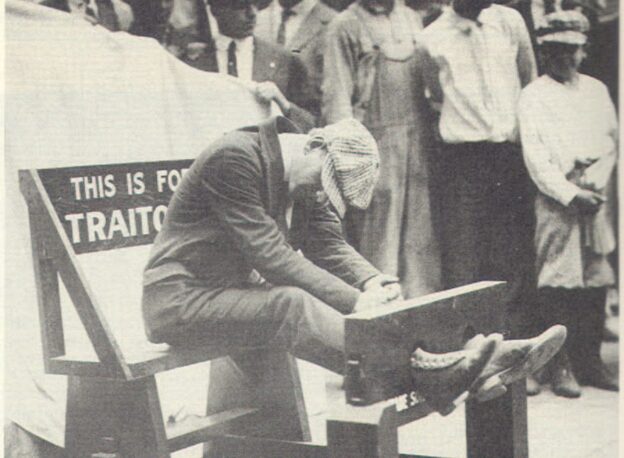
Of course they’re important and urgent and warranted. That’s not the point. Confrontation doesn’t require public shaming. If it does, we’re doing it wrong. Confrontation doesn’t require we put opponents in public stocks and heave a well-aimed rotten vegetable viral hashtag at their head. Even furious anger and indignation at injustice doesn’t require public shaming.

Do we think that shaming someone will lead to repentance? That hearkens back to The Scarlet Letter. Shaming someone else rarely calls forth transformed behavior in them – or in ourselves. Shaming another person gives us the vaulted position of judge, jury, executioner, and obituary writer without having to get our hands dirty by investing in their lives.

The great irony of our time is that we chant “don’t judge” while giving into the outrage that is comfortable shaming opponents in the public square. Maybe we chant “don’t judge” because we’re so busy shaming others; in repeating “don’t judge,” we’re trying to fight our worst internal instincts: that of devouring each other.

Our motto would serve us better if it were, “in your judging, be kind and embody humility.” And that really captures the heart of the Gospel of Jesus Christ better. Judging isn’t the problem: shaming is.

We are called to love and pursue Truth, Beauty, and Goodness, ancient transcendentals which have called thinkers to study logic, aesthetics, and ethics. If our outrage turns ugly, we may fight for goodness with confrontations of the truth, but we will have lost the grace of beauty, and we will have lost. If our outrage turns to ethical fragmentation, we may fight orderly and with grace, but we will have lost the grace of goodness and clear moral direction. If our outrage turns incoherent, we may fight attractively for the good, but we will have lost the order and reason and sense of truth outside of our isolated cause.

We all discern: we all judge. We judge whether or not a dairy product is good or has gone bad, we judge whether one dog is closer to the ideal of its breed than another, we judge whether a habit has a positive or negative outcome on our child, we judge whether a leader takes us closer or farther away from a goal we judge to be worthy of pursuit.

We all speak: we all confront. We confront a cashier about a mistake in our favor or against our interest, we confront a business about a mishandling of our package or our order or our service, we confront discomfort in our own lives through healthy action or unhealthy avoidance, we confront strangers, acquaintances, friends, and family members online.

What we don’t all need to do, of necessity, is to shame. A call to repentance is not inherently or of necessity shame-causing. There is no order, no beauty, no goodness in shaming: there can be order, beauty, and goodness in discernment, judgment, or confrontation.

And not all feelings of shortcoming or inadequacy are bad. I ought to feel inadequate to pilot a nuclear submarine. I ought to feel inadequate to trade stock at the New York Stock Exchange. I ought to feel inadequate to administer anesthesia to a surgery patient.

And I ought to feel a sense of shortcoming if I engage in a pattern of behavior that hurts myself, others, and God. I ought to feel a sense of shortcoming if I smack a child on the face. I ought to feel a sense of shortcoming if I lose my temper and berate a stranger.

If we are dressing up our outrage as “prophetic” or “faithful” but we don’t have love, we’re a sounding brass, a clanging symbol. Love bears all things and hopes all things. It’s hard to persevere in bearing all things and in hoping for redemption in the midst of shaming someone.

Loving acts are beautiful acts; they are good acts; they are true acts. They shout the beauty of being a person created in God’s image, they shout the goodness of peaceful confrontation, they shout the truth of our own worth and inadequacy. To proclaim justice does not require arrogance on our part. But shaming another human being requires a certain amount of arrogance within ourselves.

Jesus is Truth – the Word, or logos made flesh. Jesus embodied and spoke truth. Jesus’ incarnation gave Reality itself fingerprints. So when Jesus confronted others, it was almost always because they were busy shaming instead of confronting. The religious leaders weren’t just confronting the woman caught in adultery, they were deliberately shaming and humiliating and depersonalizing her. To shame a person is to remove the dignity of being human from them; and if we have removed their humanity, we are no longer bound to treat them with respect and care. Jesus didn’t shame the shamers: Jesus discerned – that is, judged – their motives, and he confronted them. Repentance, Jesus knew, didn’t require shaming a person, even if it did sometimes require judgment and confrontation.

Truth is beautiful: so communicating truth, however confrontational, cannot be done in a way that smears the inherent beauty within our fellow humans.

Consider, in closing, these reflections from artist Makoto Fujimura, in Refractions: A Journey of Faith, Art, and Culture – 

Why art in a time of war? Jesus stated, “Blessed are the peacemakers, for they will be called sons of God” (Matt 5:9). The Greek word for peacemakers is eirenepoios, which can be interpreted as “peace poets,” suggesting that peace is a thing to be crafted or made. We need to seek ways to be not just “peacekeepers” but to be engaged “peacemakers.” Peace (or the Hebrew word shalom) is not simply an absence of war but a thriving of our lives, where God uses our creativity as a vehicle to create the world that ought to be. Art, and any creative expression of humanity, mediates in times of conflict and is often inexplicably tied to wars and conflicts.

The arts provide us with language for mediating the broken relational and cultural divides: the arts can model for us how we need to value each person as created in the image of God. This context of rehumanization provided via the arts is essential for communication of the good news. Jesus desires to create in us “the peace of God, which transcends all understanding” (Phil 4:7), so that we can communicate the ultimate message of hope found in the gospel, the story of Jesus, who bridged the gap between God and humanity to a cynical, distrustful world.

The Outraged will wear out; Blessed are the peacemakers.

Receiving The Value Of Sabbaticals by Andy Stoddard

I’m at just about the halfway point of renewal leave (i.e. Sabbatical).

I took my first church job in 1997, and ever since then, I’ve worked in the church.  A couple of them were part-time, and then I took my first appointment at a pastor in 1999 to three small United Methodist Churches outside of Cleveland, MS.  In other words, I’ve worked in the church for over 20 years and never really taken a moment to breathe.

First, let me tell you what I’ve done:

  1. Spent time with my wife and kids.  I feel like I’ve been more present with family than I have in years.  Holly and I talk, really talk, more than ever.  We’ve always been good, but I feel like we’re closer than ever.  I’ve also done a lot of Mr. Mom: I’ve taken the kids to appointments, VBS, camps, I’ve been the taxi service this summer.  It’s been fun to spend lazy time with them.  I haven’t done that during their lives.  Something (or someone) else always took importance over them.  I’m doing my very best to focus on them and spend both quantity and quality time together. Sarah and I went to Hamilton and are going to another concert this summer.  Thomas and I started playing golf together.  I’m just trying to spend as much “present” time with them as possible.  I know I can’t make up for missed time, but I can be present now.
  2. Spent time with family.  On the weekends we go south to either my parents or Holly’s parents.  My mom is 89, daddy is 79.  Just like the kids, I haven’t been present with them.  I’m trying to take advantage of this gift and just be present with them as well.
  3. Gone to church.  While with family, we’ve gone to church with them.  We’ve worshiped at Holly’s parents’ church and my home church.  It’s been great to be on the same pew with family, and for the first time since 1997, I’ve been able to go to church with my mom and dad.  I am thankful for that.
  4. Prayed.  One of the hardest things to do as a preacher is to read the Bible and pray simply for your own soul.  So often when you go to the Bible and pray, you are looking to feed others, not to be fed yourself.  I’ve been serious and intentional in my prayer life to not think about what God wants me to say to you.  What does God want to say to me?  And I am thankful because I’ve heard his voice this summer.
  5. Exercised.  One of my great weaknesses is that I am unhealthy in my lifestyle.  I eat too much.  I don’t exercise.  This summer I have been intentional in this area as well; I’ve sought to walk, every day.  It’s been good for my body and my soul.
  6. Reconnected with old friends and mentors.  I’ve had some dear friends and mentors in ministry that the last few weeks I’ve reconnected with.  For this as well I am thankful.
  7. Oh and I’m growing a beard.  Just because.  Thus far Holly hasn’t killed me.  Yet.

Interesting observations:

  1. The number of clergy persons older than me wishing they had done it.  At Conference this year, I had many people come up to me and tell me that they wish that they had done this: taken a break and focus on their family and their health.  Listen, I don’t want to sit here and tell you that being a preacher is harder than any other job.  My daddy drove a truck for a living.  But I will say this; preaching has a way if you are not careful, of burning you out.  You put everything over your family.  You live and die with weekly worship numbers.  You put pressure on yourself to be perfect.  You can’t have a bad day.  You can’t mess up.  It can just get inside your soul.  I am not going to live like that any longer.
  2. The number of preachers my age and younger that would love to do it.  But they are worried about what people would think. What about their church?  Their DS?  Others?  I can tell you is this, if taking a break is something that you feel like you need to do, do it.  You will be more effective for the Kingdom by doing this.
  3. Social media gets into your soul.  One of the things I’ve done is gotten off Facebook. It’s been good for me.  I am less anxious about a lot of things, I’m not as worried about so many things.  Am I less informed?  I still read the news and the newspaper. But I don’t feel the same onslaught that I have before.  But at first, you don’t realize how much you are on it until it’s not there.  I took the app off my phone, and for the first week I found myself going to it subconsciously all the time.  That really surprised me.
  4. I am thankful to be a Mississippi United Methodist.  I have an amazing church, District Superintendent, and Bishop.  They have all loved me enough to help me take this time.  I am thankful for each of them.

What I’ve learned spiritually:

  1. I care too much about what people think.  For too long I have worried more about what people think than I do with being faithful and following the call of the Gospel.  I have worried more about what people think than what is best for my soul, my family, and honestly, the church. Through God’s grace, I will not return to this way of thinking.
  2. I have forgotten that Jesus is the main thing.  I have focused on numbers.  Success.  Growth.  All of these things.  They don’t matter. What matters?  Jesus.  Being loved by Jesus, loving Jesus, and loving others through Jesus.  That is what matters.
  3. My spiritual life had become a chess game. If I am faithful spiritually, God will do amazing things. Or if I am not, God will not be. And if I mess up, God will get my family or me as punishment. If I read my Bible and pray, God will protect my family and grow my church. If I don’t, he won’t. And it will be my fault. But it’s not my church; it’s his. And he loves my family even more than I do.  I was not seeking God to know his face and his grace, but for protection and blessing.  I need to delight in him because that is where my life is found.  For no other reason.

What are we going to do the rest of the summer?

  1. Spend more time with family.  We’ll be heading south to see our family some more.  We’ll get to go to Homecoming at Johnston Chapel, worship with our family on the coast, and just spend some time together.
  2. Go to the coast for a short vacation.  We don’t have big plans, just spending time together.
  3. See Imagine Dragons.  Sarah and I have gone to Hamilton and later next month we’ll go to an Imagine Dragons concert together.  We are having a good time.
  4. Golf with Thomas. Thomas and I have been going to the driving range a good bit, and I’m looking forward to some more.
  5. Go to Church.  We’ll worship with family, probably go to church with a friend who serves here in Madison, and worship with one of Sarah’s friends, whose dad is a pastor in Jackson.

I’ll be back in the office August 1 and my first Sunday back in the pulpit is August 5.  I am thankful for this summer, this renewal.  I really believe it is making me a more faithful follower of Christ, a better husband and father, and hopefully a better pastor.

Preach What You Practice: The Importance of Expository Preaching by Suzanne Nicholson

It has become cliché to tell people to practice what they preach—that is, to live according to their words. But increasingly we may need to think about preaching what we practice.

In most activities we practice, a structure must be followed, even when creativity is involved. For example, the best cooks can add a pinch of this and a teaspoon of that to any recipe in order to add their own creative flair. But certain parts of the recipe simply cannot be changed without destroying the recipe itself. When making chocolate chip cookies, you have to mix all the ingredients before putting dough balls into the oven. If you only mixed chocolate chips, flour, and butter and put the mix in the oven, you would have an awful mess when you cracked the eggs and stirred in the sugar after the dough came out!

Yet how often do preachers jump around from topic to topic or scripture to scripture without seeking to understand the main passage itself? Preachers must take care not to crack the eggs after the dough has come out of the oven.

The power of the Gospel message derives from connecting people with God’s story. This entails explaining what the passage meant in its original setting so that we can better understand how to translate it into today’s culture.

It can be tempting for preachers to focus on quick principles for self-help instead of explaining the ways in which God has been faithful to God’s people throughout the generations.

Here are just a few of the ways that pastors sometimes stray from the power of God’s story when preaching:

1) Reading Scripture only to identify a topic within the passage, then preaching entirely on that topic without interpreting the passage itself. This teaches the congregation that the Word doesn’t really matter—it only serves as an introduction for what the preacher really wants to talk about. We wouldn’t follow this practice in other areas of our lives, but somehow this has become acceptable in sermons. For example, it would be insensitive to ask your friend to tell you all about their recent vacation to Florida, only for you to dominate the conversation by describing your own trip to France. When we engage in conversation with others, we must pay attention to the details of their lives and care about their perspective. The same is true with Scripture. We need to preach what we practice.

2) Skipping from passage to passage to prove a point. When this happens, the message never becomes grounded in the Word itself, but only in the preacher’s external vantage point. Prooftexting is like skipping stones across a pond: you cover a great distance but never really go very deep. In order to make sense of Scripture, a preacher needs to stay focused on the passage and remain faithful to the direction of the text. When we play a sport, for example, we have to follow the rules while making strategic choices. A baseball player might decide to bunt, hit a single to advance the runner, or swing for the fence. (There is creativity in the game, just like in preaching.) But if the player initially ran to third base, then to first and then to second before heading to home plate, no run would be scored – not to mention the fans would be confused and upset. Jumping around from passage to passage entails a similar chaos. We need to preach what we practice.

3) Ignoring how the passage fits with the surrounding material. A single story about Jesus can be compelling and profound, but it is only one part of the larger story. If you’ve ever put together a 500-piece puzzle, for example, you might find that a single piece can contain a clear image. But we’re not supposed to be content with one piece of the puzzle. The image becomes all the more poignant and understandable when fit together with the surrounding pieces. The same is true with the Bible: characters and themes develop throughout each book, and the overall story develops from Genesis to Revelation. In Matthew’s Gospel, for example, the angel’s pronouncement in the first chapter that the child born to Mary will be called Emmanuel—“God with us”—comes full circle at the end of the book. There the risen Christ promises the disciples, “I am with you always.” Matthew emphatically declares that the promises of God prophesied long ago have finally come true in Jesus. But we only recognize this key theme when we explore how the individual passage connects to Matthew’s overall story. If we don’t think a 500-piece puzzle is complete with just a few pieces, then why do we do this with Scripture? We need to preach what we practice.

4) Jumping straight to application. This often results in a highly individualistic interpretation, because the constraints of the passage never come into view. Preachers of health-and-wealth gospels make this error when they twist passages about God’s spiritual blessings into specific promises about financial wealth. It is important for preachers to investigate the author’s purpose and historical context in order to make appropriate application. For example, we would never use a wedding dress for a work outfit on a farm, because the material is simply too pristine and delicate for such a tough job. It wasn’t designed for that purpose. When we ignore the original context of Scripture, we do similar violence to the text. We need to preach what we practice.

5) Missing application. This is the opposite problem of the previous point. Occasionally a pastor spends so much time on the ancient context that church members never hear what this message means for believers today. We wouldn’t go to a job training seminar only to hear a history lesson about the company but not receive any actual training. We need to preach what we practice.

The Word of God is rich and powerful, God’s message of faithfulness and grace that compels believers to draw near to God. In other areas of our lives we practice common sense; we need to make sure we preach in the same way.

What to Do With #metoo by Jennifer Moxley

The pervasiveness of sexual abuse and assault that last fall’s #metoo movement uncovered has left the Church wrestling with how to minister to those women and men who carry stories and bear wounds in our pews. I hear the Church asking questions like: What is our role in the wake of #metoo?

How can we preach light when they have kept so much pain in the dark?

What of the God who sets captives free when so many have been used as pawns in a game of power?

How can we teach love when that word has been used to manipulate or control?

How can we help them see the image of God in others and themselves when they have been conditioned to believe that their bodies are made for someone else’s pleasure?

How can we offer good news—hope— to those still in the darkness of the tomb?

While the pain that #metoo has uncovered will take years to heal, there are a few things we, as the Church, can do to bring healing and hope to those hurting.

First, we can listen.

For every story told, there are scores of others kept secret. This means our pews are full of people carrying the burden of untold assault. As the Church, we can invite these stories into the open and expose them to the light (Ephesians 5:13), stealing their power. Once revealed, they no longer have the power to shape the person’s life narrative. They can become events that happened to them, and not part of their identity, not who they are, releasing them from the captivity of shame and guilt.

Second, we can believe the stories.

Once we have created a safe space for stories to be shared—one in which there is no judgment or discrimination—if someone trusts us enough to hear their story of deepest hurt, we should believe them. The Church’s role is not to “find out what happened,” but to receive their account of experience as their truth. Rather than deem their testimony an idle tale (Luke 24:11), we are called to affirm their feelings, however messy or complicated, and trust that they are sharing honestly.*

Third, we can repent.

One of the impacts of the #metoo movement has been an awareness that sexual assault and harassment is not limited to Hollywood or boardrooms and newsrooms but reaches into every corner of our country and social strata, even the Church. At its core, #metoo names an abuse of power—the party with the most power in the relationship using their influence to control or take advantage of the other. As the Church, it would be foolish to believe we have not participated or contributed in some way. We can confess the ways we have corporately and personally upheld this power dynamic, repent and seek to turn it upside down (Luke 1:46-55).

Fourth, we can do better.

There is a cultural shift taking place in our country as a result of the #metoo movement, one that recognizes the value and dignity of everyone. As Christians who believe each person is formed in the image of God (Genesis 1:26), we should be leaders of this movement. We should be working for a time when it will be no longer socially acceptable to objectify or exploit any of God’s creation. We should be calling out oppressive systems that silence victims. We should be reminding a world desperately hurting that there a God who loves them, a Creator who calls them good (Genesis 1:31). We should share the good news that the same God who knows our deepest pain and shares our hurt came to redeem our suffering and restore all of creation. After all, this is the God who, in Jesus Christ, says, #metoo.

*As pastors, we are bound to pastoral confidentiality, although at times, mandatory reporting is necessary. For more information about mandatory reporting, visit: http://www.moumethodist.org/mandatoryreporting.


Ideas for Churches That Want to Change Culture in 2018

  • Maintain and update the local church Safe Sanctuaries® policy. Train the church community on the policy.
  • Require all leaders, even non-clergy leaders, to take boundary training.
  • Post domestic violence and sexual violence hotline numbers in church restrooms.
  • Teach the warning signs of domestic abuse and abuse of children to volunteers and paid employees who work with children (e.g., nursery, Parents Day Out, Sunday School, preschool, Boy Scout and Girl Scout troops).
  • Intentionally use the words sexual and domestic violence in various liturgies through the year—for example, in a prayer of confession.
  • Take a special offering for a local domestic violence shelter.
  • Hang posters in April for Sexual Assault Awareness Month and in October for Domestic Violence Awareness Month.
  • Plan education classes for the community on these issues during April and October.
  • Utilize local experts to educate the congregation, particularly parents and guardians, on topics like the grooming behaviors of predators, consent, and boundaries.
  • Teach a study on biblical texts of terror (e.g., Tamar, the unnamed concubine, and the daughter of Jephthah).
  • Strive to place women in visible leadership positions. Consider reflecting the gender breakdown of your own congregation in your leadership structure. If women represent 60 percent of the congregation, 60 percent of the church’s leaders could be women.
  • Have the leaders create a no-tolerance statement: If abuse occurs within the fellowship of the church, commit to prosecuting no matter who the offender might be.

#metoo additional resources:

National Sexual Violence Resource Center

Eradication of Sexual Harassment in The United Methodist Church & Society

United Methodist Sexual Ethics

General Commission on the Status & Role of Women

Missouri Annual Conference Boundary Resources

Online Boundaries Training from Lewis Center

Free Online Mandatory Reporting Training

Why Congregations Must Embrace Awkwardness by Elizabeth Glass Turner

Recently I read an article by seminary professor Kate Bowler that had me staring wide-eyed at the computer screen, alternately barking bursts of laughter, fist-pumping the air, and feeling tears sting the corners of my eyes.

She walked up to the elephant in the room, reached out, touched it, gave it a treat, made friends with it, and sat down next to it.

Which, as it turns out, is not so far off from her conclusion.

After all – have you ever been the elephant in the room?

If you’ve gone through a divorce or a painful church circumstance or you switched political parties or you finished a round of chemo or any number of things, you probably know what I mean. Conversation becomes forced, or usual warmth is dimmed to clipped small talk, or eyes are busy looking elsewhere.

Americans are uncomfortable around pain.

We don’t like it. It doesn’t fit well with our post-polio, shiny marketing, Dow-skyrocketing dreams. This is a seismic shift from a generation ago. People born in the late 20’s or early 30’s remember the Depression, pre-vaccine life when outbreaks could wipe out tens of thousands, the Dust Bowl, and the generation of young men mowed down in World War II. They remember the last few public lynchings, the Japanese internment camps, the Negro Motorist Green-Book.

Simply put, illness, bad crops, segregation, disease, and war all had a different effect on daily life. My great-grandparents first entered a church after the church members had brought food to their house when it was under public quarantine; there was disease in the house. One great-aunt I never met died of scarlet fever when she was young. I saw an old photo of her once and realized it was she to whom I bear a striking resemblance. My grandmother named my mom after this sister who had died so young.

In other parts of the world, the proximity of death is different; whether from cholera, or falling bombs, or a bad crop season; whether from polio, or women dying in childbirth, hours from a clinic or hospital. And just a few minutes ago on the American clock, the proximity of death was nearer, too. Now we are shocked or surprised by its indecency of showing up uninvited. If someone is suffering, we look for a cause, because suffering makes us uncomfortable.

As a friend put it recently, people are uncomfortable with their lack of control; if Bad Thing A can happen to you, then maybe it could happen to me – so let’s find something you did that caused it. That way, I feel safe again.

But pastors and churches are distinctly called to reach out a hand to people hurting, or contagious, or dying. (Recently my own congregation has been bringing in meals as my husband goes through a health crisis, and I mentally pray into sainthood everyone who walks in the door and feeds us, though it’s been a learning curve for me to feel at ease receiving help without yet being able to give it.)

So what can we do to walk up to the elephant in the room and make friends? What can we do to force ourselves not to avert our eyes at other peoples’ pain?

Kate Bowler has a few ideas. The thirty-something seminary professor was diagnosed a couple of years ago with Stage IV colon cancer. She lives, as she points out in her recent article in the New York Times, “What to Say When You Meet the Angel of Death at a Party,” three months at a time, from one scan to the next.

But being a seminary professor hasn’t shielded her from a wide array of responses to her illness. (To learn this was comforting.)

“We all harbor the knowledge, however covertly, that we’re going to die, but when it comes to small talk, I am the angel of death,” she writes. Yet sometimes when people talk with her, suddenly their own stories of loss come pouring out. However uncomfortable it is to Bowler personally, she says, “I remind myself to pay attention because some people give you their heartbreak like a gift.”

“What does the suffering person really want?” she queries. “The people least likely to know the answer can be lumped into three categories: minimizers, teachers, and solvers.”

Bowler continues to explore the internal dynamics and social settings in which these impulses emerge, with sharp humor not lacking patience with the well-intended. After all, we all fear saying “the wrong thing,” which often almost guarantees we will.

Her words of guidance? Simply acknowledge the loss a person is going through; a person with a bad diagnosis or life upheaval may just need to hear their upheaval named and acknowledged. That acknowledgment, she says, creates space. Then, love.

There is tremendous power in touch, in gifts, and in affirmations when everything you knew about yourself might not be true anymore. I’m a professor, but will I ever teach again? I am a mother, but for how long? A friend knits me socks and another drops off cookies, and still another writes a funny email or takes me to a concert. These seemingly small efforts are anchors that hold me to the present, that keep me from floating away on thoughts of an unknown future.

Through these reflections, Bowler gently affirms what we all want to know when we’re hurting: she is a person, not an inconvenience; she has value, whether she is contributing in her normal way or not; her suffering is not contagious, as if those who come near her will also be cursed with misfortune; and she is seen, not forgotten.

None of this threatens the sovereignty of God, or deconstructs the notion that, “He’s Got the Whole World in His Hands.” But it does draw from the stories of Jesus, who noticed a short man perched up in a tree; who sat and chatted with a woman collecting water; who sobbed with Mary and Martha and the other Jews grieving Lazarus, and grieving death itself; who picked up a severed ear of an enemy and silently put it back on its owners head, healing it into place.

Jesus saw; Jesus stood with; Jesus ate with; Jesus bumped up against; Jesus listened in the middle of the night to troubled people; Jesus cried; Jesus cooked fish and fed his friends.

It all starts with, Jesus saw. He saw and did not look away.

Leaders in the Bible (Who Happen to Be Women) Part II by Suzanne Nicholson

When we think of leaders in the Bible, names like Abraham, Moses, David, Peter, and Paul jump easily to mind — and rightly so, for these men played key roles in the drama of Scripture. But one of the great lessons of Scripture — as people like David and Paul can attest — is that God delights in using unlikely heroes to further the gospel. Despite living in a culture of patriarchy, numerous women faithfully led others to a new understanding of God’s work in the world. In my last post, I mentioned the daughters of Zelophehad, Deborah, the Samaritan woman at the well, Rahab, Phoebe, Priscilla, and Ruth.  

Today’s list includes more women whose chutzpah, wisdom, and faithfulness rival that of their more well-known male counterparts.

Abigail (1 Sam 25): When David and his men were on the run from Saul, they asked a wealthy man named Nabal for food. They had treated his shepherds well and expected that Nabal would return the favor, but the ill-tempered Nabal refused to help. David and his men prepared to attack in vengeance. When Nabal’s wife, Abigal, learned of her husband’s treacherous lack of hospitality, she intervened by riding out to meet David and his troops with stores of bread, wine, figs, and other food. Abigail gave an impassioned speech in which she begged for forgiveness for her husband’s foolishness and prayed for blessings on David. He was so impressed that David granted her petition and spared the lives of the men in her household. Later when a hungover Nabal heard about these events “his heart died within him; he became like stone” and ten days later he died. After Nabal’s death, David married Abigail. Throughout the story, Nabal’s foolishness is contrasted with Abigail’s good sense and godliness. When David proclaimed that “the Lord has kept back his servant from evil,” he was referring to Abigail as an instrument of God for David’s protection. 

The Bleeding Woman (Matt 9:18-26; Mark 5:21-43; Luke 8:41-56): This ritually unclean woman with her constant flow of blood was desperate to find a cure. For twelve years she had suffered, and she grew impoverished while trying to purchase various cures. But when she heard that Jesus was in town, she bravely entered the crowds — despite her impurity — and reached out to touch Jesus. Her belief in his healing power was so strong that she trusted that a simple touch of his cloak would be enough to heal. Jesus called the woman “daughter” and proclaimed her great faith in front of the whole crowd. 

The Syro-Phoenician Woman (Matt 15:21-28; Mark 7:24-30): This desperate mother would not take no for an answer. Although she was a Gentile approaching a Jewish teacher, she refused to let ethnicity stand as a barrier between her demon-possessed daughter and the one person who could bring about healing. Jesus put her off just long enough to allow the woman to make a cogent argument for the inclusion of the Gentiles in the blessings of God, and then through his healing actions affirmed her faith, wisdom, and tenacity. Who else in Scripture goes head-to-head theologically with Jesus and wins? 

Esther (Book of Esther): In contrast to Daniel, who resisted foreign culture in exile, Esther was forced to assimilate to her new culture. Subjected to beauty treatments and forced to sleep with a pagan king, the demure Esther followed the instructions of her uncle and waited until the crucial moment to approach her regal husband and make her request. In a culture that marginalized women and considered them powerless, Esther shrewdly used her beauty, wits, and patience to gain the king’s favor, save her people, and defeat her enemies. 

Mary, the Mother of Jesus (Matt 1-2; 12:46-50; 13:53-58; Mark 3:21, 31-35; 6:3-4; Luke 1-2; 8:19-21; John 2:1-12; 6:42; 19:25-27; Acts 1:14; Rom 1:3; Gal 4:4): This thirteen-year-old girl took her life in her hands when she agreed to bear God’s son, since Joseph could have had her stoned to death for being an adulteress. After running for their lives when Herod the Great tried to kill Jesus, she and Joseph settled down to a relatively quiet existence. She watched her son grow up, and when he entered the preaching scene, her quiet life was shattered forever. Although she at first didn’t understand what he was doing and she had to bear the torture of seeing her son die a horrible death, Mary was among the earliest believers of the fledgling church. She led by choosing God’s design for her family — a design that flew in the face of her culture and her own expectations. 

Junia (Rom 16:7): Often overlooked, Junia is described (along with Andronicus) as “prominent among the apostles.” The two were relatives of Paul (although the word could simply mean they were fellow Jews) who believed in Christ before he did, and who had been in prison with him. Richard Bauckham makes a credible argument that Junia is the same person as Joanna, the wife of Chuza (Herod’s steward [Luke 8:3, 24:10]; Gospel Women: Studies of the Named Women in the Gospels [Eerdmans, 2002], 109-202).) Since Junia was called an apostle, this would indicate that she had seen the risen Christ and had held a significant leadership position within the early church. 

Women at the Empty Tomb (Matt 28:1-10; Mark 16:1-11; Luke 24:1-11; John 20:1-18): Although the details vary, all four Gospels report that women were the first witnesses at the empty tomb and the first preachers of the risen Christ. In my favorite version, Matt 28:1-10, the big, tough Roman soldiers ironically fainted at the sight of the angel, while the weak women eagerly spoke to the angel and met the risen Christ before boldly reporting everything to the disciples. 

Scripture regularly testifies to the ways women provided leadership in God’s kingdom. We need to regularly preach these stories (and others) to remind our congregations that the most important qualification for leading God’s people is not a Y-chromosome, but a faithful heart. 

The Limits Of Leadership: Integrity And Incarnation by Andy Stoddard

One of my great hesitancies when I first entered the ministry concerned leadership.  I was afraid to lead.  I had too many doubts.  What if I choose wrong?  What if I lead my people poorly?  What if I make a mistake and it all falls apart?   

As I was going through ordination in the United Methodist Church, my mentor suggested I read In the Name of Jesus by Henri Nouwen, and that introduced me to the life of leadership in ministry. And my heart was on fire! Now I love leadership. While there are many, many ways that I need continued growth, leadership is truly life-giving to me.    

But at a pastor’s conference a few years back, something happened that caused me to stop and rethink this passion.  The speakers kept hammering the theme, “leadership, leadership, leadership!”  And I agreed with them in principle – but I turned to my youth pastor and said, “Honest question that I don’t know the answer to: is leadership the chief virtue you want in your pastor?”  In the years since I have thought long and hard about that question.  Is leadership the chief virtue we desire for our pastors?     

As important as leadership is, it cannot be the driving force of ministry.  So, then, what is? What is the virtue that we as pastors need to develop in our lives and that our people need from us most of all?     

It’s a struggle to find the right word, but the closest thing I can come up with is incarnation.  The goal of salvation is the recovery of the image of God that had been corrupted by the fall.  Our very salvation is part of the process, whereby the Holy Spirit, through the means of grace, draws us closer to God and we grow deeper in his grace and love.  Through that grace, we love God fully and love our neighbor fully. That’s the purpose of all our salvation, and in the end, our ministry. 

I think that ministry today must be led out of incarnation.  The Word became flesh and dwelt among us (John 1).  Emmanuel, God with us.  Through Jesus Christ, the fullness of God was blessed to dwell.  He is true God from true God, begotten, not made, as we confess in the Nicene Creed. As we are filled with the Holy Spirit, Christ dwells within us.  I think that this notion of ministry, flowing from incarnation, paints a path forward for us, and for the Body of Christ.     

With so many pastoral leaders fallen in integrity breakdowns along with what seems to be the current unraveling of power structures within our society, we are beginning to see those without a voice now having a voice to speak truth to the power that has harmed them.  When we see this and we see the (often) men at fault, it is easy to say, just stop it!  Just stop being a cad, just stop abusing power, just stop.    

Those words should and must be said.  As a pastor who has been blessed to work with amazing female pastors and leaders, one of my main jobs as a leader is to help create a space where everyone, every voice, feels safe.     

But for pastors, our ministry must not only be based upon morality; it must be based upon incarnation.  To me, this means a couple of things.    

First, to do ministry out of the Incarnation is to see the inherent worth of others.  It is so easy for leaders in many fields to see people as existing only to serve whatever purpose they have for that leader.  Eugene Peterson makes an analogy in The Contemplative Pastor that compares program-driven ministry to strip-mining the land: using others for our purpose or our goals and then discarding them when we are finished.  Yet the Incarnation reminds us that Jesus died for the world: all of the world. And everyone, male, female, young, old, powerful, or powerless, everyone has an inherent worth that comes from being made in the image of God.  If we do ministry out of the Incarnation, no one is an “object” to be used by the leader.  Everyone is a beloved child whom Christ came to save. We must treat all with the radical love of Christ.

Let me say this again, and say it loudly: everyone has worth.  No one is an object, and any ministry or leadership philosophy that leads people to deny that or not to see that inherent worth in others is wrong and not of God.     

Second, to do ministry out of the Incarnation allows us to see the source of our strength.  One of the things that constantly amazes me is how our society seeks to see spiritual matters through clinical terms.  The answer to every ill our society faces is education, or jobs, or other “fixes.”  While education, money, and resources are vital to living a life with hope today, they are not the fix.  I have heard this quote attributed to C.S. Lewis: “Education without values, as useful as it is, seems rather to make man a more clever devil.”   

Our education or even our values do not stand on their own.  While yes, in how we treat each other, we need helpful guidelines that keep us walking together, in the end, we will not treat others with the respect they are due unless we see their worth and allow the Holy Spirit to work in our lives, changing us, molding us, making us into the people God desires us to be.     

Ministry, and life, in general, are not an act of willpower.  

Ministry is an act of surrender to the Spirit who lives within us.  We are called to live and to lead out of the Incarnation, the spirit of Christ dwelling within us.  We are not called to stand up and fight, but to fall to our knees and surrender.  The Incarnation reminds us where our strength comes from.     

And lastly, to do ministry out of the Incarnation reminds us of the purpose of our faith.  Jesus Christ died for the world.  That’s why ministers do what we do.  He loves all.  All can be saved, and as Wesley said, all can be saved to the uttermost.  We are not here to build a more efficient organization; we are here to tend to and lead the Body of Christ.  The church is not a Fortune 500 company.  It is not a corporation.  It is a living, breathing body.  As Christ fills us, we fill the church, and the church fills the world.  We live out that grace and hope.  We are the protector of the weak, the widow, the orphan.  We love, we serve, we give, all through the power of Christ.     

Because that is what we are here for.  Not to grow.  Not to use people.  Not for fame, attention, or power.  But to live out the power of Christ within us, the mystery of God.    

We have been called into Christ’s ministry.  Our world needs the church and Christian leaders to live out of this calling now more than ever.