Tag Archives: Book Review

“Seamless” Book Review by Joseph Seger
“Seamless” Book Review by Joseph Seger

Few things can bring animated conversation to the church like one which highlights spiritual gifts (charismata). Do we really get supernatural powers? Does the pastor have to have all of these? What about tongues? 

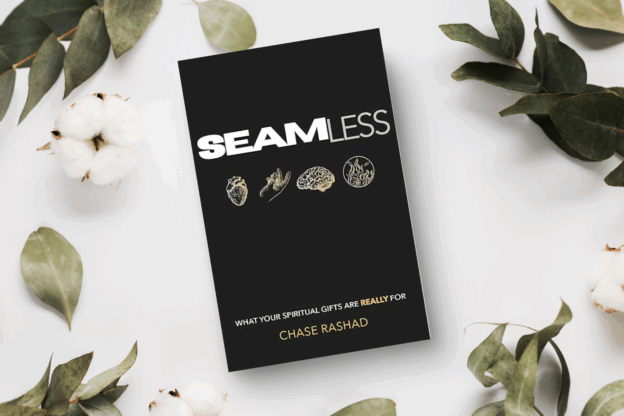
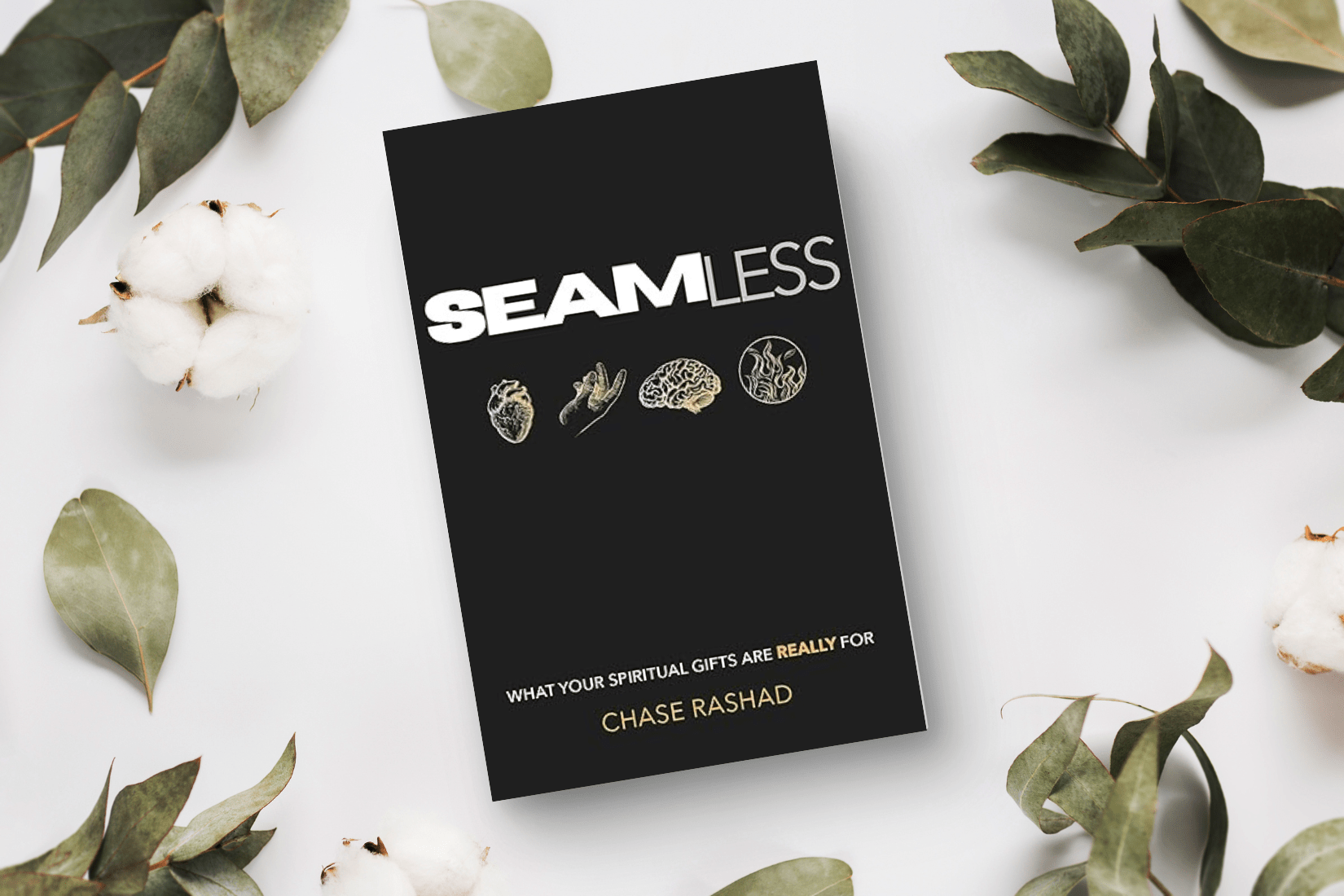
In Seamless, Chase Stancle offers us an accessible book steeped in years of practice. In writing this, he deftly reframes the conversation about spiritual gifts around the congregation’s love undergirding our unity as believers.

Rethinking Spiritual Gifts: Not Superpowers, but Tools for Unity

Everywhere today, the culture of superheroes has left its imprint. Many imagine what it would be like to be Storm, Wolverine, or some other person endowed with a super power. Unfortunately, these fantasies of solo-heroic feats have leaked into the church. “The idea of possessing so much superhuman power that I would be able to save the world on my own is more than a fantasy. It’s narcissistic. Yet, to varying degrees, this is how Christians all over the Western world discuss spiritual gifts.” Chase reminds us clearly throughout the book that these manifestations are not for our glory, but for God’s and the upbuilding of the church.

Biblical Foundations for the Holy Spirit’s Gifts in the Church

Chase grounds his words in the firm foundation of scripture. The first half of the book does a deep dive into and through 1 Corinthians while pulling in the relevant texts of Genesis, John, 1 John, Ephesians, and more. “The truth Paul was conveying is not that we have been assigned a special power to make us more than human but that our individual access to the power of the Holy Spirit has been tapered so that none of us get too big for our britches.” God gives as he discerns and the power of the Holy Spirit is shared freely and evenly for our interdependence and the church’s benefit.

This shift in the conversation is sorely needed as we often talk about spiritual gifts as things to discover and use, but we rarely say, “Your Spiritual gift will only work fully if you are in loving fellowship with other believers.” Far more often we marvel at the ‘super-Christians’ who exhibit a few of these gifts rather than realize the full import of Paul’s words that these are for all who follow Jesus.

Discovering Your Role: Heart, Mind, Hands, and Soul Gifts Explained

Chase brilliantly categorizes the stated spiritual gifts in four accessible and relatable categories – heart, mind, hands, and soul. The heart gifts are so named because ‘the five fold ministry (from Ephesians 4:11-13) is the engine that ensures that the body of Christ has all it needs to carry on the work of Christ until he returns.” The hand gifts give real presence and encouragement throughout the body. The mind gifts keep deep thinking at the forefront of leadership. The soul gifts are those unique signs inspiring awe throughout the body. Though some may want to quibble on what goes where, these groupings bring clarity for the church.

From our WME lens, I really appreciated Chase’s approach to evangelism. “The evangelist announces good news so that ‘the receiver will acknowledge the Father’s love, grace, and mercy, turn from a patterned lifestyle of sin, embrace the authority of the Son in their life, receive power from the Holy Spirit to live that out, and encourage others in the same.” Chase offers a holistic view of how this gift manifests itself. “The gift of evangelism is more than preaching. It is a unique burden to seek out those who are relationally far from God and share with them how they can be brought close to him.”

Ultimately, I loved this book for how it has allowed me to share these core truths with my congregation. It has been a great book study and guide for a larger conversation on how The Holy Spirit’s presence amongst the congregation should be seen in blessings beyond the walls we gather within. “If we are to show the world we are Christ’s disciples, we must love one another, and that unconditional love will give context to our work.”

Seamless drives us back to the love of Christ and the love of those in the church. “The body of Christ won’t be fully operational until we all can say, “I, personally, cannot function to my fullest without my sister or brother.” We need one another, and God isn’t glorified unless we embrace that interdependence. Jesus places a high value on our love and unity in his teaching. Paul went to great lengths to press the issue of preserving our fellowship.”

Chase calls the church back to these simple and elusive truths – love and unity. May we be one, as Jesus prayed during his high priestly prayer and like the seamless garment he wore on his crucifixion day. May the gifts the Holy Spirit sends bring us to this unity in love.


World Methodist Evangelism will be hosting a book study on Seamless. This will be a live event with the author on September 24th at 9 AM United States Central Time / 10 AM United States Eastern Time. Join us on Zoom by clicking here. You can purchase the book here.

Share the Post:

Subscribe

Get articles about mission, evangelism, leadership, discipleship and prayer delivered directly to your inbox – for free


“Free To Be Holy” Book Review by Joseph Seger

“Free To Be Holy” Book Review by Joseph Seger

In the last year of his life, John Wesley wrote in a letter something profound, “I am glad brother D—has more light with regard to full sanctification. This doctrine is the grand depositum which God has lodged with the people called Methodists; and for the sake of propagating this chiefly He appeared to have raised us up.” *

Wesley saw full or entire sanctification as the guiding light for the people called Methodists. It carried the gospel and the people through the centuries, across the world, and to the dozens of denominations which see Wesley as their forebearer. 

Historians and theologians understand this. Pastors talk about this. However, the average layperson often has a blank stare at the mention of such a doctrine, and can hardly articulate sanctification alone. Maybe this is part of why there has been such a decline in recent decades.

Matt O’Reilly has taken up the charge to bring focus and clarity back upon sanctification with his powerful little book, Free To Be Holy.

Speaking of how the church has failed so many in the late 1900’s and early 2000’s, he writes, “This widespread version of Christianity, offering heaven in the next life but not freedom from sin in this life, offering freedom from the consequences of sin but not from the power of sin, promises deliverance from guilt but not from the things that produce guilt.” Matt goes on to talk about scriptural holiness is the second half of the gospel so many need for today.

Matt works out a holistic understanding of holiness in the life of the believer. “For us, then, to be holy is to be formed in such a way that we consistently do what we ought to do – like God does. And when our lives are transformed in this way, our words and our actions consistently tell the truth about God and his character.” 

Rather than just rehashing what Wesley and others in the tradition have said about holiness, Matt does the hard work of grounding holiness in the exposition of Scripture with language for today. He starts in the beginning of the Bible. From Adam onward we see this call to be set apart. God created image bearers set apart for mission. In the fall, Adam falsely represents who God is. Many see that the purpose of the gospel is forgiveness to get us back in right relationship with God. Only this falls short of the whole gospel.  “Forgiveness of sin isn’t the ultimate goal. It’s the necessary first step to making us holy so that we can fulfill our missional purpose which is to fill the earth with disciples who embody the beauty of the character of the triune God.”

Adam not only needed forgiveness, he also needed to reorient his life on who God is and the tasks God has called us to. This means overturning our idols and following where God leads. “True worship cultivates the holiness necessary for the faithful mission.”

Matt lays out the truth that holiness is what God has always wanted for us – not just required of us. He wants us to bear His image well, to know and take on His character. We are like God and bear his image. This means digging deeper into the will and heart, “The initial experience of reconciliation isn’t the goal of our mission. Instead, it’s a necessary first step. The goal of our mission is thoroughgoing transformation of the heart.”

Continuing to dive into scripture we see clearly that we can be perfect in as much as we are holy. That is we can have the perfect love of 1 John 4:18. This is a gift of God and by the power of the Holy Spirit through obedience to Christ. But this love can let us truly take up our call to be the humans God created us to be. With holiness, we can have “real human life! – free from the power of sin…real human life…holiness is about becoming more fully human.”

With this holiness we have the freedom and power to truly follow Jesus. In community, we can be like Jesus and truly love one another.

Without overt references, Matt comes alongside Wesley’s own understanding of the importance of holiness within Christianity.  “O do not take any thing less than this for the religion of Jesus Christ! Do not take part of it for the whole! What God hath joined together, put not asunder! Take no less for his religion, than the “faith that worketh by love;” all inward and outward holiness. Be not content with any religion which does not imply the destruction of all the works of the devil; that is, of all sin.” This [Sanctification] is love excluding sin; love filling the heart, taking up the whole capacity of the soul.

Holiness comes from true worship, telling the truth about God’s character, and moving into the world with love. With the grounding in Scripture and a comprehensive look at holiness, Matt writes what has emerged as the obvious reality, “Holiness is a life turned away from self-interest and marked by love for God and neighbor (and enemy).” “Holiness should be the normal posture of the Christian life.” 

This book brilliantly and succinctly brings an older doctrine into the hands of everyday Christians. It breaks the chains of cultural baggage and theological obscurity. It breathes life into the ideal of spreading scriptural holiness across the land.

Thanks be to God that we are free to be holy.

World Methodist Evangelism will be hosting a book study on Free To Be Holy. This will be a live event with the author on June 18th at 9 AM United States Central Time / 10 AM United States Eastern Time. Join us on Zoom by clicking here. You can purchase the book here.

Share the Post:

Subscribe

Get articles about mission, evangelism, leadership, discipleship and prayer delivered directly to your inbox – for free

We Are Born To Shine by Joseph Seger

We Are Born To Shine by Joseph Seger

Join James Loftin on February 26th, 2025 at 10:00 am Eastern Time (United States) for a live book study on our WE 419 app.

“You are the light of the world.  A town built on a hill cannot be hidden. Neither do people light a lamp and put it under a bowl. Instead they put it on its stand, and it gives light to everyone in the house. In the same way, let your light shine before others, that they may see your good deeds and glorify your Father in heaven.” Matthew 5:14-6

In the middle of the Sermon on the Mount we read this short but profound message from Jesus. “You are the light of the world.” Many know of it. Some even sing of it, “This little light of mine, I’m gonna let it shine.” But do we live it?

In Born to Shine, James Loftin walks alongside the reader in exploring what it means to truly be the light of the world – to shine our light into the darkness. But do we know what and who is in that darkness? And are we aware of how we are shining our light? This book reads as a loving companion for a journey of discovery – just as James teaches and coaches through his ministry, Follow One International.

We may know of oppression and injustice around the world, but have we taken the time to draw near and know those people involved. Do we care about those stories? Could we be light to even that darkness? “The unmet needs of those in darkness are urgent,” James writes, calling the reader to see and own the call upon us all as followers of Jesus. Jesus, the light of the world who pours into us His light. We know this well when we first encounter the gospel, “When we receive the light of Christ by faith, the desire to shine that light is a normal fruit of conversion.” It’s amazing what someone lit on fire by the Holy Spirit will do.

However, over time, too many of us get comfortable in our own well lit spaces and fail to go back to the darkness.

The reality is it can be hard to leave luminous, known spaces and go to dark ones. It is costly to shine your light in dark places. Someone has to pay the light bill – the wax on the candle may run out. James challenges the reader to continue on as the light of the world, for often a light shines brightest in the darkness, “How am I responding to God’s call today?” Questions such as these are paced throughout, keeping the book as practical as it theological and missional.

Each chapter gives the reader or small group lessons and questions to guide us all in answering this basic call. Scientific properties of light correspond to Scripture’s teaching on light. Truths such as light does not force us to see, but merely allows us to see – and, light is the source of all life in photosynthesis just as Jesus is the source of all eternal life. James offers a helpful framework in categorizing our efforts as selfish, benevolent, and strategic light. Do I shine the light only for my own benefit, benevolently for those who happen to be on my path today, or do I strategize how I can be specifically the light of the world?

With a missionary’s heart he walks the reader through these revelations and guides toward an action plan. This book is great for any church desiring to go forth in the power of the Holy Spirit to bring their light to what breaks their heart. For light will always beat back the darkness. “It is God’s nature to chase away darkness with truth, mercy, and grace.”

James Loftin brings the church an insightful and challenging word with Born to Shine. It has been a blessing to me and my congregation as we continue to build our lampstands high for others. I will end with a few of his piercing questions for your consideration:

  • Is God worthy of your highest praise for all eternity?
  • Is God worthy of your most excellent service now?  

You were born to shine.

World Methodist Evangelism will be hosting a book study on Born to Shine on our online platform WE 419 (download on the App Store or get it on Google Play and get connected). This will be a live event with the author on February 26th. You can purchase the book here.

Share the Post:

Subscribe

Get articles about mission, evangelism, leadership, discipleship and prayer delivered directly to your inbox – for free

Healing Prayer Is God’s Idea by Joseph Seger

Healing Prayer Is God’s Idea by Joseph Seger

Join David Chotka on October 2nd for a live book study on our WE 419 app.


“For the first time in my life, I had joined with Jesus’s compassion for someone who was sick and felt the power of God flow into another to make him well.” In their book Healing Prayer: God’s Idea for Restoring Body, Mind, and Spirit, David Chotka and Maxie Dunnam remind us that healing miracles still happen today. Healing miracles in the Bible captivate us and bring us to worship our good God. We read in these pages how those who seek God’s healing presence become part of God’s healing in others. It is such a beautiful way to think and communicate about God’s agency through us to others – a beautiful plan God has for us. Healing prayer is God’s idea. Have you ever considered it? God made us to bear his image in part so that we might heal others. The truth becomes clearer with every page turned in this book.

The book pours forth story after story of God’s miraculous outpouring amidst our continued awe.  The authors effortlessly weave their each unique vantage point into a shared thesis of how the Holy Spirit works through disciples of Jesus in healing prayer.

They acknowledge the seeming scarcity of healings throughout the church, but they continue to challenge the church to lean into the promises made in scripture.  Sometimes even calling out our gaps in discipleship, “That’s where many Christians are stuck today.  The gospel stops at the decision to receive the grace of forgiveness and doesn’t move us toward a divine infilling. As a result, pews are full of people who believe in Jesus and affirm some kind of formal faith, yet those people remain empty and unfulfilled. They lack divine power while seeking (like John Wesley before his transformative Aldersgate experience) to obey God “under their own steam.”(p.37)  The authors are quick to acknowledge cultural differences, but still desire all who follow Jesus to know the joy and power of a Spirit-filled life.

They remain hopeful in their Wesleyan roots that God’s grace can do more than we can possibly imagine, “Jesus came to infill and saturate every pore of our beings with his spirit! Christ came to empower us with the very nature, character, and power of God. (p 40)” Wesley saw this lived out in his ministry.  His journals record many people receiving miraculous healings through prayer. The authors complement the biblical and historical healings with their own experiences from around the world.

As their dive into this practice uncovers more and more, they are quick to acknowledge that God’s grace is not confined to healing prayer alone. “Medicine, miracle, and mystery – their threads of grace intertwine until time ends, and God reveals how those pieces, woven together, comingle to coalesce into a melded tapestry of beauty.” Even harder is the acknowledgement that not all have been or will be healed. Yet even here God is found to be at work in the waiting for the day when “death is swallowed by triumphant life.’

Perhaps their simplest statement is also one of their most profound – “God initiates. We respond.”  Healing prayer cannot just be done. There is no incantation or holy person. There are only faithful people who seek a holy and loving God through fervent prayer. God has always and will always be the worker.

David and Maxie go on with this divine centrality, focusing on the character of God and work of Christ as they are revealed in scripture – “Based on this, we pray with Christ, through Christ, and in Christ. Because prayer is God’s idea, we begin with these attitudes as rock-solid footing, even before we start. We start praying by embracing these postures: Having bold confidence in going to God, trusting God’s faithfulness, with childlike simplicity, confidently, remembering it is the Spirit who intercedes, knowing Jesus esteems the desires of your heart.” Anchoring our prayers in what God has already shared about Himself guides us to be present to the pain of the person before us rather than the anxiety of our own agenda.

Ultimately, we find that healing prayer is itself a tool of discipleship, “Healing prayer is designed to bring people toward the love of God rather than distract them from it! (p 155)”  This book runs the gamut of scriptural exploration, seasoned wisdom from practice, powerful stories and practical observations, and will be a blessing for the church.

The best recommendation I can give for this book comes from the fruit. Our church has been blessed by a growing prayer ministry. We have begun holding a periodic time of healing and anointing prayer. Upon reading this book, I shared the wisdom and insight from David and Maxie with our team. They were so grateful. The next time we offered the ministry, we felt the Holy Spirit move in new ways and heard from several who came forward for the first time in their lives in response to the Holy Spirit’s movement. Praise God for his initiative. May we all be humble in our response.


World Methodist Evangelism will be hosting a book study on Healing Prayer on our online platform WE 419 (download on the App Store or get it on Google Play and get connected). This will be a live event with the author on October 2nd. You can purchase the book here.

Share the Post:

Subscribe

Get articles about mission, evangelism, leadership, discipleship and prayer delivered directly to your inbox – for free

Review: Dr. Rob Haynes Explores “Renew Your Wesleyan DNA”

What makes a Methodist a “Methodist”? This is an increasingly important question in the age of the rise of secularism, the decline of churches in the West, and other significant challenges in the Wesleyan/Methodist movement. As younger generations decreasingly emphasize the role of denominations, many people are no longer aware of the rich history and theology of the Wesleyan/Methodist churches they call home. In some parts of the world, leaders need fresh encouragement for mission and ministry. All the while, the global Wesleyan movement remains strong, and God continues to use it to share and show the love of Jesus Christ.

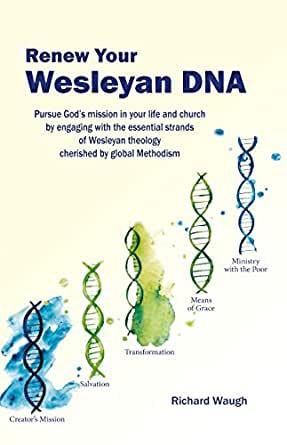
Renew Your Wesleyan DNA: Pursue God’s Mission in Your Life and Church by Engaging with the Essential Strands of Wesleyan Theology Cherished by Global Methodism by Rev. Dr. Richard Waugh (Australia: Cypress Project, 2019) is a critical resource to help contemporary Wesleyans learn the history of the movement while valuing the principles that continue to guide the most vibrant Wesleyan/Methodist churches. However, Waugh’s work is not merely a historical retelling. It is an examination and appreciation of the core of the Methodist movement. It is a call for churches and leaders to reflect upon their own ministries and reorient them for the vibrancy experienced when the “people called Methodists” are faithful to God’s call and mission.

The book is divided into eight chapters around three themes: Wesleyan Identity, Wesleyan DNA, and 21st-Century Ministry. Independently and cohesively, these provide a helpful view of the rich history of the Wesleyan movement, its ability to hold a variety of theological positions in a healthy tension, and a call to action for the contemporary church. Waugh identifies five strands of Wesleyan DNA: Creator’s Mission, Salvation, Transformation, Means of Grace, and Ministry with the Poor. These, he says, “encapsulate the essence…of Wesleyan emphases.” He uses them to illustrate the unique way in which John Wesley balanced biblical and theological principles. Waugh demonstrates their application for modern Christian discipleship. The book’s usability is further expanded through the author’s inclusion of historical and theological profiles that show evidence of Wesleyan DNA through various expressions of the global church. While these profiles include a brief historical account, the highlighting of the contemporary gospel witness in each context is enriching.

The global Wesleyan movement has a varied and complex history. Waugh successfully navigates this complexity by providing two separate narratives to illustrate one grand story: the first primarily concentrates on geographic particularities (see chapter two). The second recounts the ways in which Methodism has influenced various theological streams, ecumenism, missional witness, education, healthcare, and other important areas (see chapter eight). He handles these complexities in a way that remains appropriately thorough yet approachable for a general international audience. After all, according to Waugh, over 100 million people from more than 160 countries follow Jesus in the company of the Wesleys. Appropriately, he does not attempt to recap them all. Rather, he gives proper appreciation of various iterations to encourage the reader to apply the Wesleyan DNA into each local ministry. Throughout the work, Waugh’s unique voice as a Wesleyan Methodist leader from the South Pacific gives an important timbre to the conversation.

In some corners of Methodism, leaders have failed to attend to the doctrine that Mr. Wesley sought to preserve. Publications such as this, grounded in modern biblical and theological scholarship while accessible to a broad audience, are important for a deeper sense of belonging in the way God continues to use the global Wesleyan movement.

With thoughtfulness for local church application, small group discussion questions are included. Other helpful resources include a church audit guide, celebration service, and worship guides for Watchnight, Covenant Renewal, and Aldersgate services.

Renew Your Wesleyan DNA is a helpful addition to the libraries of Wesleyan/Methodist laity and pastors alike. It provides a fresh, global perspective on the vibrancy of the People Called Methodist. The work offers tools for individuals, small groups, and congregations to go deeper in their own faith development alongside their Wesleyan/Methodist kindred in the worldwide movement.

Silence Movie Review by Cole Bodkin

The Hero’s Journey

American mythologist Joseph Campbell (1904-1987) was renowned for his ability to compare ostensibly opposing worldviews, philosophies, and religions through the lens of mythology. What Campbell discovered was that the human experience could be reduced down to a single concept: the “monomyth.” In other words, all human traditions have an archetypal pattern with thousands of variations, which basically tell the same story: the hero’s journey.1

The hero’s journey involves as many as 17 stages and centers on a man or woman who goes on an adventure, is confronted with a crisis or resistance inevitably resulting in a decisive battle, and ensuing victory, which forever changes the hero(ine). At the conclusion of the hero’s journey, the audience is charged—through the power of the tale’s rhetoric—and implicitly beckoned to pursue their own personal quest. Once applying his method to various stories, movies, and books, one sees the merit of Campbell’s work and how the monomyth accurately portrays much of the common human experience.

And we Americans? We love the hero’s journey. We starve for it. It’s all around us. It’s part of the very fabric of our society. We are drawn to it, sing, it, celebrate it, and deep down in the inner recesses of our hearts, we ultimately want to be a hero.

Journey and Resistance

In Martin Scorsese’s recent film Silence, based on the novel by Shusaku Endo, Father Rodrigues learns that his mentor, Father Ferreira, has allegedly committed the egregious sin of apostasy. Though Christian persecution was pervasive in 17th century Japan in which the novel is set, Rodrigues and Garupe, Ferreira’s other mentee, could not possibly conceive of any scenario where their mentor could commit such an act of infidelity. Hence, they must depart immediately on their quest to investigate and (dis)prove any legitimacy of these claims.

Upon arriving in Japan, Father Rodrigues and Garupe realize that the persecution against Christians is much more severe than they had ever imagined. Yet, this will not stop our hero(es). The tandem duo is surreptitiously brought into a village full of Christians to whom they immediately minister in secret. At this point, we begin to notice that their mission—to recover or disprove the alleged news regarding Ferreira—is slightly modified and expanded: to tend to a desperate flock. To be sure, much is to be commended for their care amongst the despairing congregation; however, once the heat turns up, and the antagonist, The Inquisitor, discovers subversive Christian life in this village, a realization begins to surface: our hero’s quest has become extremely complicated and convoluted, and he has some cracks in his armor.

Without spoiling too much, I contend that characters in the biblical text begin to emerge in Rodrigues’ imagination: Pilate (the Inquisitor), Judas (Kichijiro), and Jesus (Rodrigues). Our hero develops a complex and compares his struggles and hardships with those of Christ. Without a doubt, trying to be like Jesus isn’t a bad thing. Imitatio Christi is good – yet we have limitation in our imitation. There are some things that were only intended for Jesus to undertake (e.g., die for the sins of the world). As Silence unfolds, Rodrigues’ romanticized illusion of martyrdom intensifies. Is he really the savior of this flock? Is he on a mission or a conquest?2

Wabi-Sabi 3

Legend has it that an aspiring disciple of the Way of the Tea, Sen no Rikyu, sought the tutelage of a tea-master, Takeeno Joo. First lesson? Tend the garden. Rikyu, with delicate precision, presented an immaculate garden before the tea master, but not before shaking a cherry tree, resulting in the perfect garden being scattered with a few random leaves.

In the 15th century an aesthetic and worldview in Japan began to manifest. Rikyu was revered as one who embodied its very essence. Wabi-sabi originated as a reaction against the popular lavish depictions of beauty in art at that time. In contrast to predominant forms of the day, wabi-sabi emphasized imperfection, impermanence, finitude, and authenticity.

A contemporary example might help us to understand. In the recent TV show The Man in the High Castle, there is an entire episode in which Nobusuke Tagomi (Trade Minister of the Pacific States) repairs a broken white coffee mug. We’d probably expect him to use some sort of white lacquer to distract any attention from previous cracks; however, he doesn’t do that. Instead, Tagomi uses what looks like a gold lacquer to highlight the imperfections (which is very wabi-sabi of Tagomi).

In Silence Rodrigues’ romantic vision of Christianity is one that exists as if there are no cracks. Filled by lofty propositional truths, and a God on a high and mighty throne, Rodrigues does his best to muster up strength to remain faultless. Continuing up the path of the hero, he repeatedly fails to recognize the cracks in his armor.

The Way of the Saint 4

Not all literary gurus agree that Campbell’s analysis of the monomyth—an all-encompassing existential metanarrative with variegated threads—is entirely accurate. In lieu of the monomyth, Frank J. Ambrosio has argued there are actually two paradigms: the way of the hero and the way of the saint. Whereas the hero is on the path towards the goal of achieving self-fulfillment and glorious honor, the saint is guided by love and a responsibility towards the other and one’s community. Both the hero and the saint are on the same quest—the meaning of life—but arrive at two different conclusions.

From Hero to Saint? (SPOILER)

At the dénouement of Silence, Rodrigues is brought face to face with his mentor, the alleged apostate Ferreira. Up to this point, Rodrigues had witnessed multiple Japanese Christians suffer torturous conditions and death. Doubt is at a fever pitch. Rodrigues even tells some of his flock to step on the fumi-e (image of Jesus) to escape this unbearable situation; our hero, however, would not concede.

Reminiscent of a stubborn athlete, our hero will not budge. And just like a coach (or person in charge) disciplining the stubborn player, by making the whole team suffer for the one who thinks they are in the right – paining the player to no end – likewise, the Inquisitor causes the village to suffer because of Rodrigues’ refusal to recant.

But the confrontation with Ferreira proves a formidable challenge. Despite Rodrigues’ stalwart attempts, Ferreira appears to be a goner.

Or is he? The once-priest tells him Japan is a swamp. The gospel will not take root in this land. The “Christians” there aren’t really Christians but syncretists (an aside which raises a host of questions regarding contextualization).

Later that night, our hero is presented with the greatest challenge. After complaining about the loud snoring, Rodrigues is informed that the sound is actually coming from the suffering of other Japanese Christians. This is the breaking point, and the most controversial scene in the movie. Ferreira invites Rodrigues to engage in the hardest act of love he will ever face—to trample the fumi-e—and thus end the torture. As declared by his opponents throughout, he is assured it will only be a “formality.”

As Rodrigues gazes upon the fumi-e, the silence is unbroken. The voice of Jesus whispers, “Go ahead now. It’s all right. Step on me. I understand your pain. I was born into this world to share men’s pain. I carried this cross for your pain. Your life is with me now. Step.”

And so in deep despair, Rodrigues relinquishes the pursuit of victory – the hero’s journey— and accepts defeat for the sake of love. He steps on the fumi-e. Rodrigues undergoes a Christian version of wabi-sabi; through weakness, his armor is cracked and filled by the power of Christ. Effectually, he participates in the death of Christ, and begins his journey anew toward the way of the saint.

Or maybe that is my hope? I desire that in the end Rodrigues was faithful despite what appears to be apostasy. Could it have been just a matter of formality? What even is apostasy? Is it just a declaration, an assent? What about being a functional apostate in the day-to-day without publicizing it? Could it be just an example of “alternative facts”?

There are so many questions raised by this film, and ultimately I think what we desire is resolution and certitude. But only one thing is certain to me in this film (as I suspect in the book): it’s a shroud of mystery. The world of Silence isn’t clear-cut black and white, but full of grey and confusion. Maybe Rodrigues was a hero, a saint, or both?

The conclusion of the movie remains murky. One of the more heartbreaking consequences is that our (ex)hero-saint must spend the rest of his life exiled in Japan without the fellowship of other believers (even this statement can be scrutinized, for I suspect that a touching reunion and reconciliation with Kichijiro (“Judas”) in the final scene may suggest otherwise). With few exceptions, God ultimately calls, gathers, and sends Christians out together as the communion of the saints, not in isolation.

My one-year-old daughter and I try to walk to the park whenever it’s warm enough to go see the ducks at the pond. Yesterday we saw an aberration. After visiting the pond almost daily for the past three weeks, we saw a stranger to these parts: the heron. Sticking out like a sore thumb, this majestic bird immediately grabbed the attention of my daughter, but this time she didn’t say, “duck.” She knew it was different and mysterious. As we observed for a few minutes, we noticed that although the ducks, geese, and heron inhabited the same pond, it was clear that the heron wasn’t welcomed. A few geese even hissed at it. Staring quietly as mere bystanders, we watched the heron remain by itself, all alone, in the marshy-like terrain, and in that moment I was reminded of Rodrigues.


  1. I first heard this concept from Pastor/Author, Tim Suttle: https://vimeo.com/133293651
  2. This blog was helpful in identifying these themes: https://contrarianravings.wordpress.com/2017/01/05/i-was-not-silent-i-suffered-beside-you/
  3. See J.R. Briggs Fail (Kindle location 1905)
  4. Suttle, ibid.

A Circle Of Quiet Book Review by Claire Matheny

I am a part of a church book club that meets each month. A member nominates a book for the next gathering. This ensures that most of us read something we would never have picked on our own. And let’s be honest, with many of us torn between children and work, we barely get time to read. Our meeting gives us an excuse to skimp on laundry or stay up late for the worthy goal of discussion. We are pretty amenable; we read new and old books, fiction and nonfiction, a mix of spiritual and secular.


Book Group Discussion: “A Circle of Quiet” by Madeleine L’Engle

I couldn’t remember if Madeleine L’Engle had died.  I did not wish to know before I finished her 1972 journaling memoir, “A Circle of Quiet.” I knew it would change her words for me somehow to know that she is no longer a cohabitant on the planet.

I recall a special moment when I was in second or third grade. Madeleine L’Engle came to speak to us at school in our comfortable library. I remember sitting on my patch of deep blue carpet as Ms. L’Engle – though I think she might insist I call her Madeleine – read animatedly.

She speaks just as animatedly on these pages. Most times my fellow book readers and I forgave the dusty 40 years between us. However, given how much “Madison Avenue” and loveless sex distressed her, we could only imagine the horror with which she would encounter our current “overshare society,” devaluing much of the physical and spiritual mystery she champions.

I believe there was a part of each of us that longed to be seated at Crosswicks, the Connecticut home she owned with her husband, Hugh, and the setting of much of the journal. We wanted to plop down at that Bohemian house in the small town. We agreed that it would be nice to go where the apple pie may be burned, but where there is always laughter and understanding. Hers was that proverbial place where everyone knows your name and cannot help but know all your business. In order to keep her sanity, she takes refuge in solitude. She leads us out of doors where the chaotic swirl of a busy house is balanced by the calm of a hidden pond.

It was the interspersed passages about faith that made us take the most notice. It was amusing to think of her doubting the institution of the church, even as she led her local parish’s feeble choir. It was comforting to hear her criticism of Christians and still count herself among them. It was beautiful to hear her wax on about children’s literature, sensing the deep respect she has for the early years. She does not want evil to be so masked from children that when they are forced to face the downsides of life that they are ill-equipped to cope. She unwraps her own faith to show its vulnerability. This is the same faith that counts doubting and the ability to lay bare one’s weakness among its greatest strengths.

I enjoyed the journey she carved out for my reading group. And yet, I have no immediate desire to pick up her subsequent nonfiction. Perhaps I need to spend more reflective moments around my own pond before I will have the patience and curiosity to sit with L’Engle again. Early on in “A Circle of Quiet,” she describes the busiest years of life as the “tired thirties,” when the demands of child-rearing and vocation-launching consume each hour. It is clear as she writes that she is no longer in the mad dash of that decade.

I realize that every moment spent sitting with L’Engle’s imagination is one in which I am not sitting with my toddler reveling in hers. I am convinced that I do L’Engle the most honor by countering my reading with pure moments knee-deep in the mess of my daughter’s childhood. Perhaps I would do her even more honor by also dusting off my journal. Or, even better…by sharing here.

Upon finishing “A Circle of Quiet,” I did look to see that Madeleine has gone on to greater glory. I mourn her death even as it gives me hope. Over 40 years since she wrote this volume and still, she speaks. I am thankful for my second time on a square patch, pausing, soaking in her animation.