
Your Future Is in Your Feet! by Kelcy Steele
Don’t ask God to guide your footsteps if you’re not willing to move your feet.

Don’t ask God to guide your footsteps if you’re not willing to move your feet.

Unfortunately, the word holiness conjures up for many people images of repressive legalism, dour dogma, and joyless judgmentalism. Much of the holiness movement seems to have forgotten that John Wesley constantly insisted that holiness and happiness are inseparable. Indeed, one Wesley’s most memorable descriptions of God was “the fountain of happiness, sufficient for all the souls he has made.”
Dennis

For you created my inmost being; you knit me together in my mother’s womb. I praise you because I am fearfully and wonderfully made; your works are wonderful, I know that full well. – Psalm 139:13-14 A couple of caution signs: Introversion and extroversion are too easily over-simplified. Lumping people exclusively into one or the other camp is to miss all the nuances

A Note From The Editor: Recently Wesleyan Accent was able to chat with Youth Specialist Josh White about his role in caring for unaccompanied alien children who arrive in the United States. He also operates EQ Roasters, a small fair-trade coffee roasting enterprise aimed at encouraging economic stability in nations from which many unaccompanied minors come. An avid musician, his
Piero della Francesca gets thunderingly right what so many Christians get so stunning wrong. Raised on the first day of the week – a day any faithful Jew would understand as the first day of creation – God in Christ has begun the re-creation of this world. This work of making all things new is not complete, but it has
Someone living with an anxiety disorder (or any medical condition) that makes being in loud, dark areas or separated from family unendurable does not feel welcomed. This is not a commentary on the theology or religiosity of the “turn up the volume and dim the lights, no children allowed” movement. The concern here is how the Body of Christ meets

With its distinctive orb that surrounds the intersecting arms that form the right angles of the Latin cross, most of us recognize the shape and design of the traditional Celtic cross. No matter our level of familiarity with the prayers, traditions and other customs of the medieval Celtic Christians, the iconic artwork of the cross is no ancient relic relegated
These hymns, like the psalms, come from or speak to different experiences – some quite specific, others more general – and they express a wide variety of feelings toward God, ranging from thanksgiving and adoration to supplication to bitter grief. The hymn I came upon that had a reference to Jesus weeping was under the heading of “For a Child
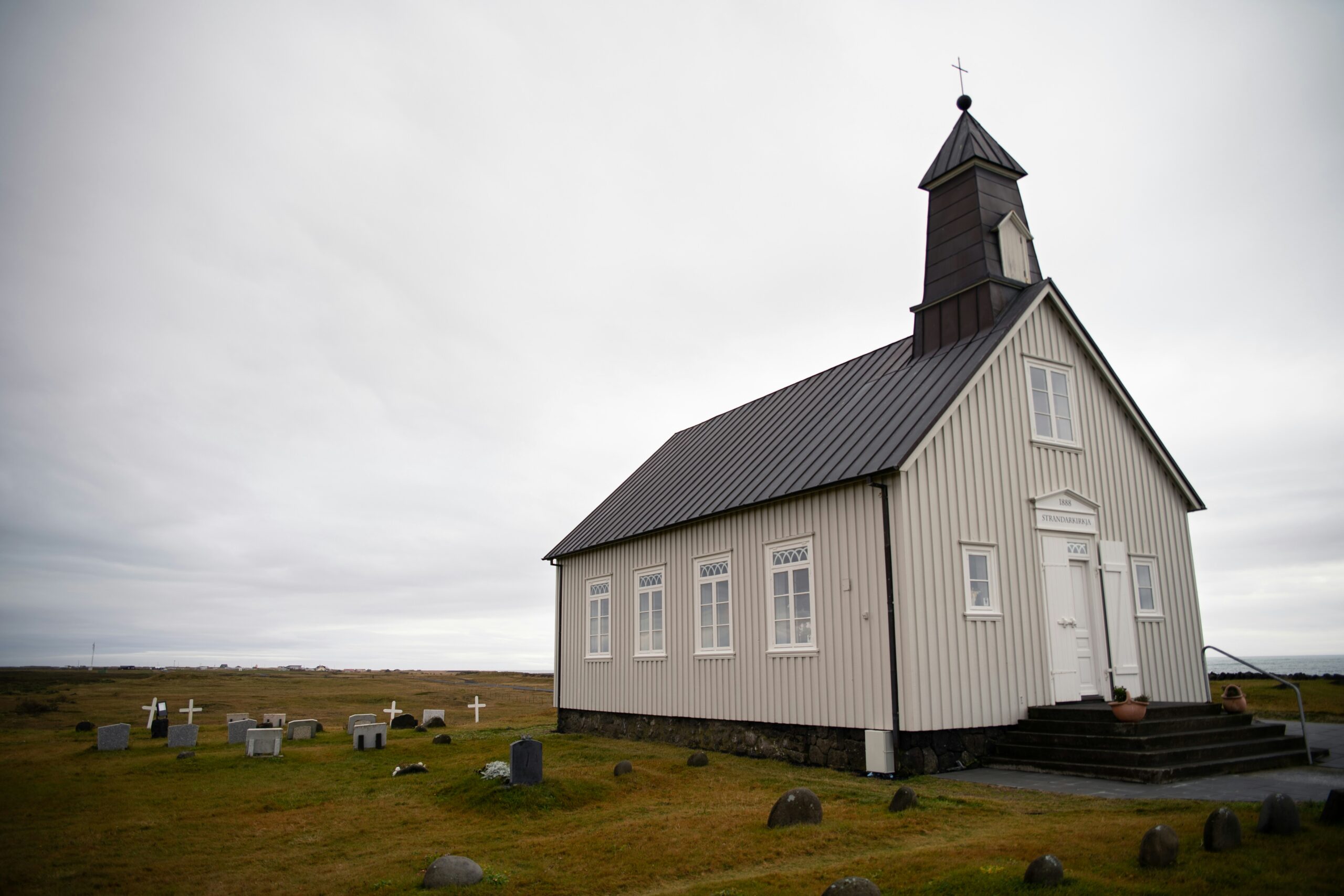
Most churches aren’t big. Most churches say they want to grow. Many pastors hope to serve at big or growing churches. Most pastors won’t. It’s simply a matter of numbers in the United States: there aren’t that many megachurches. If you happen to be the pastor of one, you can sell a lot of books to pastors who want to
Seminar participants are so committed to faith and evangelism. If you want to be Christian here you have to be incredibly committed.

I am “old school.” I freely admit it. When it comes to writing, whether it be drafting a letter or revising a doctoral thesis (and I have done both in the last year) I would rather sit down with paper and pencil than a laptop or tablet. Turns out, studies indicate, I am not alone; there is something about the mind-body
And so, among other things I’m giving up for Lent, I’m trying to give up the search to find some other hidden meaning. Perhaps I won’t get anything out of it. We don’t enter into the Lenten season practicing disciplines in order to achieve a particular return. It’s not an investment. Fasting and praying are not disciplines that we engage

I’m supposed to be sitting here writing something brilliant and thought-provoking. You (my audience) are well-versed in theology, social ethics, and various philosophies. You have high expectations, or you wouldn’t be here. Don’t get me wrong, I enjoy a good theological debate and I am passionate about the current social crises, but right now, I’m just really loving the font

“What’s for dinner?” It might be the most dreaded daily question an adult can be asked. If only there was a simple answer that did not hinge on a barrage of underlying questions: Who’s making dinner? What time are we eating? How many for dinner? Will there be any dislikes or allergies represented at the table? What’s in the cupboard?
Every morning I start off with the Morning Office. It’s an online version of the morning and evening prayer service found in the Book of Common Prayer. The service has scripture readings, prayers, and other useful tools for focusing on God. Each day’s reading starts off with a hymn. And while I usually focus on one of the scripture readings,

On a cold winter’s evening, whether to toast marshmallows, chat with friends or curl up and read a book, many of us might enjoy the opportunity to cozy up to a brightly burning fire in the hearth. But how many of us depend upon a fireplace—excepting in dire emergencies—to heat up our homes? The reality is, despite whatever scouting skills
Unless we hold God’s will as Christ held his Father’s, our gifts corrupt. They grow into the most sinister of idols, more powerful than the Baals.
It may just be that we don’t make connections between our experience of being in relationship with Jesus Christ and the experience of the rest of the world through massive efforts and structures. It may just be that it’s about the intimacy of crossing a footbridge to meet another in the middle.
We are called to be “strong but gentle,” called to “strive to make the right prevail,” through the light of God who is with us, who does not abandon us midday, whose purpose will not fail or crumble, who trains us to serve “a higher will.”
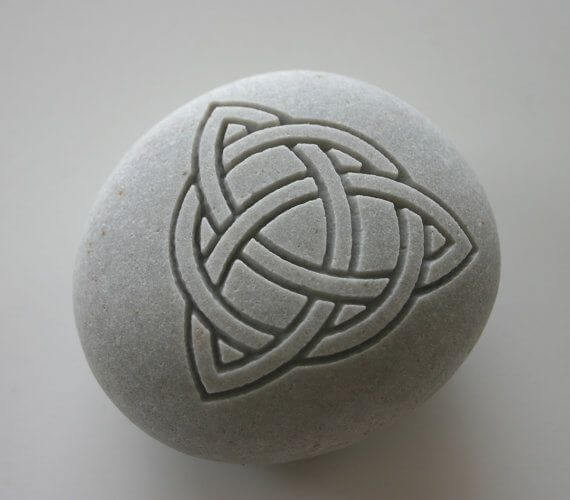
For my shield this day A mighty power: The Holy Trinity! Affirming threeness, Confessing oneness, In the making of all Through love… The breastplate of St. Patrick features this refrain at both the beginning and the end of its poem. St. Patrick’s invocation of the Trinitarian Godhead—Father, Son and Holy Spirit—is emblematic of Celtic Christianity. St. Patrick may be famously