Flesh and Blood by Kim Reisman
Word and deed come together, as intimately entwined as breathing in and breathing out. Deciding which is more important depends on which you did last.

Word and deed come together, as intimately entwined as breathing in and breathing out. Deciding which is more important depends on which you did last.

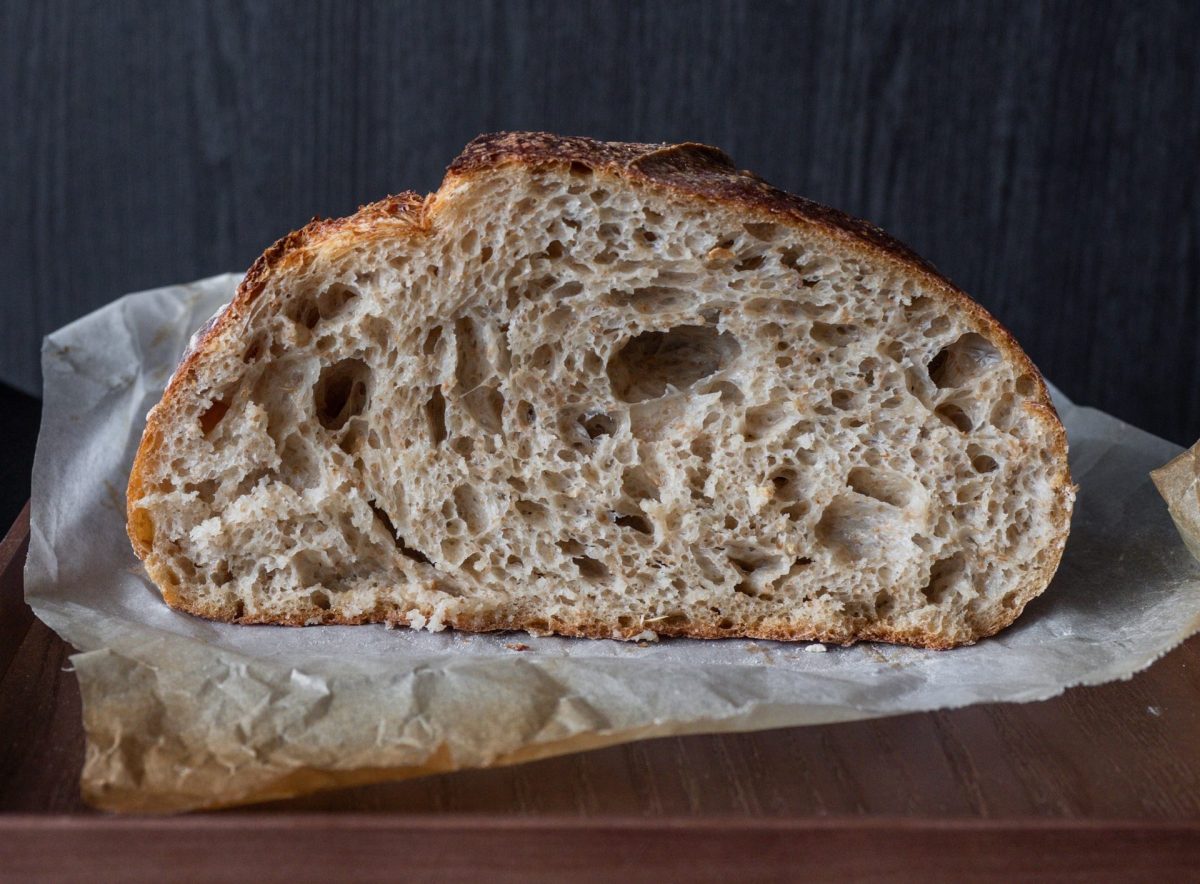
I have a delicious no-fail sourdough bread recipe! It involves a three-step process spread over one and a half days. The key to the recipe is to give the bread dough time to “yeast” – Sue Monk Kidd’s word for allowing bread to rise. Kidd tells of making the bread with the assistance of her five year old daughter, Ann.
Waiting is hard. Many of us are tempted either to wait passively, like the foolish bridesmaids, or to take over and attempt to save ourselves by our own effort. Advent challenges both our complacency and our self-sufficiency.
Into this climate of fear and apprehension, Christmas enters,
Streaming lights of joy, ringing bells of hope
And singing carols of forgiveness high up in the bright air.
The world is encouraged to come away from rancor,
Come the way of friendship.
So, while we can and should sing of Christ’s return throughout the year, Advent presents a key opportunity to declare with clarity this crucial doctrine in our faith. And as Wesleyans we have a gem in Charles’ hymn, “Lo! He Comes With Clouds, Descending.”
By establishing the habits of observing other people’s sufferings, of taking time to notice the pain and fear around them, we teach our children a genuinely Christian ethic. And in this, my hope is that they become adults who care about justice and equality for everyone. My hope in conversations like this is to sensitize my children to the lived
Following Jesus is always easier when there are angels around. We have a significant spiritual experience. We make a commitment. We’re bold and excited. We think, I can do this. I believe this.
There may be others around us who are feeling that same way. They’ve taken on a new spiritual challenge. Made a new commitment. Maybe even their initial

One of the things that I love most about God is how God can take our small efforts, the things in our life that we don’t believe are good enough, and make them truly amazing. He can take our small, human efforts, and perform divine miracles with them. He can make the impossible, possible. Listen to what happens in John 6:
It’s so easy to forget. It’s so easy to lose touch with the source of life…how we got to where we are; all the blessing that have been poured out upon us. It’s easy to think that we are where we are today because of our own efforts.
As in every age, there is a need to speak truth to power. There is a need to reflect Jesus into the lives of others. There is a need for Christians everywhere to more fully become Godbearers, making the kingdom life visible, tangible and real.

I am “old school.” I freely admit it. When it comes to writing, whether it be drafting a letter or revising a doctoral thesis (and I have done both in the last year) I would rather sit down with paper and pencil than a laptop or tablet. Turns out, studies indicate, I am not alone; there is something about the mind-body
And so, among other things I’m giving up for Lent, I’m trying to give up the search to find some other hidden meaning. Perhaps I won’t get anything out of it. We don’t enter into the Lenten season practicing disciplines in order to achieve a particular return. It’s not an investment. Fasting and praying are not disciplines that we engage

I’m supposed to be sitting here writing something brilliant and thought-provoking. You (my audience) are well-versed in theology, social ethics, and various philosophies. You have high expectations, or you wouldn’t be here. Don’t get me wrong, I enjoy a good theological debate and I am passionate about the current social crises, but right now, I’m just really loving the font
“What’s for dinner?” It might be the most dreaded daily question an adult can be asked. If only there was a simple answer that did not hinge on a barrage of underlying questions: Who’s making dinner? What time are we eating? How many for dinner? Will there be any dislikes or allergies represented at the table? What’s in the cupboard?
Every morning I start off with the Morning Office. It’s an online version of the morning and evening prayer service found in the Book of Common Prayer. The service has scripture readings, prayers, and other useful tools for focusing on God. Each day’s reading starts off with a hymn. And while I usually focus on one of the scripture readings,

On a cold winter’s evening, whether to toast marshmallows, chat with friends or curl up and read a book, many of us might enjoy the opportunity to cozy up to a brightly burning fire in the hearth. But how many of us depend upon a fireplace—excepting in dire emergencies—to heat up our homes? The reality is, despite whatever scouting skills
Unless we hold God’s will as Christ held his Father’s, our gifts corrupt. They grow into the most sinister of idols, more powerful than the Baals.
It may just be that we don’t make connections between our experience of being in relationship with Jesus Christ and the experience of the rest of the world through massive efforts and structures. It may just be that it’s about the intimacy of crossing a footbridge to meet another in the middle.
We are called to be “strong but gentle,” called to “strive to make the right prevail,” through the light of God who is with us, who does not abandon us midday, whose purpose will not fail or crumble, who trains us to serve “a higher will.”

For my shield this day A mighty power: The Holy Trinity! Affirming threeness, Confessing oneness, In the making of all Through love… The breastplate of St. Patrick features this refrain at both the beginning and the end of its poem. St. Patrick’s invocation of the Trinitarian Godhead—Father, Son and Holy Spirit—is emblematic of Celtic Christianity. St. Patrick may be famously