Praying Power by Karen Bates
“I do not always understand the mystery of prayer, but I know its power.”

“I do not always understand the mystery of prayer, but I know its power.”
World Methodist Evangelism is excited to launch the Residency In Mission program with the placement of our first Resident, Eliza Edge. Eliza will serve in Auckland, New Zealand at the Millwater Wesleyan Methodist Church of New Zealand. As a part of our ongoing commitment to raise up the next generation of leadership in Evangelism and Mission, RIM seeks to foster
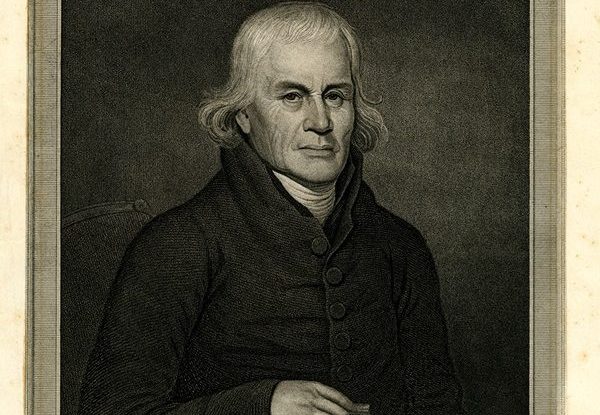
On my office shelf is a 200-year-old brick from Bethel Academy, the first Methodist school in the United States west of the Appalachian Mountains, established by circuit riding Methodist preacher Francis Asbury in 1790. From those roots sprang Asbury College in 1890 and Asbury Theological Seminary in 1923. You might look at that brick on my shelf and think it’s

Today’s reading is from Acts 27: 13-38: When a moderate south wind began to blow, they thought they could achieve their purpose; so they weighed anchor and began to sail past Crete, close to the shore. But soon a violent wind, called the northeaster, rushed down from Crete. Since the ship was caught and could not be turned head-on into the wind,
“Nehemiah is faced with the news that the walls and gates of Jerusalem have been destroyed, leaving the city’s inhabitants vulnerable. What are some things in your life that need to be rebuilt? Are you ready to ask God to show you something that is in need of repair?”
A crucial source of guidance for WME comes from our Regional Secretaries who are located across Africa, Asia, Eurasia, Europe, North America, Pacifica, and South America. These global leaders help us identify the challenges facing the church in their part of the world. We recently gathered the WME Regional Secretaries in Seoul, South Korea to create strategies for WME’s ongoing

“I’ve discovered that there is a tremendous difference between easiness and simplicity.”

“More than just building a tower, the people of Babel wanted to build a reputation for themselves. They wanted others to recognize their intelligence and skill and to admire them. Abraham, on the other hand, didn’t seem that interested in making a name for himself. He was happy to follow God, to obey God’s calling, and to entrust his reputation

God fulfills his promises. We know this. But we often struggle to see how. Because the promises God makes and the promises we would like aren’t always the same. His wisdom is not ours.

“God’s strength becomes available to us when we are rooted and established in his love. In what other things are you tempted to root yourself? What in your life makes you feel secure and established?”
The weight of Christian worship history testifies that the Sunday service is primarily a gathering of, and for, the faithful. This is not to say that we shouldn’t consider how our worship services can best speak in the language of our local contexts. It isn’t to say that we shouldn’t consider if our gatherings are marked with radical hospitality and
Wesley knew how to be abased and how to abound. He intended, as did his brother John, to live all of life under God’s hand, whatever the circumstances of any given day.
Though it may seem to be the most difficult to define of the three, Wesley insists on including spirit with doctrine and discipline because right doctrine (belief) and right discipline (practice) are not enough in themselves.
There is a phrase in Wesleyan theology that holds the key to understanding most everything about present salvation. The phrase is “holiness of heart and life.” This is one of those terms that seems simple at first glance and yet is packed with meaning on multiple levels. It’s also a term worth exploring, and I want to explore it here.
I have heard numerous people in various ecclesial and academic contexts use this reformulation as if it were the direct equivalent of the original. What I have not heard, however, is much in the way of critical reflection upon such usage. “Stay in love with God” is perhaps easier to say (and memorize) and sounds more modern than the rather

For six years I lived among live oak trees on the Mississippi Gulf Coast in the aftermath of Hurricane Katrina. In fact, weekly, I drove down Highway 90 between Bay St. Louis and Ocean Springs, Mississippi – the “beach road” as we natives call it, where there were hundreds if not thousands of live oak trees that are massive in

We Methodists don’t “believe” in backsliding, as some have accused us, but we’re honest enough to confess a fact when it stares us in the face, and we’re sensitive enough to our spiritual condition that we can tell the difference.

We Christians are to “sit down on the bottom rung of the ladder of sanctity and yell for Jesus Christ.” When we do, he will come. He will come to nurture and change us.
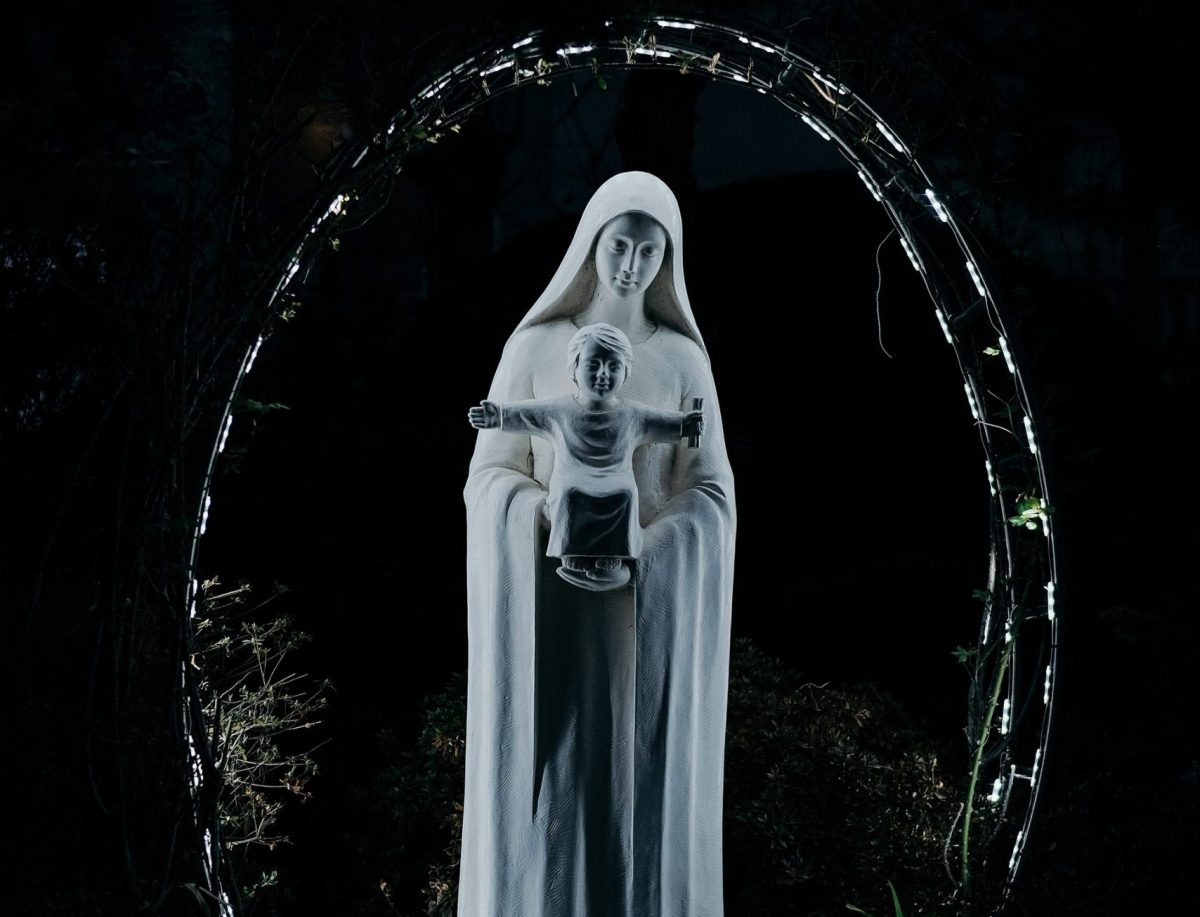
Here is a reality check as we move forward from the Christmas event: Mary may have been the first Godbearer. She may have been the ultimate Godbearer. But if you are in relationship with Jesus Christ, then you are a Godbearer too. Everyone who follows in the Jesus way is called to be a Godbearer. That is a huge part

The twelve days of Christmas are upon us at last! Advent, the church’s liturgical season of waiting and anticipation is over and the liturgical police can no longer write citations for early Christmas carols singing. For the past three and a half weeks, Christians following the liturgical calendar, have been singing hymns about waiting, expecting, anticipating the coming of Christ.