Remembering Christ’s Presence With Us by Ken Loyer
“How is memory significant for us as God’s people? Why is it important for us to remember, and what specifically should we remember most?”

“How is memory significant for us as God’s people? Why is it important for us to remember, and what specifically should we remember most?”
“We are what we think. We are transformed by the renewal of our minds. So study is a necessary discipline for spiritual growth.”

Revelation. Not of the contents of a carefully wrapped box in your childhood home, hidden from view until enterprising siblings helped you spy out the contents (or were you one of the professional tape-peelers who could lift a flap of wrapping paper without leaving a trace?). Not of a painful holiday discovery, realizing your daughter has an eating disorder or
“In Advent we are waiting for the return of Jesus the Christ, the coming King. In Advent, we anticipate the return of Christ. Advent is about the future, the end, the “Christ shall come again in final victory” part of our faith. And so in Advent, we practice waiting. We remind ourselves that Jesus is coming back and that we
Simon and Garfunkel quipped that “the words of the prophets are written on the subway walls and tenement halls and whispered in the sound of silence.” At the beginning of the song, they sang, “hello darkness, my old friend, I’ve come to talk with you again.” Advent meets us in the darkness, in the silence. So do the prophets.
“There I was, the new pastor of a church that had a strong, proud heritage but more recently had experienced several decades of slow decline while nobly carrying on, a congregation like so many others these days. I was trying to envision through hope-filled eyes the potential for renewal and growth in that setting, but as I stepped into the

Advent. For some, it’s a countdown to Christmas. For others, it marks the beginning of the Christian calendar year. For most Christians, it is a season of preparation: not just to celebrate the birth of Jesus but to renew our hearts that we might see Christ in the here and now as well as in hope and expectation of his

10…9…8…7…6…5…4…3…2…1… HAPPY NEW YEAR! “A little premature, man…” When the holiday season rolls around, emphasis is placed on the Big Three: Advent, Christmas, and New Year’s Day. What would happen if we started celebrating the Big Two—Advent and Christmas—instead of the Big Three? Christians may forget that Advent marks the beginning of the Christian calender year. It entails celebrating two

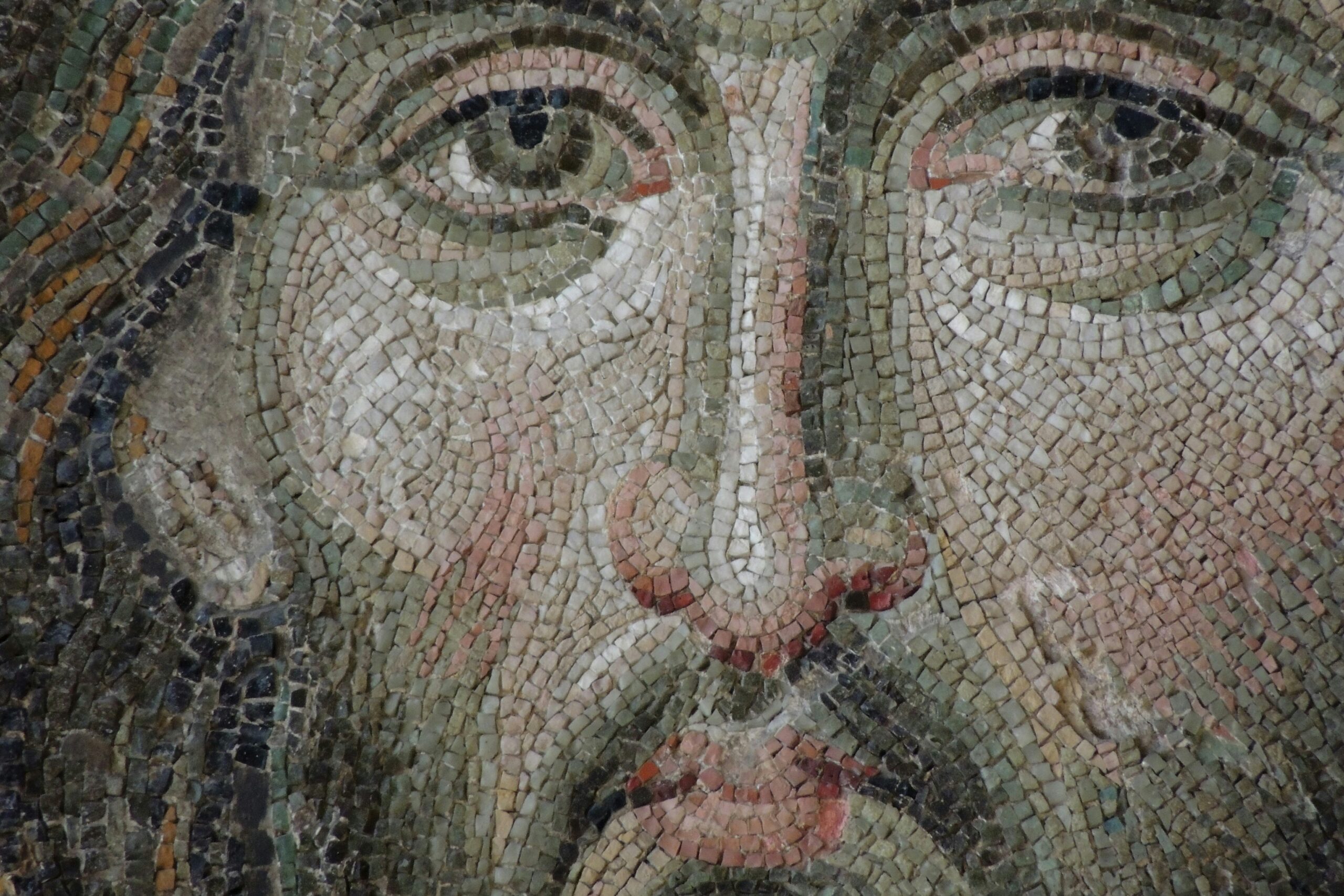
“I told you this so that my joy might be in you, so that your joy might be full.” – John 15:11 I love the image of a smiling Jesus. It always inspires me to wonder about the things Jesus might have smiled at. Children, certainly. I have a sense that no child in a marketplace ever escaped his smile.
“There are things that you and I can never do for Christ and the kingdom by ourselves. We have to be a part of a body, a community. This is especially true in the use of our money.”
“The efforts at Methodist liturgical revision that culminated in the 1989 United Methodist Hymnal and 1992 Book of Worship were often disregarded by those seeking to make their worship services more “contemporary.” As “contemporary worship” became an increasingly viable option for Methodists, many completely rejected the hymnal or anything that appeared to be rooted in the past. While Methodist “contemporary”
“Sanctification is not about something that I either have to do to make myself better, or for which I have to feel guilty about not being good enough. It is a ‘work of God’s grace.’ Entire sanctification is really nothing more than
God’s grace freeing us from everything that has kept us chained to sin and death. The Triune

Fasting is more than denying ourselves food. It is choosing to act out, by temporarily denying ourselves food, that we do not live by bread alone. We are completely dependent upon God, and we deliberately choose voluntary weakness. We become identifiably humble in the face of the problems with which we are dealing. We admit to each other, and primarily
The more Christians link Communion with spiritual formation and daily faith practice, the more likely the church will be invigorated and empowered to carry out its missional mandate to make disciples of Jesus Christ for the transformation of the world. Through the service of Communion, the church remembers and celebrates the presence of God with us.

“Jack, take your hands off of your ears.” “But I don’t want to hear what you are saying!” This is what shoppers strolling down store aisles could overhear recently. Alas, the four year old had acted up; alas, Mama had to intervene with a reminder of behavior expectations. But the child had realized that with hearing comes accountability. If I

Some time ago, I was called to an assisted living home. The staff wanted me to talk with a guy who was really giving them a hard time and they were at their wit’s end. This 92-year old guy who claimed to be an atheist was struggling because he felt like he might die any day and he didn’t know
At issue was the question of what made Methodist worship distinctly Methodist. Drawing from Wesley’s example, Summers argued that form and freedom should go hand in hand in Methodist worship. Even today these disagreements over what makes Methodist worship “Methodist” continue. For all the talk over “high” and “low” church; “spirit-led” and “ordered;” or “contemporary” and “traditional”—whatever the current iteration
Do you ever find yourself struggling with bridging the horizons from ancient to modern? Recently, I was allotted the task to preach the Parable of the Two Sons (Matthew 21:28-32). Realizing that this passage is difficult to understand apart from its context, I decided to expand the sermon to Matthew 21:23-32. As I was drawing things together and preparing for
As pastors we have to understand that as we serve our church, it will begin to look like us. Our shared life will rub off on each other. We will take on the DNA of that local church body and always carry it with us. And part of who we are will always stay with them. We are related after
I have known for several years that on some level behavior precedes doubt.
In other words, we don’t arrive at our shadow of doubt by objective analysis of relevant facts; instead, most of us begin to act a certain way and then circle back around and develop some doubts to substantiate that behavior.
We don’t think our way