
Christmas In Brazil by Maria Paula Pereira de Lima
When I was a little girl, decorating the Christmas tree was a family ritual my parents and I looked forward to every year. We’d crack some Christmas tunes on the stereo CD player we had in our living room – yes, I feel old whenever I remember I actually used one of those – and we’d hang all kinds of cute ornaments on our tree. There was one particular “ornament,” if it can be called that at all, that is part of the “Brazil core Christmas tradition package” – cotton. Yes, actual cotton balls. Except we would open them up and stretch them out along the tree branches to make it look like snow. It didn’t, and I never quite understood why we did that, because it is usually 100F outside at this time of the year. We always did it anyway along with many other Brazilian families. Personally, I gave up the “fake snow” a while ago, but many people still do that to this day.
Unique Brazilian Christmas Decorations and Rituals
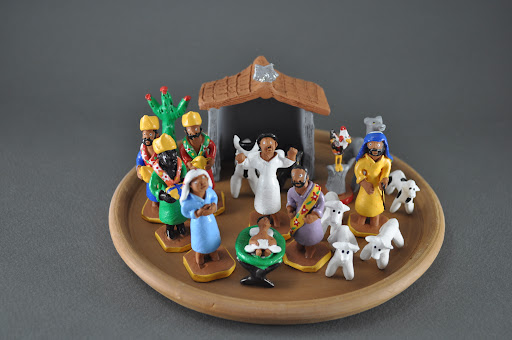
And that’s the thing about Brazil – being a continental nation with so many different cultural influences, celebrations of any holiday will vary quite a bit depending on which part of the country you’re in. That is true for Christmas as well, however, it is arguably the holiday with the most common denominators nationwide. One of those is the aforementioned ritual of decorating the tree. And not just the tree – almost literally the whole town. Christmas season technically begins early December, but preparations may start as early as late October (Halloween and Thanksgiving aren’t really a thing around here). One of the most common decorations is what we call a presépio – a nativity scene that usually consists of baby Jesus, his parents, some animals, the shepherds and the wise men (they weren’t actually there that night, but that’s a topic for a different article).
The Brazilian Christmas Feast: Must-Have Foods
Another commonality amongst those who do celebrate – because there are those who do not, including some Christian denominations, mind you – is the date. The majority of families will gather for a special dinner on the evening of the 24th, any time between 10:00pm and midnight. The menu of said special dinner is also pretty regular. There must be turkey – usually roasted. If your family is fancy, they might add an orange/pineapple sauce to it. Codfish dishes are pretty common as well. A big fan favorite is a delicious thing called farofa, which is basically a toasted cassava flour mixture, usually mixed with bacon, peas, corn or whatever you feel like adding to it. Rice is also a staple, as is the argument over whether or not to add raisins to it (same goes for farofa). For dessert, we usually have one of three options, and quite often, all of them – rabanada (similar to a french toast), pavê (delicious layers of biscuit, cream and chocolate) and panettone (an Italian fruit bread that you either love or hate, and if you hate it, you probably love the chocolate chip counterpart, which is my case).
Christmas presents are very much a thing, and Christmas shopping gets as crazy as anywhere else. Some parents will allow their kids to open their presents on the evening of the 24th, whilst others have to wait to open them on the morning of the 25th. Speaking of the next day, one of our favorite traditions that I believe is also a national one is to have the leftovers of Christmas for lunch the next day. Somehow, it all tastes even better.
Keeping the Faith: The True Meaning of Christmas in Brazil
In the midst of all this craziness, it is easy for people to lose sight of the real meaning of Christmas – the birth of our Lord and Savior Jesus Christ (that is partially why some denominations abstain from the festivities all together). Even though Brazil is a majority Christian country, there’s a huge gap between how people respond to a census about their religious beliefs and how they actually live their lives. For many, Christmas has become nothing more than a yearly family gathering, and quite a stressful one at that, due to all the preparation that is needed.
In this context, I believe the church has a fundamental role in preserving the true reason why we celebrate Christmas — and there are many ways it tries to do that. Some denominations follow Advent calendars and liturgies that intentionally guide the congregation through the themes of hope, peace, joy, and love, as well as recount the events leading up to the wonderful birth of Jesus. Others may emphasize Scripture readings, special programs for children, or public reenactments of the story of Jesus’ birth (the latter being more common within the Catholic Church).
Regardless of the specific tradition, the church serves as a steady reminder that Christmas is ultimately about God’s redemptive story. We received the ultimate gift when that baby boy was born in a stable all those years ago in Bethlehem. Through Jesus’ life, love and sacrifice, God brings together his own family in a celebration of mercy and grace. It is because of Jesus that we can have hope, peace, and joy — three things our world desperately needs to this day.
Subscribe
Get articles about mission, evangelism, leadership, discipleship and prayer delivered directly to your inbox – for free