The Beautiful Gate by Kim Reisman
Why did they leave him at the gate? Why not take him all the way in? Did they not understand that he had spiritual needs as well?

Why did they leave him at the gate? Why not take him all the way in? Did they not understand that he had spiritual needs as well?
Wesley leads us to the heart of Lent and to the heart of every day of seeking the fullness of life in Christ: such a longing to please our Lord that we want the Holy Spirit to check us at the first sense of pride, wrong desire, or the wandering will — anything, that is, that might “quench the kindling

“The mission of the Church is to make disciples of Jesus Christ for the transformation of the world.” The Mission Statement of the United Methodist Church. I am an ordained United Methodist clergy and I have a confession to make. I have a love-hate relationship with the United Methodist mission statement. As a Wesleyan, I love it because it is
On Ash Wednesday, we recall through word and ritual, and even rejoice in, the fact that the Lord our God can bring new life out of the ashes of our brokenness.
A celebration of Easter without a prior descent into the grave is dishonest and naïve, just as observing Lent without the uncompromising proclamation of the Resurrection is hopeless.

Compassion comes from a deliberate identification with another person until we see things as he sees them, and feel things as she feels them. That’s the place to which God seeks to bring all of us.

Around the time the Methodist revival in England completed its first decade, John Wesley penned an essay called A Plain Account of the People Called Methodists. His aim is to explain the Methodist movement to the larger world, which he does by describing the various internal components of the revival that had developed during Methodism’s first ten years. One of

I’m a Yankee. Specifically, I was born in central Michigan, where the air is scented with pine needles and damp sand. I live in northeastern Texas – a region known for its own Piney Woods – but a world away from the cornfields of the Midwest, where I grew up. It may seem like a small question, but how does

I frequently lead workshops on prayer, which I always find kind of odd because I’ve never felt myself to be much of an expert on that kind of thing. Prayer is hard work for me; it’s meaningful, but it’s hard. During my workshops I always focus at some point on intercessory prayer – prayer for needs beyond our own –
Charles Wesley wrote songs for sinners. For those who were lost in sin, his hymns promised salvation, and for those who had come to Christ they were hymns that celebrated the day when it happened… These hymns are as true as ever and it is only our spiritual and doctrinal naivete that keeps us from seeing it.

Acts 17:16-34 contains Paul’s message to the Athenians at the Areopagus. Athens was considered the intellectual capital of the world. It was home to Socrates, Plato and Aristotle. Paul came to Athens during his second mission trip, seeking refuge. Earlier, he had been run out of Thessalonica by the synagogue crowd. He found a more congenial reception in Beroea, until
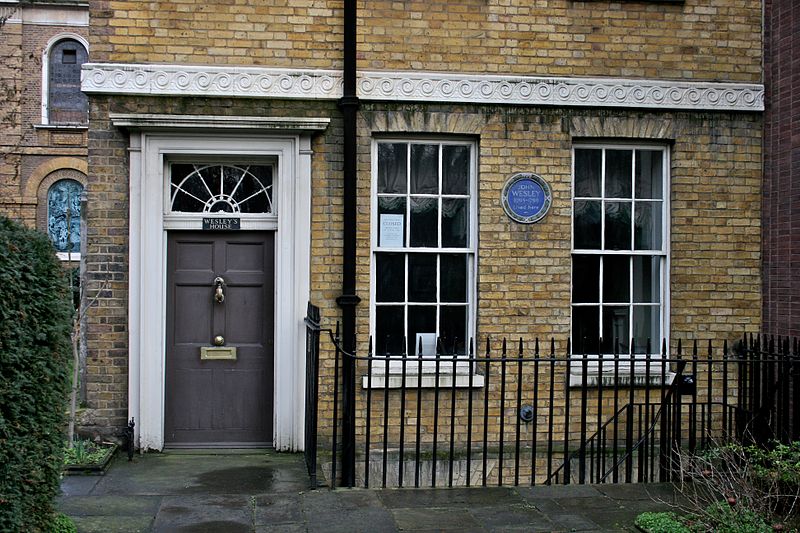
The good news is that we already have a basic blueprint for how to help people embrace faith in Jesus and become his apprentices. Methodist discipline, or the method that gave Methodism its name, was focused on helping people become deeply committed Christians, to become mature followers of Jesus Christ … The biggest challenge contemporary Wesleyans may face is our
This is a portion of the sermon preached on December 27, 2013, at the funeral service for Bishop McAlilly’s nephew Gale Stauffer, who was killed in the line of duty December 23, serving on the Police Force of the city of Tupelo, Mississippi. … little did we know that on this day of days, we would find ourselves moving so

Prevenient grace does not depend on any power or merit in man; no, not in any degree, neither in whole, nor in part. It does not in any wise depend either on the good works or righteousness of the receiver; not on anything he has done or anything he is. It does not depend on his endeavors. It does not

I received an e-mail from a pastor in Tennessee a few days ago posing this question: A church member asked me to recommend a biography on John Wesley, and I didn’t know what to suggest. Wondering if you could suggest something? That’s not an infrequent request to get for a seminary professor who teaches Methodist history. When I get an

I was thirty-two years old when a woman took my advice on how to die. Sitting in her low living room banked with windows that overlooked butterfly-laden bushes, I watched her shallow breaths. She had lost strength and energy: her frame seemed diminished, as if her soul were clinging to her body by mere tendrils. While disease sapped her vitality,
The weight of Christian worship history testifies that the Sunday service is primarily a gathering of, and for, the faithful. This is not to say that we shouldn’t consider how our worship services can best speak in the language of our local contexts. It isn’t to say that we shouldn’t consider if our gatherings are marked with radical hospitality and
Wesley knew how to be abased and how to abound. He intended, as did his brother John, to live all of life under God’s hand, whatever the circumstances of any given day.
Though it may seem to be the most difficult to define of the three, Wesley insists on including spirit with doctrine and discipline because right doctrine (belief) and right discipline (practice) are not enough in themselves.

There is a phrase in Wesleyan theology that holds the key to understanding most everything about present salvation. The phrase is “holiness of heart and life.” This is one of those terms that seems simple at first glance and yet is packed with meaning on multiple levels. It’s also a term worth exploring, and I want to explore it here.
In short, we need more Arminians with an edge. These are Arminians who understand that the claims of Calvinism and Arminianism are mutually exclusive, and they cannot both be right. They understand that there are important issues at stake and that there are large practical implications. Not the least of these is the very character and love of God. Does
David understood the important of leaving a legacy. He understood that each generation should stockpile resources for the next generation. He accepted that his own failures and inadequacies would prevent him from accomplishing everything he wanted to do during his own lifetime, but he used that fact as a motivation for the future success of those who would come after

Do you mind if we drive around a bit in the Word? I’d like to show pastors some points of interest that have changed the way I understand ministry. If you need to set your GPS, I’ll tell you that we’re going to start in 2 Timothy where we’ll pick up a three-letter key. Then we’ll stop in Luke 9
In the church, we often are so soft about what we are doing that we can’t speak to people about concrete objectives and goals. We can’t even tell whether we are doing well because we don’t know what doing well looks like. And, my son observed, we often seem more concerned about everyone liking us than speaking what we believe.

The challenge for the disciples was to be the bridge for someone else to experience justice. When Jesus called the disciples, he didn’t send them out in search of instant conversions. He gave them an example of living before telling. Doing before speaking. Go. Make. Baptize. And teach. This is one way in which Jesus was the incarnation of God.
Is anything too supernatural? Too mystical? Too great for God to do? Nope. Is it too hard for him to bend the laws of nature? Nope. He wrote them. You know what? You, too, have continual reminders in your life of not underestimating God. We have those reminders, items large and small, global and personal, to urge us not to
It’s not easy to hold yourself in readiness. You have to be alert, your entire body engaged and prepared to move. You have to be focused, intent on watching for the necessary sign. You have to be willing to act, following the signal the moment it arrives.

It’s nearing the end of summer and there is a pretty good chance, if you are a Methodist or attending a church in the Wesleyan tradition that either your church newsletter or weekly bulletin is currently showcasing upcoming Bible studies or spiritual formation classes under a banner headline, “Fall Discipleship Opportunities.”It might be that there is an advertised afternoon volunteer
The conclusions reached in God’s Love through the Spirit, particularly concerning an understanding of love both within God’s own life and in Christian participation in God by grace, challenge the claim that Western theology suffers from a pneumatological deficiency, and represent a significant contribution to the study of Aquinas and of Wesley, to ecumenical dialogue between Catholics and Methodists (and

To die, to sleep— no more—and by a sleep to say we end the heartache and the thousand natural shocks that flesh is heir to—’tis a consummation devoutly to be wished! To die, to sleep. To sleep, perchance to dream—ay, there’s the rub, for in that sleep of death what dreams may come when we have shuffled off this mortal

“What kind of advice can I offer you? I’m younger than you.” My friend’s reflection resonates with many younger folks in ministry. In essence it asks, “Can young people offer wisdom to those who are (much) older than themselves?” That question haunts many young pastors and ministers as they wrestle with their vocation. Whether or not Timothy was in his

The Son of Man came not to be served by to serve, and to give his life as a ransom for many. – Matthew 20:28 My mom was a great southern cook. At least six nights a week, she cooked a full meal for everybody who showed up at the table. There were eight of us and most nights, at
The setting is ripe for revival. And the essential response to that possibility is for God’s people not to whimper. Acknowledge our sin, and repent, yes, but not whimper. Could it be that we are mistakenly centered on institutional unity, when a prior issue is crying for attention: unity in the Gospel. We can have institutional unity without revival, but

These kinds of moments have come and gone in my ministry, and more are sure to unfold; as they do I need to ask myself, how am I treading? Lightly? With grace? Out in the open? Is it about me? Or am I the errand runner for the Spirit I need to be? Sadly for me, as my ministry moves
If it is true that many are gravitating to more historically resonant forms of worship, Methodists should know the resources within their own liturgical history…The forms of Methodist worship, when embraced with “heart, mind, soul and strength,” allow for reverent spontaneity and holy emotion. The use of liturgical forms, for Wesley, actually led to freedom in worship—a fact quickly lost
Talking about aliens was a great opportunity to teach students about the Wesleyan understanding of scripture, to delve into the logic of the two natures in Christology, and to unpack how Christians connect incarnation to salvation. I got to show the student I cared about his question, and maybe helped him learn a bit more about Christian theology.

Forty years ago, we could not have imagined paying $3 for a cup of coffee. Now, a daily Starbucks habit would cost you the price of a house over 30 years. And people pay it. Starbucks is nearly 43 years old. There are about 23,000 of them, but there are 1000 less of them this year. Starbucks is shrinking. Here’s

“Now we see dimly; then, face to face.” Not, perhaps, the most utilized portion of I Corinthians 13 at the ubiquitous summer wedding – but oddly, one of my favorite parts of the familiar chapter. It seems to distill the essence of faith: trust that we will eventually see “face to face” what we now discern only dimly, in fragments
I mean, what in the flippin’ world is happening here? Did God really just slaughter this guy for “spilling his semen on the ground”? If this story has ever interested you, then you’ll want to know why Onan the Barbarian was slain.
True generosity means extending yourself to a place of the unknown or even fearful. To do something that is so beyond your capacity and frame of reference puts you into the Realm of the King. This is Kingdom work, here folks. We get to see moments of God’s Kingdom here and now when this happens. All it takes is a