Everything That Is Hurt: St Symeon by Kim Reisman
And everything that is hurt, everything
That seemed to us dark, harsh, shameful,
Maimed, ugly, irreparably damaged
Is in Him transformed.

And everything that is hurt, everything
That seemed to us dark, harsh, shameful,
Maimed, ugly, irreparably damaged
Is in Him transformed.
I doubt there is a more used and less understood word in the contemporary church than “missional.” Missional is not about being better at being Kodak in a digital photograph world.
The question remains. Do we really know the High God? How would our lives change if we really understood the fact that the God made real in Jesus Christ – the God of the world – loves each tribe and nation equally? How would that understanding change how we looked at other tribes and clans – even in our own
J. C. Albert has to be one of the greatest followers of Jesus I’ve ever met. I met him in India in 2012. He was the most open, loving, friendly guy and he had these wonderful stories to tell of adventures with Jesus. He has visited and shared the good news of Jesus Christ in nearly 3,000 tribal villages in
Now that we’ve celebrated God’s decision to put on flesh and bone and move into the neighborhood, we’re left with the question, what do we do now?

At our downtown ministry this week, I watched a precious soul rock an invisible baby while “Away in a Manger” was being sung and I was overwhelmed by the values of God and his preference for the poor. It is completely antithetical to our human nature to seek after and invest in the hidden places where the poorest of the
“The Good, the Bad and the Ugly.” We all have something in each list. Tonight, I want to remind you that life is a complex mixture of all three kinds of experiences…good to celebrate, bad to grieve, and ugly to heal.
The King of all creation was born as a lowly, disregarded nobody-baby. In part, that was because Mary and Joseph were nobodies. Joseph was a craftsman from the small town of Nazareth in Galilee. Mary was a young woman with an apparently questionable character. Still, they were the nobodies God wanted to use, and that was a surprise.
God creates. God redeems. Christian faith is deepened and enriched when we get the order right. This is especially true in the arena of evangelism, where our focus is often on individuals and our fervent hope that they might come into relationship with Jesus Christ. There is no doubt this is an extremely important focus. Yet something significant is lost

“The will to win is not nearly as important as the will to prepare to win.” – Everyone from Vince Lombardi to Bear Bryant to Bobby Knight is cited as the source of this quote. The wisdom found in it has outlasted the origin. Everyone wants to win. It doesn’t matter how you define winning – career success, relationship goals met,
Maybe as we proclaim the good news that will bring great joy to all people, we ought also to recall the words of our Prince of Peace, who told us that God blesses peacemakers. Maybe in this season of peace and beyond, we need to ask how might we become more active in our peacemaking?
Word and deed come together, as intimately entwined as breathing in and breathing out. Deciding which is more important depends on which you did last.

I have a delicious no-fail sourdough bread recipe! It involves a three-step process spread over one and a half days. The key to the recipe is to give the bread dough time to “yeast” – Sue Monk Kidd’s word for allowing bread to rise. Kidd tells of making the bread with the assistance of her five year old daughter, Ann.
Waiting is hard. Many of us are tempted either to wait passively, like the foolish bridesmaids, or to take over and attempt to save ourselves by our own effort. Advent challenges both our complacency and our self-sufficiency.
Into this climate of fear and apprehension, Christmas enters,
Streaming lights of joy, ringing bells of hope
And singing carols of forgiveness high up in the bright air.
The world is encouraged to come away from rancor,
Come the way of friendship.
So, while we can and should sing of Christ’s return throughout the year, Advent presents a key opportunity to declare with clarity this crucial doctrine in our faith. And as Wesleyans we have a gem in Charles’ hymn, “Lo! He Comes With Clouds, Descending.”
By establishing the habits of observing other people’s sufferings, of taking time to notice the pain and fear around them, we teach our children a genuinely Christian ethic. And in this, my hope is that they become adults who care about justice and equality for everyone. My hope in conversations like this is to sensitize my children to the lived
Following Jesus is always easier when there are angels around. We have a significant spiritual experience. We make a commitment. We’re bold and excited. We think, I can do this. I believe this.
There may be others around us who are feeling that same way. They’ve taken on a new spiritual challenge. Made a new commitment. Maybe even their initial

One of the things that I love most about God is how God can take our small efforts, the things in our life that we don’t believe are good enough, and make them truly amazing. He can take our small, human efforts, and perform divine miracles with them. He can make the impossible, possible. Listen to what happens in John 6:
I have heard numerous people in various ecclesial and academic contexts use this reformulation as if it were the direct equivalent of the original. What I have not heard, however, is much in the way of critical reflection upon such usage. “Stay in love with God” is perhaps easier to say (and memorize) and sounds more modern than the rather

For six years I lived among live oak trees on the Mississippi Gulf Coast in the aftermath of Hurricane Katrina. In fact, weekly, I drove down Highway 90 between Bay St. Louis and Ocean Springs, Mississippi – the “beach road” as we natives call it, where there were hundreds if not thousands of live oak trees that are massive in

We Methodists don’t “believe” in backsliding, as some have accused us, but we’re honest enough to confess a fact when it stares us in the face, and we’re sensitive enough to our spiritual condition that we can tell the difference.

We Christians are to “sit down on the bottom rung of the ladder of sanctity and yell for Jesus Christ.” When we do, he will come. He will come to nurture and change us.
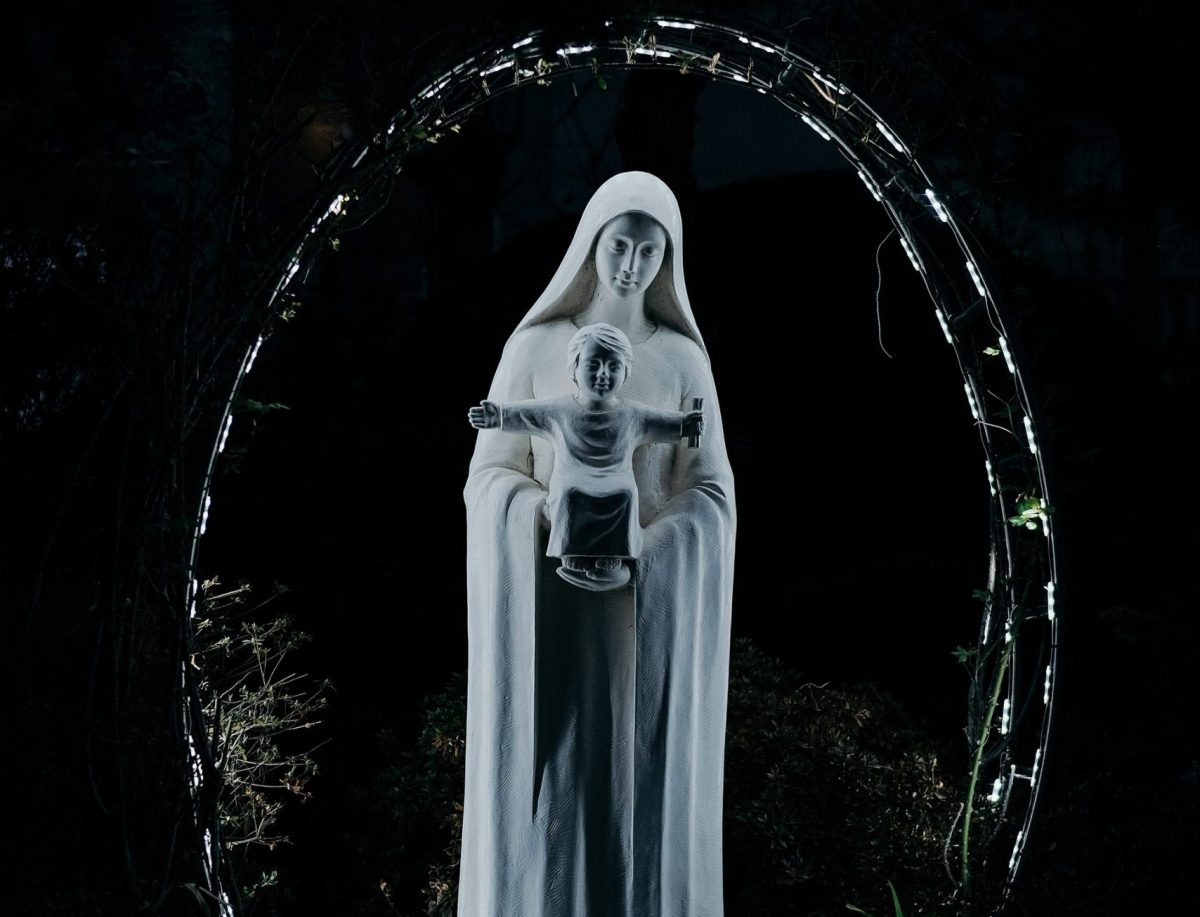
Here is a reality check as we move forward from the Christmas event: Mary may have been the first Godbearer. She may have been the ultimate Godbearer. But if you are in relationship with Jesus Christ, then you are a Godbearer too. Everyone who follows in the Jesus way is called to be a Godbearer. That is a huge part

The twelve days of Christmas are upon us at last! Advent, the church’s liturgical season of waiting and anticipation is over and the liturgical police can no longer write citations for early Christmas carols singing. For the past three and a half weeks, Christians following the liturgical calendar, have been singing hymns about waiting, expecting, anticipating the coming of Christ.
An intriguing commonality between those who follow the Jesus way and non believers is a general distaste for evangelism. Certainly this dislike doesn’t apply to everyone, believer or not; nor does it stem from an accurate understanding of what evangelism is all about. But the dislike is there…The negative image of the televangelist looms large in all our consciences.
The first verse of “Hark! the Herald Angels Sing” is an invitation to join the angels who announced Christ’s birth. In fact, Wesley wants all nations to rise and “join the triumph of the skies” in the tumultuous news, “Christ is born in Bethlehem!” Notice the exclamation point. Wesley was inclined that way. It’s hard to end all your sentences
There aren’t many times in the life of the church where people sit down and say, “Please teach me doctrine.” As a theology nerd, I wish it would happen more. But it just doesn’t happen that much.
Advent is primarily about looking through the baby in the manger to see Christ the King coming on the clouds in glory. The problem for Methodists is that, for decades, we did not have a single hymn in the Methodist hymnal that explicitly referenced the Lord’s physical return.
When I was in 8th grade, my family lived for a bit in some low income apartments. The apartment complex was formed in a square with a decent sized courtyard in the middle. In the courtyard was where all the dramatic action was – this is where kids got in fistfights with each other, where drug deals happened after dark,

Wesleyan Accent is excited to welcome Ellsworth Kalas who will be contributing regular reflections on Wesleyan hymns. His first highlights Charles Wesley’s wonderful Advent hymn, “Come, Thou Long-Expected Jesus.”
Familiarity sometimes breeds dullness. It’s true in the whole of life; it is especially true in the way we hear things and reflect on what we hear. The hymns we sing are a great example of this. If we have sung them often, we are so familiar with the tunes that we sing the words by rote. Not only do

How should we “read” John Wesley? And why is he important for people today? These are important questions for Methodists, most of whom consider themselves to be Wesleyans in some sense. Focusing on the actual theology of John Wesley has not always been emphasized in American Methodism. For much of the 19th and 20th centuries, Wesley was treated in “hagiographic”
One of our big failures as Christians is our continual refusal to discipline ourselves in living with the word of God. We need to study the Bible. It is the shaping source of our Christian faith and way. In it we find the revelation of God which God provided through God’s Son, Jesus. It is food for our souls, direction
Though Wesleyans are most committed to offering Christ, not to being distinct from other Christian traditions, there are differences in Christian traditions because various parts of the body of Christ articulate their faith with differing emphases or nuances. And although Wesley was primary focused on offering Christ, he was not indifferent to Christian beliefs or practice. The next three posts,
Several weeks ago, as I was running errands, I heard my two-year old son exclaim from the backseat of our car, “Oh my God!” When I paused for a second to consider how to explain the third commandment to a toddler, he continued, “Heavenly Father, You have blessed our congregation with the joy and care of children…” This is the
Today, in Houston, Texas, friends and family of Bishop Sarah Frances Davis are gathered in sorrow, thanksgiving and joy. They are gathered in sorrow, because they are mourning the loss of a sister in Christ. They are gathered in thanksgiving, to celebrate a life well-lived, and they are gathered in joy, confidently proclaiming the truth that Jesus Christ has overcome
This summer I spent a week in Santa Fe, New Mexico at a writer’s conference. I’ve attended a few of these over the years and I’ve learned something. A single, very important fact: Writers are weird people. That’s just the truth. I can say that because I’m a full time pastor and a full time mom and only have time
Evangelism is a natural and necessary element of multifaith conversations from Wesleyan perspectives. True conversation by Wesleyans means true announcement of the good news of Christ’s life, death, resurrection, and coming reign. Yet a real conversation also means Christians are open to hearing what other faiths consider good news in their traditions. Multifaith conversations for Wesleyans always include evangelism (which