
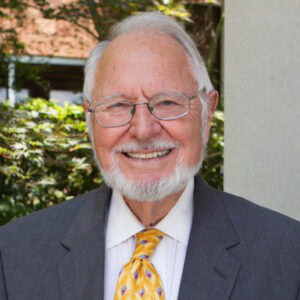
Check out the earlier articles in this series where Maxie shared about the need for personal holiness (part 1), surrender (part 2), character (part 3), and faithfulness (part 4).
It is not enough to recognize that the fruit and progress that result from our leadership are based on strong character. We must practice the disciplines that build that character and make us the prophet/priest God calls us to be.
Why Character Matters in Christian Leadership
Some of you will remember Frank Harrington. He was the long-time minister of Peachtree Road Presbyterian Church in Atlanta, one of the great churches in the nation. I remember the last time I was with Frank, before his death. I told him a story about my in-laws – Jerry’s mother and father – who live in Atlanta. Frank was one of their favorite television preachers. One Sunday morning as they listened, they were bolted in surprise by Frank’s reference to their son, Randy, Jerry’s brother. Randy had died of cancer a few years before. I had written about Randy’s death in one of my books, and quoted a letter that Randy had written to me in the midst of his suffering with cancer. Frank used that letter as an illustration in his sermon – he mentioned my and Randy’s names. Well you can imagine how that took Gerald and Lora by surprise – to hear a letter, written by their son, going out to bless thousands of people who had heard Frank preach.
Well, I told Frank that story. The next week, when he was back in Atlanta, he called my in-laws and shared a pastoral visit over the phone. He had thousands of people in his congregation, a national television ministry – yet he took the time to call two people whom he’d never met and shared with them the love of Christ. He was a model preacher in many ways.
How to Grow Spiritually: Questions Every Leader Should Ask
I remember one of his own experiences which he shared. When he went off to college, he was a candidate for the ministry under the care of Harmony Presbytery in South Carolina. Once a year he had to appear before the presbytery in person to give an account of his progress, his plans, and his studies. “In retrospect,” he said, “there’s only one thing I remember about those appearances. Mr. Knox, an older white-haired minister, would get up and ask the same question every time I was there. ‘Frank, are you making any progress in your walk with Christ?’
That’s the sort of question we need to ask ourselves – and we need to do it probably by asking ourselves three different questions:
One, am I growing?
Two, do I want to change?
Three, how deep is my desire for holiness?
What Is Spiritual Formation?
All of us could recall the events and crucial timeframes in our ministry which were watershed occasions, transition times, marking dramatic redirection or paradigm shifts in our understanding of vocation, church, the Christian life, and spirituality. One of those came for me when I was invited to join the staff of The Upper Room to direct a ministry, primarily calling people to a life of prayer, providing direction and resources for growth in and the practice of prayer – giving structure to a united expression of prayer by people around the world. I told Dr. Wilson Weldon, then editor of The Upper Room, that the fact the board was inviting me to assume this responsibility showed the church to be in desperate straits, since I was such a novice in this area of life and its development.
This responsibility forced me to be even more deliberate and disciplined in my own personal life of prayer. It introduced me to a wider dimension of spirituality than I had known. During those days, I knew no one within the Protestant tradition who was talking about spiritual formation. The Roman Catholics have known the importance of this aspect of Christian growth and have used “formation” language through the centuries. It wasn’t long before we at The Upper Room were talking about spiritual formation and seeking to provide resources for a broader expression of spirituality than we had known before.
Spiritual Disciplines for Christian Leaders: Lessons from the Saints
I became intensely interested in the great devotional classics. The Upper Room had published a collection of little booklets – selections from the great spiritual writings of the ages, writers whose names I barely knew and to whose writings I was a stranger: Julian of Norwich, William Law, Francois Fenelon, Francis of Assisi, Evelyn Underhill, Brother Lawrence, and an array of others. I began a deliberate practice of keeping company with the saints, seeking to immerse myself in the writings of these folks, which endured through the centuries, expressing Christian faith in life and becoming classic resources for the Christian pilgrimage. Parenthetically, out of this keeping company with the saints have come two workbooks – Keeping Company With the Saints and Lessons From the Saints.
As I have kept company with the saints, I’ve observed some characteristics they had in common:
… they passionately sought the Lord
… they discovered a gracious God
… they took Scripture seriously
… Jesus was alive in their experience
… they practiced discipline, at the heart of which was prayer
… they didn’t seek ecstasy but surrender of their will to the Lord
… they were thirsty for holiness
… they lived not for themselves but for God and for others
… they knew joy and peace, transcending all circumstances.
I submit these to you as the dynamic that will enable you to stay alive in your ministry and guarantee that you will finish well.