
Learning to Love by Michelle Bauer
What damage can be done if people exercise their spiritual gifts without love?

What damage can be done if people exercise their spiritual gifts without love?

Lent is a season of clarity. We already sit among the ashes. We already sit in cities made in our own image.
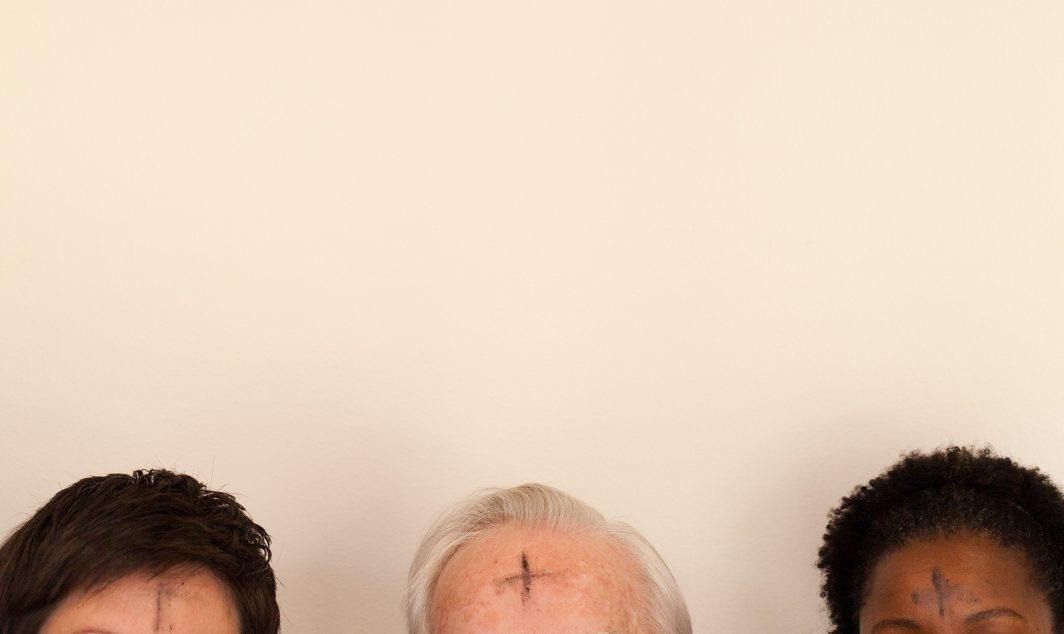
Simcha Bunim was a Jewish rabbi who lived in Poland in the 1700s. He is best known for what might be called the parable of the two pockets. The parable begins with two slips of paper. On one slip is written, “I am dust and ashes.” On the other slip is written, “For my sake the world was created.” These

As we prepare to enter into the season of Lent, there is always a call to fasting. That is one of the definitive features of this time of Lent. It is a time to pull back from all the abundance of our life, particularly for those of us in the West, and to refocus ourselves upon God, on our great

As the Church, it would be foolish to believe we have not participated or contributed in some way. We can confess the ways we have corporately and personally upheld this power dynamic, repent and seek to turn it upside down.
Men who object to women taking central roles in the church might want to remember what place the women took in the gospels: at the foot of the cross, present with Christ, at the moment when God himself was pierced and blood and water flowed.

I’ve seen a lot of death. Not just because my husband has a full-time pastoral calling, but also because my parents never shielded me from the reality of death. Many parents today hesitate to take their children to funerals because, “they wouldn’t understand,” and that is true, but only to an extent. As a parent, it is my duty (privilege?)

Curiosity is underrated. In the past one hundred years, many North Americans have undergone a shift in how they’re described and in how they see themselves. We have gone from citizens to consumers. A few years back the hit drama “Mad Men” followed the lives of people in a booming advertising industry in post-World War II America. Citizens may benefit
Recently I read an article by seminary professor Kate Bowler that had me staring wide-eyed at the computer screen, alternately barking bursts of laughter, fist-pumping the air, and feeling tears sting the corners of my eyes. She walked up to the elephant in the room, reached out, touched it, gave it a treat, made friends with it, and sat down
We live in a culture marked by a dramatic lack of trust, and the Church is not exempt as a target for those feelings of suspicion. As the Body of Christ, we have some restorative work to do as we witness for the kingdom.

What would you give your life for? Your kids? Your spouse? Your family? Would you give your life for people you don’t know? People forced into prostitution in Bangalore, or unborn babies? Would you give your life for the Church? Paul tells us Jesus gave his life for just this thing. Jesus gave his life for the Church. More precisely, Jesus
Here’s a news flash – the word “evangelism” is emotionally, historically, and theologically charged.
Cognitive dissonance is especially challenging in evangelism. We’re tempted to find ways to reduce the divergences between the Gospel and our culture, to change our message so it’s more palatable to the society in which we live, to accommodate it to the “wisdom of the world.”

The more I read those words and reflected on Jesus’ teaching in Matthew 25 the more it struck me that the Seven Works of Corporal Mercy are not an anachronistic relic of the Medieval church but constitute a very effective evaluation tool for the contemporary church.
The history of heresy in the first few centuries of Christian faith is fascinating as the church slowly and methodically made choices about the core tenets of Christianity.
And that’s the key. It was a process of choice – hairesis.

I really do love the book of Proverbs. There’s just some really good stuff within this great book: wisdom that can help us live our lives in ways that are just so powerful and so good. Ways that are just so true. Listen to what we are told today in Proverbs 21: 1-2: 1 A good name is to be chosen

United Methodists and many others followed the 2016 General Conference in Portland with fervent interest. Whether you watched live streaming (a primer in do’s and don’ts of parliamentary procedure), caught a few random comments on social networks or read daily summaries from the United Methodist News Service or the UM Reporter, by now there are a lot of perspectives on
Because as comforting as it is to know that I stand in a long line of mothers without children, ultimately their stories of temporary infertility are not helpful. I have prayed until I looked drunk. Nothing. My husband has prayed on my behalf. Still nothing.
Here we see the peril and the promise called-ones. The twelve come. They gather the stones at your feet. They heap those stones, stones of remembrance, stones your children’s children will ask about. But the names and the images of the called-ones are forgotten. They are wiped away like rough edges of stone in the bed of the Jordan. The
For me, as a Methodist, this is an important day to celebrate. It is important to tell the story of what God can do in a person’s heart, and because of that work, the world could be forever changed. As people who are walking the road of faith, let us point out particular places and stops along the way where