Lay People with A Vision by Kim Reisman
How many lay people do you know who exhibit vision for the inbreaking Kingdom of God?

How many lay people do you know who exhibit vision for the inbreaking Kingdom of God?
A couple of generations ago in North America, camp meetings and revivals were not uncommon in many Wesleyan Methodist traditions, flourishing in part from their popularity in the 19th century across frontiers. Outdoor meetings or camp meetings or week-long revival series held in local churches perhaps helped to pave the way for Billy Graham’s famous evangelistic crusades that inhabited tents
Compassion, in the Jesus way, is active – it steers toward the pain, joins folks in the valley of the shadow of death and finds some way to point to the hope of the resurrection.

When you look closely at the first few verses of Philippians, something quite unique stands out fairly quickly:
Paul and Timothy, servants of Christ Jesus,
To all the saints in Christ Jesus who are in Philippi, with the bishops and deacons.
You’ll notice that Paul does not refer to himself as an apostle.

We have a hungry prophet (Elijah) on assignment to stretch the faith of a widow woman on welfare and to add insult to injury she has just lost her son.
I stop by to tell somebody when you are dealing with a dead situation you have to expect the unexpected, process your pain, and trust the process.

What would you give your life for? Your kids? Your spouse? Your family? Would you give your life for people you don’t know? People forced into prostitution in Bangalore, or unborn babies? Would you give your life for the Church? Paul tells us Jesus gave his life for just this thing. Jesus gave his life for the Church. More precisely, Jesus
Here’s a news flash – the word “evangelism” is emotionally, historically, and theologically charged.
Cognitive dissonance is especially challenging in evangelism. We’re tempted to find ways to reduce the divergences between the Gospel and our culture, to change our message so it’s more palatable to the society in which we live, to accommodate it to the “wisdom of the world.”

The more I read those words and reflected on Jesus’ teaching in Matthew 25 the more it struck me that the Seven Works of Corporal Mercy are not an anachronistic relic of the Medieval church but constitute a very effective evaluation tool for the contemporary church.
The history of heresy in the first few centuries of Christian faith is fascinating as the church slowly and methodically made choices about the core tenets of Christianity.
And that’s the key. It was a process of choice – hairesis.
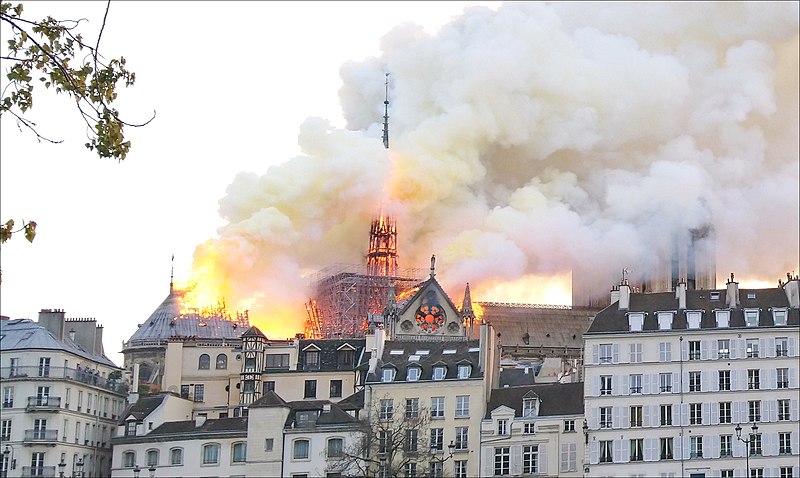
A wise art teacher used to say, “Make art that won’t be burnt up.” He meant, make art that will outlast the last judgment. Make art that will count as one of the “glories of the nations” brought into the New Jerusalem (Rev. 21:26). Beauty attracts us, even when our reasons are unconvinced.

As we practice the disciplines of submission and serving, we are freed from the terrible burden of always needing to get our own way, and we find the freedom to value and serve others.

I wondered how hungry the man was to steal an egg salad sandwich from a convenience store. I also wondered how he would have reacted to the customer’s kindness. He left without knowing his debt was paid. He was free to go. The food belonged to him.

There is a moment you stand on the brink, or the brink stands on you. The inexorable draw pulls you in, like gravity, like the current; at the moment you must fight to get away or be drawn in forever, you are the most tempted to pause with quickened breath as you weigh whether the knowledge of what lies on
With the coming of spring and the anticipation of summer, many churches in the United States are preparing for the Short-Term Mission (STM) “season.” Churches frequently use a domestic or international STM trip as a standard part of regular programming for youth and adults of all ages. STM has been billed as a way for American churches to spread the

Do you like to tell stories? The gospel of Mark tells us Jesus was “never without a story when he spoke.” If the listener’s heart was like good soil, (if they could not only hear but also truly listen) the seeds of those stories would go down deep inside, be protected, nourished, then sprout roots, dig in, hold on, and

Today we encounter two men, Timothy and Epaphroditus, who have chosen to believe what Paul has taught them about joy. They don’t just believe it, they are putting into action the things they’ve learned. Their stories serve as perfect examples of how serving well leads to joy.

In this mysterious moment, known to history as “the Transfiguration,” Jesus reveals to the disciples his true nature. And to their shock, his true nature is the glory of God shining from his face. Present with the disciples, and beholding the same incredible sight, is Moses, the prophet who had asked on Mt. Sinai to see God’s glory. Only now,

I’m a pretty happy and optimistic guy. I tend to believe the best of other people, and by and large, I expect things to work out alright. I take Romans 8:28 literally and seriously – God will somehow work out things for good. I tend to be an optimistic and grace-full preacher. I believe in hell, but I’m not a

One of my favorite evangelists is known by her place of
conversion. She is the woman at the well — the Samaritan woman — who
encountered Jesus while she was filling her water pot. She had a conversation that transformed her and moved her to share her experience with others.