Tragedy, Community, and Action by Kim Reisman
The Wesleyan Methodist tradition is one that puts actions with intentions.

The Wesleyan Methodist tradition is one that puts actions with intentions.
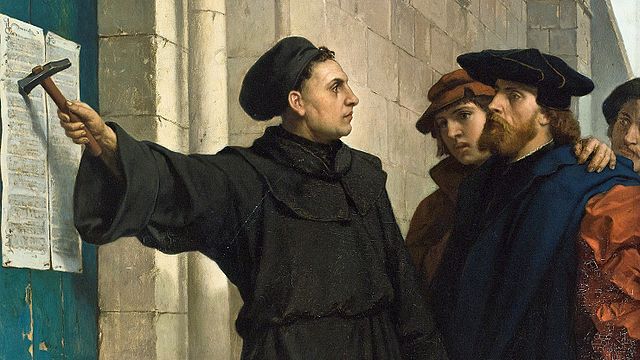
For I am not ashamed of the gospel; it is the power of God for salvation to everyone who has faith, to the Jew first and also to the Greek. For in it the righteousness of God is revealed through faith for faith; as it is written, “The one who is righteous will live by faith.” Romans 1:16-17 provides the thesis of
When we are teachable, we come with simple, trusting hearts, ready to gain insight from another.
As clergy, we preach, we teach, we pray, we visit the sick, and we know the word, but how does this apply to ourselves?
Thank God for the blessings of your day. Ask God for guidance as you live the rest of your day. And leave this quiet time in peace knowing you never leave the Shepherd’s presence.

In the book of John, beginning at chapter 13, there is an interesting shift in how Jesus deals with the people he calls “friend.” First, he does this radical thing where he gets down on his knees and washes their feet. He wants to serve them and model for them what humility in the context of friendship looks like. With

But the Word comes nevertheless, not in an earthquake or fire or rushing wind, but in this man, Jesus the Christ. And he offers himself to us; eat from me, drink from me.

There’s an overwhelming amount of beauty and awe in the world – from midday eclipses to bounding monkeys in jungles to the perfect curl of newborn baby toes. At some point, though, we all encounter suffering. Sometimes it appears as physical pain; sometimes it’s in the form of prolonged waiting; sometimes it’s mental or emotional distress. Sometimes suffering occurs through our
There is something mystical about the way people will drive hours to serve perfect strangers a hot meal, muck out their flooded home, or repair a hole in the roof.

He is at work in you and me, gifting, equipping, empowering, and shaping us to work alongside him in accomplishing the work he is doing.

Recently Wesleyan Accent spoke with Dr. Aaron Perry on Leadership in the Wesleyan Way, a volume he edited with Dr. Bryan Easley. Wesleyan Accent: This summer, you and Bryan Easley published a 450-page collection of essays on “Leadership the Wesleyan Way: An Anthology for Forming Leaders in Wesleyan Thought and Practice.” It’s been praised by notable voices like Dr. Jo

A Note From The Editor: Recently Wesleyan Accent posed a couple of questions to pastors and their spouses about how they pray for their children while in ministry, and how they choose to shape their kids’ experience of vocational ministry. Here are their responses. Elizabeth Glass Turner Wesleyan Accent: What are some ways you prayed for your children while

Right before I turned 14, my narrow little view of the world was rocked. The U.S. had just declared war on Iraq. I wasn’t so afraid of a war on the other side of the world as I was of the implications of this war. “Armageddon,” “World War III, “and “Christ’s return,” were just a few of the words swirling
One month ago, an American couple herded three children into a men’s room in the Istanbul, Turkey airport. The wife visibly pregnant, they settled in for the night and texted to family members in the U.S., letting them know that their flight was being delayed indefinitely – keeping some of the details to themselves. All night the parents kept vigil
I’m going to call Martha’s the honest approach. She doesn’t stand back and say things like, “Well you must have needed another angel.” Or “It must have been your will.” She looks him right in the eye and tells him exactly what she is thinking. “You let me down. You did not do what I asked you to do. You
let’s look closer at the story of Babel. The first thing we learn is that there was only one language and one people – “now the whole earth had one language and the same words” – that ought to be a red flag for us. It ought to alert us that something isn’t right.

It is a season to weed and to water and to pluck from the vine. We are in the midst of Ordinary Time on the liturgical calendar – between Pentecost and Advent, “ordinary” sounds mundane. But if it is mundane, it can also be the beautiful kind of mundane, like a long-married couple sharing their morning coffee or a gardener
When I walk him to school, and remember the proper procedure, I ask him to teach me their prayers. It changes frequently, alighting upon virtues and visions, my wife’s butterfly spirituality passing down to our son. As he teaches me their prayer, a common refrain rolls across his lips, “Lord, help me be bold and courageous.”
This congregation has a fresh, invigorated vision of proclaiming God’s Kingdom in their hometown and around the world (including an appreciation for four-legged outreach).
I’m proud to declare that the African Methodist Episcopal Zion Church is my church. It’s my church of birth, it’s my church of choice, and it’s the church I love. It is known by many as “The Freedom Church,” and this I do not take lightly. Yet, while no church can ever claim to be perfect, the church must at