A Song For Every Day by Ellsworth Kalas
Wesley knew how to be abased and how to abound. He intended, as did his brother John, to live all of life under God’s hand, whatever the circumstances of any given day.

Wesley knew how to be abased and how to abound. He intended, as did his brother John, to live all of life under God’s hand, whatever the circumstances of any given day.
Though it may seem to be the most difficult to define of the three, Wesley insists on including spirit with doctrine and discipline because right doctrine (belief) and right discipline (practice) are not enough in themselves.
I have heard numerous people in various ecclesial and academic contexts use this reformulation as if it were the direct equivalent of the original. What I have not heard, however, is much in the way of critical reflection upon such usage. “Stay in love with God” is perhaps easier to say (and memorize) and sounds more modern than the rather

For six years I lived among live oak trees on the Mississippi Gulf Coast in the aftermath of Hurricane Katrina. In fact, weekly, I drove down Highway 90 between Bay St. Louis and Ocean Springs, Mississippi – the “beach road” as we natives call it, where there were hundreds if not thousands of live oak trees that are massive in

We Methodists don’t “believe” in backsliding, as some have accused us, but we’re honest enough to confess a fact when it stares us in the face, and we’re sensitive enough to our spiritual condition that we can tell the difference.

We Christians are to “sit down on the bottom rung of the ladder of sanctity and yell for Jesus Christ.” When we do, he will come. He will come to nurture and change us.
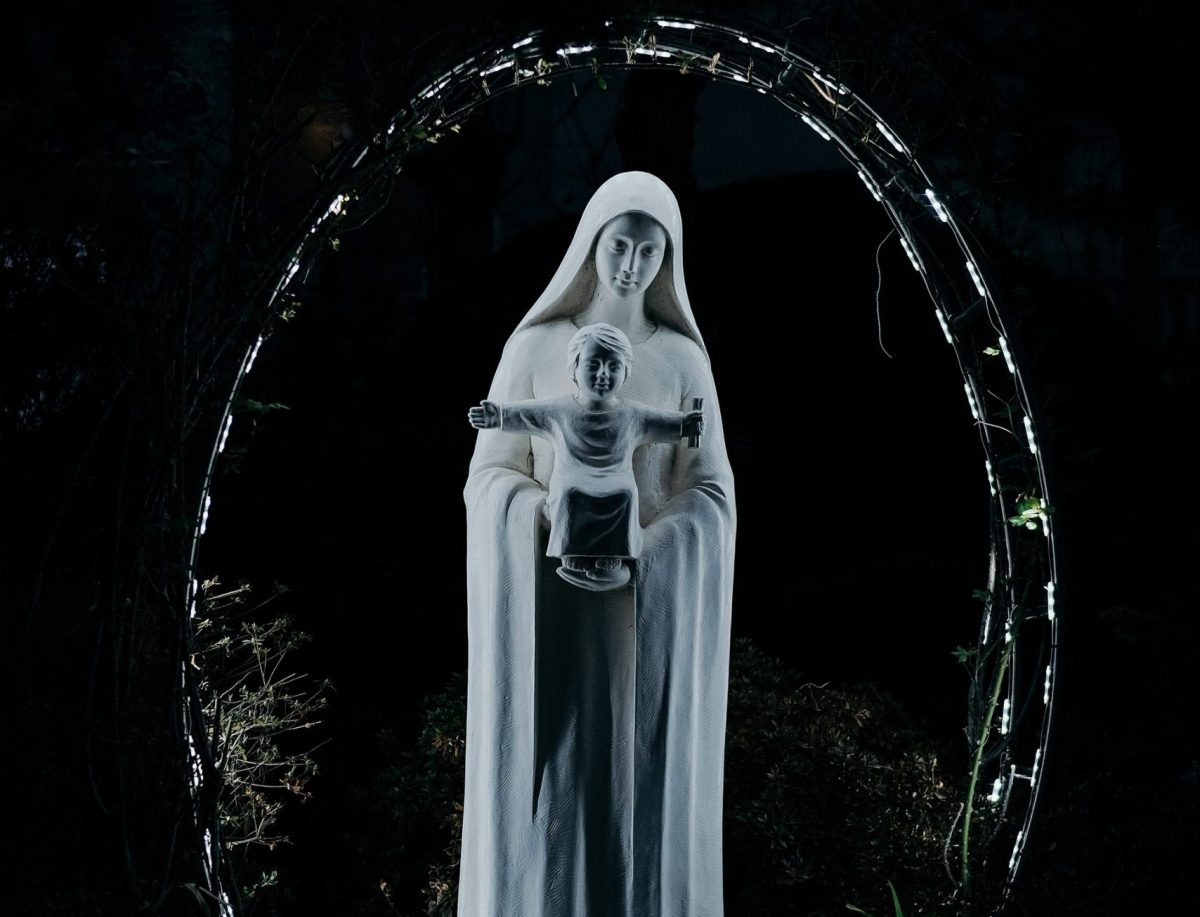
Here is a reality check as we move forward from the Christmas event: Mary may have been the first Godbearer. She may have been the ultimate Godbearer. But if you are in relationship with Jesus Christ, then you are a Godbearer too. Everyone who follows in the Jesus way is called to be a Godbearer. That is a huge part

The twelve days of Christmas are upon us at last! Advent, the church’s liturgical season of waiting and anticipation is over and the liturgical police can no longer write citations for early Christmas carols singing. For the past three and a half weeks, Christians following the liturgical calendar, have been singing hymns about waiting, expecting, anticipating the coming of Christ.
An intriguing commonality between those who follow the Jesus way and non believers is a general distaste for evangelism. Certainly this dislike doesn’t apply to everyone, believer or not; nor does it stem from an accurate understanding of what evangelism is all about. But the dislike is there…The negative image of the televangelist looms large in all our consciences.
The first verse of “Hark! the Herald Angels Sing” is an invitation to join the angels who announced Christ’s birth. In fact, Wesley wants all nations to rise and “join the triumph of the skies” in the tumultuous news, “Christ is born in Bethlehem!” Notice the exclamation point. Wesley was inclined that way. It’s hard to end all your sentences

The same Lord who met the disciples on the road to Emmaus longs to meet us during this season of Eastertide. As we seek him, he opens his Word to us, meets us in the breaking of the Bread, and stirs our hearts with his holy love in a way that makes it impossible to contain the news of his
The Son of God had a major impact upon our world and is the foundation of our faith. God, indeed, is not dead. Because of these things, let’s spend more time deepening our own faith and understanding of what it means to be a follower of Jesus and stop arguing about movies.
There’s no question but that the first line ought to be the first line – “Christ the Lord is risen today” – because all else follows from that premise. If you accept that fact (and God have mercy on you if you don’t), it’s easy to “raise your joys and triumphs high,” and to know as you do so that
As the Son of God, God’s chosen One, the Anointed, the Messiah was making the ultimate sacrifice, giving his life for the whole world, at that very moment, the Roman soldiers were rolling the dice and gambling for his clothes – having their own little “Casino at the Cross.” Such a contrast!
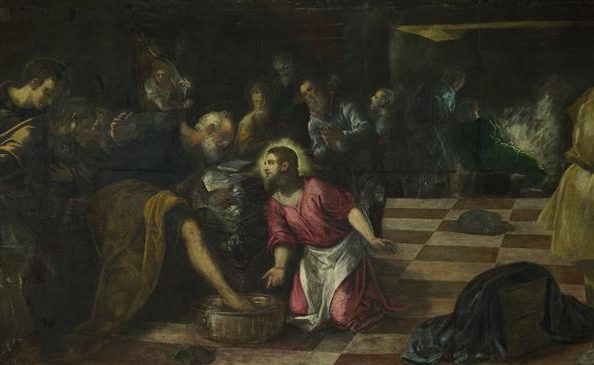
Is foot washing, by and large, the forgotten command of Jesus? After he washed his disciples’ feet, the Lord said to them, “Do you know what I have done to you? You call me Teacher and Lord—and you are right, for that is what I am. So if I, your Lord and Teacher, have washed your feet, you also ought

“Too big to fail.” A few years ago – and it doesn’t matter what your personal political opinion was on the government bailout of American automakers – this phrase rang repeatedly in American consciousness. These businesses were too big to fail. We couldn’t afford to lose them, no matter the cost. They were essential to our identity and our economic
“You can do anything you put your mind to” does not take seriously the problem of sin and our inability to save ourselves. A key conviction of historical Christian orthodoxy is that we are not enough. We cannot ever be the source of our own salvation. Putting your mind to being a better person, from the Christian perspective will fail
When I recall Abdul Rahman, I recall the magnificent love offered in Jesus Christ – a love that comes to us freely and waits for our response without pressure or manipulation; a love that respects our sacred right of refusal; a love that Abdul Rahman was willing to die for. And that’s a love worth sharing.
Thank God for pastors and lay leaders who recognized that history is important, and when unrecognized and unconfessed, sin poisons the body. We don’t keep secrets, our secrets keep us.
The Trinity is, in my experience, the ultimate collector’s plate. A gilded, limited edition Charles and Diana Wedding commemorative. Purely for admiring. Never for serious use … This is a problem … Because we love what we use. Can we really love the beauty of the Trinity if we never talk about it?