The Beautiful Gate by Kim Reisman
Why did they leave him at the gate? Why not take him all the way in? Did they not understand that he had spiritual needs as well?

Why did they leave him at the gate? Why not take him all the way in? Did they not understand that he had spiritual needs as well?
Wesley leads us to the heart of Lent and to the heart of every day of seeking the fullness of life in Christ: such a longing to please our Lord that we want the Holy Spirit to check us at the first sense of pride, wrong desire, or the wandering will — anything, that is, that might “quench the kindling

“The mission of the Church is to make disciples of Jesus Christ for the transformation of the world.” The Mission Statement of the United Methodist Church. I am an ordained United Methodist clergy and I have a confession to make. I have a love-hate relationship with the United Methodist mission statement. As a Wesleyan, I love it because it is
On Ash Wednesday, we recall through word and ritual, and even rejoice in, the fact that the Lord our God can bring new life out of the ashes of our brokenness.
A celebration of Easter without a prior descent into the grave is dishonest and naïve, just as observing Lent without the uncompromising proclamation of the Resurrection is hopeless.

Compassion comes from a deliberate identification with another person until we see things as he sees them, and feel things as she feels them. That’s the place to which God seeks to bring all of us.

Around the time the Methodist revival in England completed its first decade, John Wesley penned an essay called A Plain Account of the People Called Methodists. His aim is to explain the Methodist movement to the larger world, which he does by describing the various internal components of the revival that had developed during Methodism’s first ten years. One of

I’m a Yankee. Specifically, I was born in central Michigan, where the air is scented with pine needles and damp sand. I live in northeastern Texas – a region known for its own Piney Woods – but a world away from the cornfields of the Midwest, where I grew up. It may seem like a small question, but how does

I frequently lead workshops on prayer, which I always find kind of odd because I’ve never felt myself to be much of an expert on that kind of thing. Prayer is hard work for me; it’s meaningful, but it’s hard. During my workshops I always focus at some point on intercessory prayer – prayer for needs beyond our own –
Charles Wesley wrote songs for sinners. For those who were lost in sin, his hymns promised salvation, and for those who had come to Christ they were hymns that celebrated the day when it happened… These hymns are as true as ever and it is only our spiritual and doctrinal naivete that keeps us from seeing it.

Acts 17:16-34 contains Paul’s message to the Athenians at the Areopagus. Athens was considered the intellectual capital of the world. It was home to Socrates, Plato and Aristotle. Paul came to Athens during his second mission trip, seeking refuge. Earlier, he had been run out of Thessalonica by the synagogue crowd. He found a more congenial reception in Beroea, until
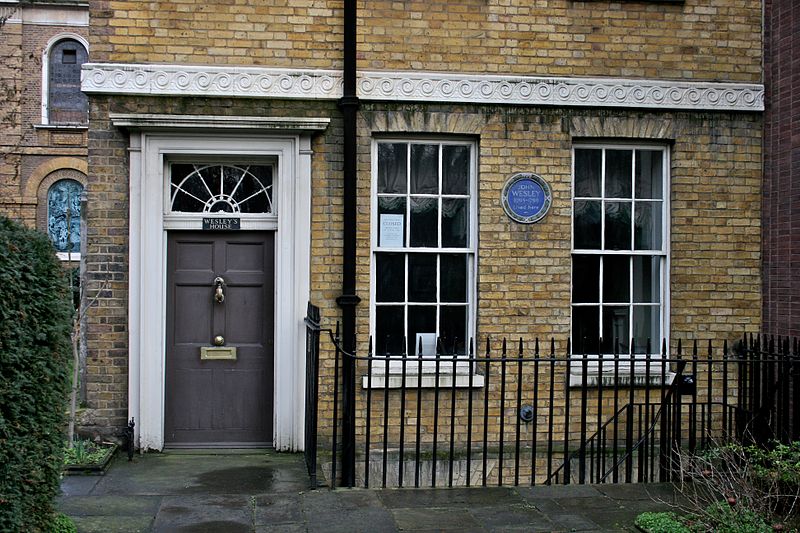
The good news is that we already have a basic blueprint for how to help people embrace faith in Jesus and become his apprentices. Methodist discipline, or the method that gave Methodism its name, was focused on helping people become deeply committed Christians, to become mature followers of Jesus Christ … The biggest challenge contemporary Wesleyans may face is our
This is a portion of the sermon preached on December 27, 2013, at the funeral service for Bishop McAlilly’s nephew Gale Stauffer, who was killed in the line of duty December 23, serving on the Police Force of the city of Tupelo, Mississippi. … little did we know that on this day of days, we would find ourselves moving so

Prevenient grace does not depend on any power or merit in man; no, not in any degree, neither in whole, nor in part. It does not in any wise depend either on the good works or righteousness of the receiver; not on anything he has done or anything he is. It does not depend on his endeavors. It does not

I received an e-mail from a pastor in Tennessee a few days ago posing this question: A church member asked me to recommend a biography on John Wesley, and I didn’t know what to suggest. Wondering if you could suggest something? That’s not an infrequent request to get for a seminary professor who teaches Methodist history. When I get an

I was thirty-two years old when a woman took my advice on how to die. Sitting in her low living room banked with windows that overlooked butterfly-laden bushes, I watched her shallow breaths. She had lost strength and energy: her frame seemed diminished, as if her soul were clinging to her body by mere tendrils. While disease sapped her vitality,
The weight of Christian worship history testifies that the Sunday service is primarily a gathering of, and for, the faithful. This is not to say that we shouldn’t consider how our worship services can best speak in the language of our local contexts. It isn’t to say that we shouldn’t consider if our gatherings are marked with radical hospitality and
Wesley knew how to be abased and how to abound. He intended, as did his brother John, to live all of life under God’s hand, whatever the circumstances of any given day.
Though it may seem to be the most difficult to define of the three, Wesley insists on including spirit with doctrine and discipline because right doctrine (belief) and right discipline (practice) are not enough in themselves.

There is a phrase in Wesleyan theology that holds the key to understanding most everything about present salvation. The phrase is “holiness of heart and life.” This is one of those terms that seems simple at first glance and yet is packed with meaning on multiple levels. It’s also a term worth exploring, and I want to explore it here.

We are examining this Teacher-Student-Teacher relationship between Paul, who invested in Timothy and expected Timothy to invest in others as a model for not only how, but what to pass “downline.” Last week we opened in chapter 1 of 1 Timothy where Paul, before teaching even the first “what,” sets the context – Grace. Everything that will be taught, should
When people do get a taste of healthy Christian community, it is often like water in a dry land. It is quickly absorbed and serves to make one more aware of a deep longing to be known, seen, heard, cared for, and most of all loved. Many Christian are hungry for this kind of connection with others.

During this Lenten season there was a lot of noise surrounding four movies: Noah, Heaven is for Real, God’s Not Dead, and The Son of God. When Easter is nearing it is commonplace for a proliferation of “evidence” to come forth that will now put this Jesus-rising-from-the-dead business to rest. Maybe these movies’ release dates were strategic so that they

For every action, there is an equal and opposite reaction. That’s Sir Isaac Newton’s third law of motion. It explains how birds fly and fish swim. Jump on a trampoline and you’ll experience the third law firsthand: You force the bounce mat down, and it springs back to throw you up into the air. Newton’s law applies to actions and
What are we called to do and say in our world? Sometimes we need to turn our jerseys inside out. Play the game but don’t play it unaware. Be the voice of change today in your system, company, church, and world.

It is Easter. Alleluia! Or, more properly, it is Easter-tide. Palm fronds saved from Sunday’s service two weeks ago are woven homemade crosses drying on the kitchen windowsill or (in my case, on the pile of mail stacked on my desk). The signs and symbols of Lent and Holy Week – along with the bins of empty plastic eggs –

I get what a zombie is. I was watching zombie movies in the church basement before zombie movies were cool. I’ve seen Night of the Living Dead a dozen times. But what we have now, this is another level of interesting. I know nothing about the current zombie culture, so help me out here. What is this fascination with dead

The same Lord who met the disciples on the road to Emmaus longs to meet us during this season of Eastertide. As we seek him, he opens his Word to us, meets us in the breaking of the Bread, and stirs our hearts with his holy love in a way that makes it impossible to contain the news of his
The Son of God had a major impact upon our world and is the foundation of our faith. God, indeed, is not dead. Because of these things, let’s spend more time deepening our own faith and understanding of what it means to be a follower of Jesus and stop arguing about movies.
There’s no question but that the first line ought to be the first line – “Christ the Lord is risen today” – because all else follows from that premise. If you accept that fact (and God have mercy on you if you don’t), it’s easy to “raise your joys and triumphs high,” and to know as you do so that
As the Son of God, God’s chosen One, the Anointed, the Messiah was making the ultimate sacrifice, giving his life for the whole world, at that very moment, the Roman soldiers were rolling the dice and gambling for his clothes – having their own little “Casino at the Cross.” Such a contrast!
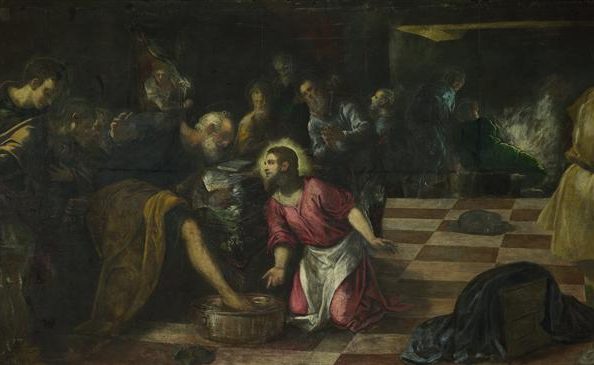
Is foot washing, by and large, the forgotten command of Jesus? After he washed his disciples’ feet, the Lord said to them, “Do you know what I have done to you? You call me Teacher and Lord—and you are right, for that is what I am. So if I, your Lord and Teacher, have washed your feet, you also ought

“Too big to fail.” A few years ago – and it doesn’t matter what your personal political opinion was on the government bailout of American automakers – this phrase rang repeatedly in American consciousness. These businesses were too big to fail. We couldn’t afford to lose them, no matter the cost. They were essential to our identity and our economic
“You can do anything you put your mind to” does not take seriously the problem of sin and our inability to save ourselves. A key conviction of historical Christian orthodoxy is that we are not enough. We cannot ever be the source of our own salvation. Putting your mind to being a better person, from the Christian perspective will fail
When I recall Abdul Rahman, I recall the magnificent love offered in Jesus Christ – a love that comes to us freely and waits for our response without pressure or manipulation; a love that respects our sacred right of refusal; a love that Abdul Rahman was willing to die for. And that’s a love worth sharing.
Thank God for pastors and lay leaders who recognized that history is important, and when unrecognized and unconfessed, sin poisons the body. We don’t keep secrets, our secrets keep us.
The Trinity is, in my experience, the ultimate collector’s plate. A gilded, limited edition Charles and Diana Wedding commemorative. Purely for admiring. Never for serious use … This is a problem … Because we love what we use. Can we really love the beauty of the Trinity if we never talk about it?

The Kingdom of Heaven is the rule and reign of God on earth, and this is what God is building among us. Matthew teaches us that this King and his Kingdom have come and are coming. Thirty-two times in Matthew’s gospel, he uses the term “Kingdom of Heaven.” That’s his working theme as he shares the story of Jesus with
“God, You have outwitted me!” Isn’t that a delightful phrase?…What a testimony to the providence of God, the working of God’s grace in our lives.
Stop inviting people to church! Stop it! Right Now!…Invite them, instead, to follow Jesus.