The Beautiful Gate by Kim Reisman
Why did they leave him at the gate? Why not take him all the way in? Did they not understand that he had spiritual needs as well?

Why did they leave him at the gate? Why not take him all the way in? Did they not understand that he had spiritual needs as well?
Wesley leads us to the heart of Lent and to the heart of every day of seeking the fullness of life in Christ: such a longing to please our Lord that we want the Holy Spirit to check us at the first sense of pride, wrong desire, or the wandering will — anything, that is, that might “quench the kindling

“The mission of the Church is to make disciples of Jesus Christ for the transformation of the world.” The Mission Statement of the United Methodist Church. I am an ordained United Methodist clergy and I have a confession to make. I have a love-hate relationship with the United Methodist mission statement. As a Wesleyan, I love it because it is
On Ash Wednesday, we recall through word and ritual, and even rejoice in, the fact that the Lord our God can bring new life out of the ashes of our brokenness.
A celebration of Easter without a prior descent into the grave is dishonest and naïve, just as observing Lent without the uncompromising proclamation of the Resurrection is hopeless.

Compassion comes from a deliberate identification with another person until we see things as he sees them, and feel things as she feels them. That’s the place to which God seeks to bring all of us.

Around the time the Methodist revival in England completed its first decade, John Wesley penned an essay called A Plain Account of the People Called Methodists. His aim is to explain the Methodist movement to the larger world, which he does by describing the various internal components of the revival that had developed during Methodism’s first ten years. One of

I’m a Yankee. Specifically, I was born in central Michigan, where the air is scented with pine needles and damp sand. I live in northeastern Texas – a region known for its own Piney Woods – but a world away from the cornfields of the Midwest, where I grew up. It may seem like a small question, but how does

I frequently lead workshops on prayer, which I always find kind of odd because I’ve never felt myself to be much of an expert on that kind of thing. Prayer is hard work for me; it’s meaningful, but it’s hard. During my workshops I always focus at some point on intercessory prayer – prayer for needs beyond our own –
Charles Wesley wrote songs for sinners. For those who were lost in sin, his hymns promised salvation, and for those who had come to Christ they were hymns that celebrated the day when it happened… These hymns are as true as ever and it is only our spiritual and doctrinal naivete that keeps us from seeing it.

Acts 17:16-34 contains Paul’s message to the Athenians at the Areopagus. Athens was considered the intellectual capital of the world. It was home to Socrates, Plato and Aristotle. Paul came to Athens during his second mission trip, seeking refuge. Earlier, he had been run out of Thessalonica by the synagogue crowd. He found a more congenial reception in Beroea, until

The good news is that we already have a basic blueprint for how to help people embrace faith in Jesus and become his apprentices. Methodist discipline, or the method that gave Methodism its name, was focused on helping people become deeply committed Christians, to become mature followers of Jesus Christ … The biggest challenge contemporary Wesleyans may face is our

This is a portion of the sermon preached on December 27, 2013, at the funeral service for Bishop McAlilly’s nephew Gale Stauffer, who was killed in the line of duty December 23, serving on the Police Force of the city of Tupelo, Mississippi. … little did we know that on this day of days, we would find ourselves moving so

Prevenient grace does not depend on any power or merit in man; no, not in any degree, neither in whole, nor in part. It does not in any wise depend either on the good works or righteousness of the receiver; not on anything he has done or anything he is. It does not depend on his endeavors. It does not

I received an e-mail from a pastor in Tennessee a few days ago posing this question: A church member asked me to recommend a biography on John Wesley, and I didn’t know what to suggest. Wondering if you could suggest something? That’s not an infrequent request to get for a seminary professor who teaches Methodist history. When I get an

I was thirty-two years old when a woman took my advice on how to die. Sitting in her low living room banked with windows that overlooked butterfly-laden bushes, I watched her shallow breaths. She had lost strength and energy: her frame seemed diminished, as if her soul were clinging to her body by mere tendrils. While disease sapped her vitality,
The weight of Christian worship history testifies that the Sunday service is primarily a gathering of, and for, the faithful. This is not to say that we shouldn’t consider how our worship services can best speak in the language of our local contexts. It isn’t to say that we shouldn’t consider if our gatherings are marked with radical hospitality and
Wesley knew how to be abased and how to abound. He intended, as did his brother John, to live all of life under God’s hand, whatever the circumstances of any given day.
Though it may seem to be the most difficult to define of the three, Wesley insists on including spirit with doctrine and discipline because right doctrine (belief) and right discipline (practice) are not enough in themselves.

There is a phrase in Wesleyan theology that holds the key to understanding most everything about present salvation. The phrase is “holiness of heart and life.” This is one of those terms that seems simple at first glance and yet is packed with meaning on multiple levels. It’s also a term worth exploring, and I want to explore it here.

Simplicity isn’t easy. I used to think that “simple” and “easy” could always be used interchangeably, like when asked about a particular task that didn’t require a lot of physical or mental sweat, one could say, “it was simple” or “it was easy” and both would mean the same thing: “No big deal!” But when it comes to what Richard

But Jesus went to the Mount of Olives. At dawn he appeared again in the temple courts, where all the people gathered around him, and he sat down to teach them. The teachers of the law and the Pharisees brought in a woman caught in adultery. They made her stand before the group and said to Jesus, “Teacher, this woman

There are two difficulties with our prayer, “Thy will be done.” We fret over the first, but the second is far more dangerous. “What is Your will? How do I know it? Where can I find it? Is this Your will?” This is the first difficulty. The second accompanies it, and often escapes our notice. There is a forgotten moment

Dear Millenials, I was you once. People wanted to know what I thought. They wanted to know what I wanted to buy. They wanted to hear what I was looking for in a spouse, in a career – in a faith group. They talked about me in the news, they studied me to see which way I was likely to

It is summer camp season. For thousands of children and youth that means night hikes and camp fires, arts and crafts and lake fronts. It is commonplace for churches in the United States to offer a trip to summer camp for their children or youth. It is often a highlight of the year for these ministries. Years after their experiences,

Methodists are good at counting. The numerous records that have been kept over the years of “conversions,” “probationary members,” and the like, are a goldmine for historians. This penchant for noting numbers remains in our DNA today. “How many members?” and “How many in active attendance?” are the two primary questions asked when one evaluates the strength of a local

It is no revelation that the United Methodist Church is facing an uncertain and problematic future.The second largest Protestant denomination in the United States is deeply divided over human sexuality and as a result it is divided over its language in the Book of Discipline (the denomination’s manual on agreed-upon life together) and is divided over decisions made by the Judicial Council, several Annual Conferences, and Boards of Ordained Ministry regarding human sexuality. In response, the Council of

I believe that God wants us to enjoy our everyday lives. John 10:10 says that Jesus came to us so we may have and enjoy life, and have it in abundance (to the full, until it overflows). But it seems that far too many people who say they believe in Jesus are not enjoying their lives. Now, it is not only

Recently, I heard a church leader describe the instinct to “drop Facebook napalm” in an online debate. What a great image. Our cultural currency right now isn’t the American dollar or the speculative Bitcoin: it is outrage. Outrage is addictive, and it’s so easily justified: we sanctify it with the word “prophetic” or the word “faithful.” God calls us to

“The Spirit of the Sovereign Lord has anointed me to preach good news to the poor. He has sent me to bind up the brokenhearted, to proclaim freedom for the captives and release from darkness for the prisoners…” – Isaiah 61:1 “Jesus returned to Galilee in the power of the Spirit, and news about him spread through the whole countryside. He

I’m at just about the halfway point of renewal leave (i.e. Sabbatical). I took my first church job in 1997, and ever since then, I’ve worked in the church. A couple of them were part-time, and then I took my first appointment at a pastor in 1999 to three small United Methodist Churches outside of Cleveland, MS. In other words,

Over the last 75 years, researchers at Harvard have tracked the lives of 724 men.* These men were children when the study began. For 75 years, they’ve been tracking these lives to record the state of their home life, work, health, outlook. Some men in the study became rich and famous. One became President of the United States. Others fared poorly. Boiling
Henry H. Knight III’s John Wesley: Optimist of Grace is a book I would like to get into the hands of as many Wesleyan Methodist pastors and lay leaders as possible. Knight has written a remarkably accessible and concise introduction to John Wesley’s life and theology without sacrificing precision and nuance. As the subtitle suggests, the core theme of this book
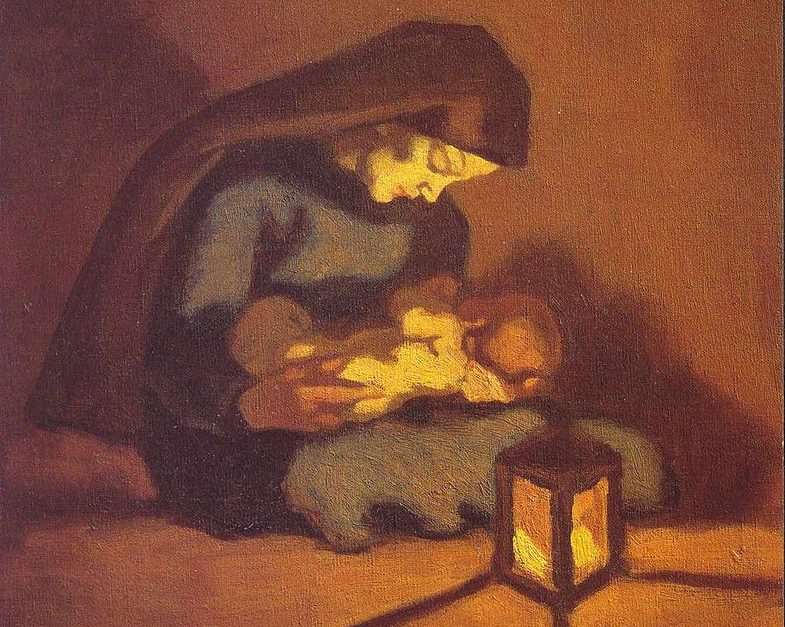
Children Adrift: The Old Testament Now a man of the tribe of Levi married a Levite woman, and she became pregnant and gave birth to a son. When she saw that he was a fine child, she hid him for three months. But when she could hide him no longer, she got a papyrus basket for him and coated it with tar and pitch. Then she placed

There is a prayer that I recently discerned to pray: God, may all your plans for me be successful. The rationale behind this prayer is that I want to position myself and do everything that is in my power to let God fulfill his plans in my life. Notice that I did not say “my plans,” but God’s. This is

True faith is demonstrated with obedience: what you cannot see, God does. “And as he entered into a certain village, there met him ten men that were lepers, which stood afar off: And they lifted up their voices, and said, Jesus, Master, have mercy on us. And when he saw them, he said unto them, Go shew yourselves unto the

There are seven “Woe to you” statements in Matthew 23: Jesus was warning the teachers of the law and the Pharisees not to focus on outward things. Of ten trees we had removed from our property, we knew that one was damaged. An arborist saw the spot where it had been hit by lightning. We hadn’t seen it. Other than

After this, Jesus appeared again to the disciples, this time at the Tiberias Sea (the Sea of Galilee). This is how he did it: Simon Peter, Thomas (nicknamed “Twin”), Nathanael from Cana in Galilee, the brothers Zebedee, and two other disciples were together. Simon Peter announced, “I’m going fishing.” When the sun came up, Jesus was standing on the beach, but they didn’t
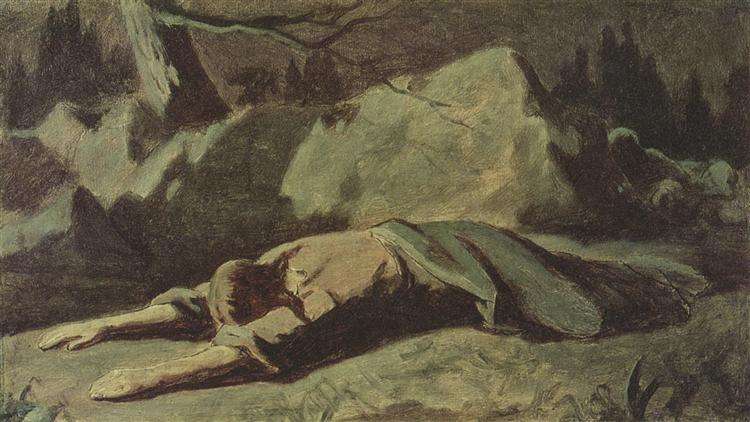
“Do not let your hearts be troubled” (John 14:1-31). Imagine how the disciples are feeling in this moment. Jesus has just predicted Peter’s denial and another’s betrayal: they could hardly be a happy group. How would his words have been heard? Would they have been comforting? “Do not let your hearts be troubled.” Certainly more easily said than done. How
It has become cliché to tell people to practice what they preach—that is, to live according to their words. But increasingly we may need to think about preaching what we practice. In most activities we practice, a structure must be followed, even when creativity is involved. For example, the best cooks can add a pinch of this and a teaspoon