
Our Greatest Leadership Challenge of the New Year by James Petticrew
I have often thought when hearing of another nose-dive from ministry, “not him?” but underlying that has been a naive attitude that has assumed that it won’t ever be me.

I have often thought when hearing of another nose-dive from ministry, “not him?” but underlying that has been a naive attitude that has assumed that it won’t ever be me.

Christmas is almost here! Thinking backing over the last few weeks, when have you felt the most peaceful? When have you felt the most stress or anxiety? As you think ahead to the coming week, what are you looking forward to? What, if anything, are you dreading? Offer those things into God’s care.

Yesterday was the third Sunday of Advent, called Gaudete Sunday; “gaudete” is Latin for “rejoice.” Even a cursory reading of the Bible reveals that joy and rejoicing are an inevitable overflow in the lives of people who have understood and experienced God at work in their lives.

As good as the story of Esther is, however, it presents us with a problem: God is absent. Unlike other Old Testament stories, where we read of God appearing to Abraham or working behind the scenes to foil the plans of the Pharaoh, the story of Esther never mentions God. Rather, the characters in Esther appear to be acting on
We live in a culture that wants to move faster and faster still. But, is faster always better? There are some things about going slow that you cannot get when you are moving fast. When I was serving as a youth minister, I took the youth group hiking to the top of a small mountain. At the end of the

At a time in my life when things were not like I wanted, I sat in a restaurant booth across from a friend as tears streamed down my face explaining how everything was going wrong. The holidays were around the corner. I was short on cash. I was helping other people but no one asked me if I needed help.
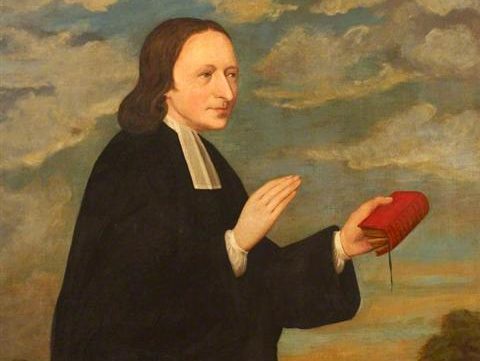
I’m a historian by training. It is what I do and how I think. This training orients my own spiritual formation as well. I think about the past as a way to make sense of God’s faithfulness and to consider my Christian duty as well as others’. Thinking like a historian tends to consider how we narrate our stories and

Many families enjoy re-telling the events that happened around the time that someone was born – the mad dash to the hospital, nervous pacing in the waiting room, funny names that your parents almost gave you. Luke begins his gospel by telling the story surrounding Jesus’ birth. Did you know that Jesus was born next to animals? That’s unusual isn’t

Christmas is around the corner, and for the Christian church this is the beginning of the Advent season. Advent is a season when we are reminded that God is with us. In fact, one of the names for God that we hear often during Christmastime is Emmanuel, which means: God with us. (Isaiah 7:14) However, many times we don’t feel

Many churches are currently setting up Advent wreaths to mark the weeks leading up to Christmas. The four candles that encircle the wreath illuminate the area around them as they point toward the center candle. Those outer candles relate to prophecy, Bethlehem, shepherds, and angels, while the center candle alludes to Christ. The prophecy candle represents the expectation of the
An intriguing commonality between those who follow the Jesus way and non believers is a general distaste for evangelism. Certainly this dislike doesn’t apply to everyone, believer or not; nor does it stem from an accurate understanding of what evangelism is all about. But the dislike is there…The negative image of the televangelist looms large in all our consciences.
The first verse of “Hark! the Herald Angels Sing” is an invitation to join the angels who announced Christ’s birth. In fact, Wesley wants all nations to rise and “join the triumph of the skies” in the tumultuous news, “Christ is born in Bethlehem!” Notice the exclamation point. Wesley was inclined that way. It’s hard to end all your sentences
There aren’t many times in the life of the church where people sit down and say, “Please teach me doctrine.” As a theology nerd, I wish it would happen more. But it just doesn’t happen that much.
Advent is primarily about looking through the baby in the manger to see Christ the King coming on the clouds in glory. The problem for Methodists is that, for decades, we did not have a single hymn in the Methodist hymnal that explicitly referenced the Lord’s physical return.
When I was in 8th grade, my family lived for a bit in some low income apartments. The apartment complex was formed in a square with a decent sized courtyard in the middle. In the courtyard was where all the dramatic action was – this is where kids got in fistfights with each other, where drug deals happened after dark,

Wesleyan Accent is excited to welcome Ellsworth Kalas who will be contributing regular reflections on Wesleyan hymns. His first highlights Charles Wesley’s wonderful Advent hymn, “Come, Thou Long-Expected Jesus.”
Familiarity sometimes breeds dullness. It’s true in the whole of life; it is especially true in the way we hear things and reflect on what we hear. The hymns we sing are a great example of this. If we have sung them often, we are so familiar with the tunes that we sing the words by rote. Not only do

How should we “read” John Wesley? And why is he important for people today? These are important questions for Methodists, most of whom consider themselves to be Wesleyans in some sense. Focusing on the actual theology of John Wesley has not always been emphasized in American Methodism. For much of the 19th and 20th centuries, Wesley was treated in “hagiographic”
One of our big failures as Christians is our continual refusal to discipline ourselves in living with the word of God. We need to study the Bible. It is the shaping source of our Christian faith and way. In it we find the revelation of God which God provided through God’s Son, Jesus. It is food for our souls, direction
Though Wesleyans are most committed to offering Christ, not to being distinct from other Christian traditions, there are differences in Christian traditions because various parts of the body of Christ articulate their faith with differing emphases or nuances. And although Wesley was primary focused on offering Christ, he was not indifferent to Christian beliefs or practice. The next three posts,