
Good News: God is Moving in Asia and Far Beyond by James Loftin
After living in Asia for several years, my wife and I moved to the United States in 2020. This past summer, we were able to return to Asia. By the grace of God, we were able to learn and shine in 17 cities in 4 countries over 6 weeks. We had an amazing adventure. (For security reasons, some names and details are withheld)
In a time of confusion, division, frustration, and hostility, I bring Good News: God is moving. People are saying YES to the grace of God – people young and old, across the US and in cultures far away. In spite of governmental restrictions, the failure of the Church to move into many dark areas, and the ongoing outworking of human depravity, God is moving. As I engaged with new and old friends in Asia and listened carefully to the Holy Spirit, I rediscovered an ancient truth: God is always moving toward human pain and lostness. He is always ahead of us – beaconing us to join Him in a ministry of truth and grace. That is Good News!
The following insights are summaries of discussions I had with my wife, good friends, and the Holy Spirit during and after our six weeks in Asia. I am not suggesting that any of these insights are new or unique. I am only bearing witness to what God was teaching me as I was immersed in cultures far from my home. I pray that these paragraphs cause you to think carefully about God, our faith, God’s mission, and the people waiting in darkness.
1. Seeing people as made in the image of God is essential. One of the great joys in life is when we look deeply at another human, remember that they are God’s creation, and appreciate their unique beauty. Almost instantly, we begin considering ways to love and encourage them. We do this effortlessly with a smiling infant, especially our own offspring. We do this with only a little effort with older children and adults as long as they look like us, believe like us, and act in ways we affirm. The challenge relates to how we view and respond to the rest of humankind – the stranger, the foreigner, the threat, the “other.”
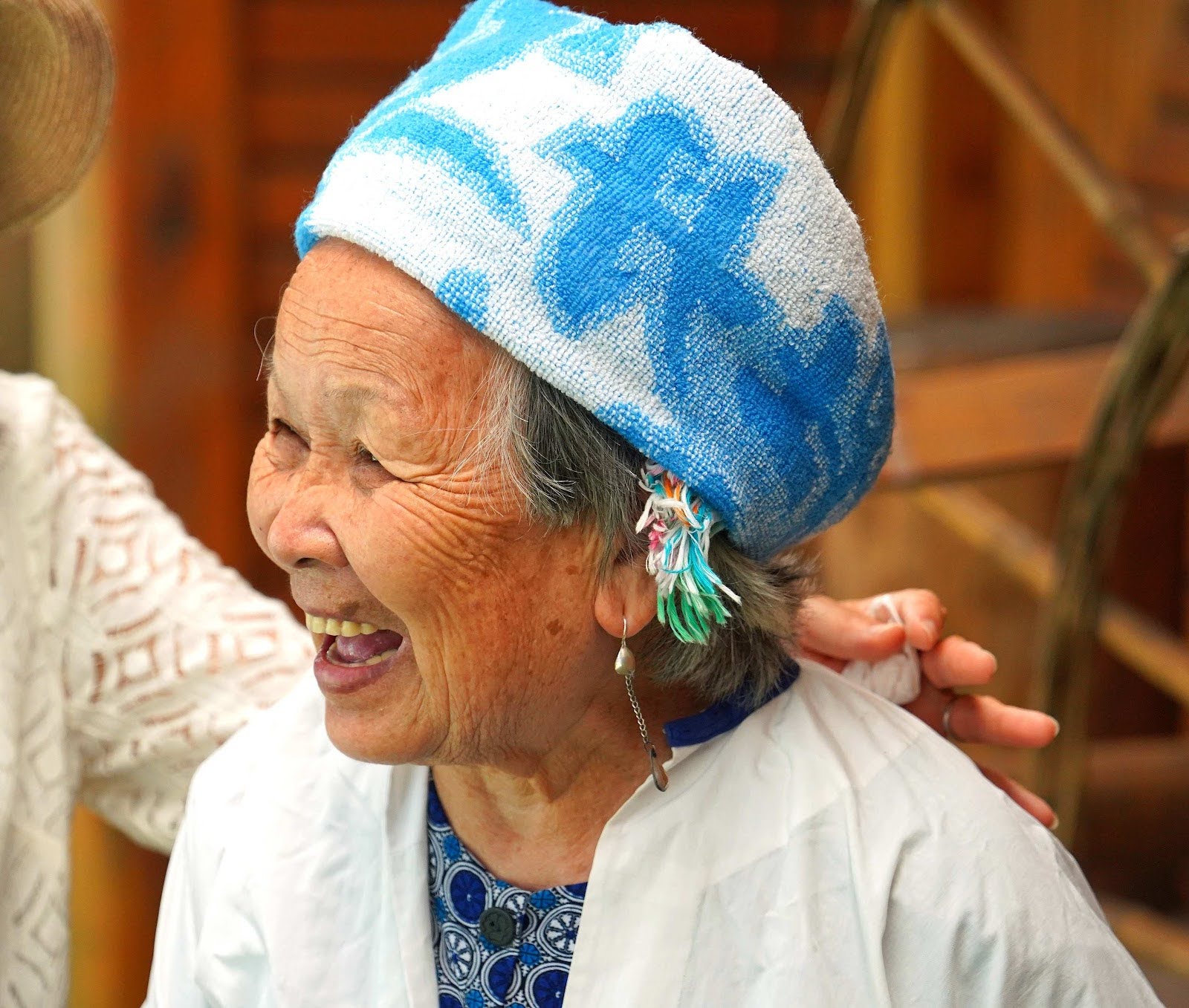
I spent a week in a remote part of Asia. The majority of the population are part of an ethnic minority that is predominantly Muslim. I felt called to learn and shine there because groups like the Joshua Project report that only 0.01% of the population is Christian. When I shared with Asian and Western friends about my travel plans, I was often cautioned with statements like: “Those people are dangerous, violent, immoral. Be very careful.” Contrary to what my well-meaning friends told me, the people I encountered are gentle, hospitable and beautiful.
Generalities are almost always unhelpful and inaccurate. There are at least three exceptions. All are sinners. All are loved by God. All are created in the image of God (Genesis 1:27). All people – including those in the ethnic group I visited – are as beautiful and fascinating as they are lost without Jesus. One of the foundational aspects of biblical Christianity is the recognition that all people are beautiful and worthy of our respect regardless of their lifestyle or faith. Christ died for all, and every single person is created by God in the image of God.
When a person or group is seen as less than human, all restraint on abusive and evil treatment of them vanishes. Consider how children, women, minorities and immigrants have been treated in various cultures throughout history. The ugly fruit of seeing individuals who are different from us as being less than human is not limited to the battlefields and genocides of history. Every time a person, especially a leader, demonizes a group of people, she or he is creating an environment where the darkness of evil can be unleashed to the shame of humankind and the horror of the Church.
Any behavior toward a person or group that does not respect them as image bearers of God is less than loving and thus sub-Christian no matter what justification is offered. All authentic Christian ministry is guided by the fact that all people are created in the image of God.
2.God is before and behind us. Inna was part of a fun group of English students I had in China. She was passionate about learning, honest about her life challenges, and curious about the way of Jesus. She also lacked confidence in herself. Vivien and I had not seen her in over six years. Although we prayed for her often, we worried that her fragile emerging faith would dissipate without our encouragement. But when we reconnected with her on our trip, we were shocked. A confident, winsome, glowing version of Inna greeted us. God had continued to woo and shaped her without us. Through a “random” post on social media, Inna learned about and joined Toastmasters International. In regular group meetings around the world, people practice the skills needed to communicate with confidence and excellence. In this new community, Inna met some Christians. And God’s work continued.
When I first went to China in 1996 someone thanked me for taking Jesus to Asia – as if God was not already there. Thirty years later, I still receive similar comments. God is working in a life or culture long before any human witness begins. This truth is rooted in the gracious nature of God and is seen in the transformational role of the Holy Spirit throughout history.
We can never be ahead of Jesus or “take” Jesus anywhere. At our best, we follow Jesus and join him in mission. But long before you and I show up to share his light, God is there. And long after we move on or give up, God is there. That’s what grace does.
3.Darkness is strong but not impenetrable. The dark expanse of human suffering and lostness is breathtaking, but much of it is not as inaccessible as we may have assumed. God’s light shines in even the darkest places.
We were honored to spend a week serving with and encouraging the staff of the Hard Places Community in Phenom Phen Cambodia. Founded by my friend Alli Mellon in 2008, HPC is an international group of Christ followers whose mission is “to see justice prevail, pain redeemed, hope reborn, and life restored” in the hearts of broken and abused children and adults around the world. They are doing hard but important work.
Although there are many beautiful and positive aspects to the culture and history of the people of Cambodia, there is also great darkness. The country is open to evangelism and mission activities, but only 3% of the population is Christian. As is true in many countries, human trafficking and the sexual exploitation of children seems to be increasing here. As dark as that is, it is important to understand the cultural context. Especially in poor, disadvantaged, migrant families, children are expected to help support the family financially – as early as age 4. Often this involves laboring in agriculture or as a street vendor. But sometimes – when the family is approached by seemingly kind foreigners (sex tourists) – children can become victims of sexual exploitation. In many cases, there is no shame about this economic relationship between the family and the tourist at the expense of a child. It is just a necessity for the family to live. This cultural reality only makes the darkness of human trafficking even darker, and much more difficult to stop.
Most of the people who serve with the Hard Places Community are Cambodians who were impacted by human trafficking. God has delivered, redeemed and empowered them as instruments of change. But ministry in places like Cambodia is hard and slow. Alli shared that she perseveres in ministry because every person is made in the image of God, and Jesus loves working in the hard places. The darkness in Cambodia is as shocking as anything I have ever experienced or imagined. But even in that environment, the light of Jesus is shining, redeeming and transforming lives.
Because light brings hope in even the darkest places, people are more ready to hear the Good News than we often imagine. It is easy to assume the opposite. Even if we don’t live in an overtly anti-Christian environment, we tend to assume that people are hostile to any communication about faith. But God has helped me reject that negative and limiting assumption.
If I remember that every person is made in the image of God, and I approach them with grace and dignity, almost every person will be open to hearing and discussing the truth of Christ. That has been my experience in Asia and around the world. Most people are receptive when we demonstrate grace and use vocabulary that they understand. They are open to talking about the forgiveness, the peace, the freedom, the joy, the hope that is found in Christ alone. Darkness is strong, but it is not impenetrable.
4.Be urgent about turning over leadership to local believers. We encountered countless expressions of darkness across Asia and saw how God’s people are trying to bring peace and hope to those situations. As I reflected on those realities, God reminded me of the necessity of turning over ministry leadership to local Christians as soon as possible. Three of the most obvious reasons are:
- People learn by doing. This was Jesus’ model of ministry with the Twelve.
- There is the possibility that an expat witness (foreign missionary) may fail, be moved to another location, or be forced to withdraw with little notice.
- Local (indigenous) leaders are more likely to facilitate cultural shifts. It is one thing to serve a person in a way that helps them move out of poverty or abuse or some other darkness, but it is quite another thing to change the underlying causes of that darkness. The transformation of culture will never be achieved by foreigners alone. People who have been raised in that environment are the most likely tools God will use in bringing a transformation of cultural values and systems like the dark but “acceptable” economic relationship between families and sex tourists in Cambodia.
William Wilberforce (1759 – 1833) was a British politician who lead the movement which eventually abolished the Atlantic slave trade. This was a complicated and seismic cultural and economic shift. It is unlikely that a well-meaning and passionate outsider would have been able to lead this charge. As visitors in another nation, we can share Jesus and address needs one by one, but radical cultural change will most likely come through the citizens of that nation. I am praying that God will raise up a Cambodian man or woman to lead a movement to change the cultural norms and laws in that land and bring safety and peace to vulnerable children who are created in the image of God.
As you reflect on these four insights
- Which insight best connects with your needs or passion today
- Which lost, hurting and unreached people has God put on your heart?
- In what ways is God calling you to lift the lamp of Jesus’ love even higher?
“Lord Jesus, thank you for moving with transforming power around the world. May the Church in every nation faithfully follow you in your mission of grace. Amen.”
Subscribe
Get articles about mission, evangelism, leadership, discipleship and prayer delivered directly to your inbox – for free