The Methodist Band Meeting: Confession Is For Protestants Too by Kevin Watson
Methodists gathered together because they were convinced that growth in holiness was most likely to happen in community.

Methodists gathered together because they were convinced that growth in holiness was most likely to happen in community.
We know that what we do here in Holy Communion is look forward to that day when life will finally be the way God wants it to be.

This is not an anti-technology diatribe. There are enough diatribes in the world, I think: talking heads, Facebook rants, raised fists and honking horns etching anger for a permanent moment of rush hour that hangs now in the universe reflecting our contorted faces back to us. What if I died in that moment? The moment of my life when my
God’s word is better delivered in obscurity than by celebrity. The greatest impact usually happens when no one notices.
It’s a mistake to criticize questioning by and in itself. An unexamined life is not worth living, and an unexamined faith will last about as long as Farrah Fawcett hair, Hammer pants, beanie babies, MySpace, “Gangnam Style” and every other grass that withers and flower that doth fade away.
Beginning at the point of our believing that it is God’s desire to forgive, confession becomes not a morbid discipline, not a dark groveling in the mud and mire of life, not a fearful response to a wrathful, angry God who is out to get us if we don’t shape up. Rather, confession becomes an act of anticipation, a response
New is unknown, and often we are afraid of the “what if” questions in our lives. But new is happening every day.

It began with Jesus, who invited twelve guys to quit their day jobs and enroll in a three-year intensive, seminary-level program. By following Jesus, these guys learned Hebrew Bible, pastoral care, prayer and healing, theology, missions and evangelism, preaching and economics. At the end of three years, Jesus declared them ready (in fact, he called them his peers) and commissioned
When we refuse to be silent we are saying that we have nothing left to learn or that God has nothing left to say to us.
By the time most of us get to be adults, we have accumulated a great deal of stuff. We’ve learned so many wrong things, stored up so much misinformation, learned to respond in so many destructive ways, adopted all the biting, snarling, snippy styles of relating, become secretive and cynical. We carry a lot of stuff around, and it burdens

Note from the Editor: Recently, Wesleyan Accent interviewed Rev. Dr. Roberta Mosier-Peterson, an ordained Elder in the Free Methodist Church (USA) who is currently Senior Pastor of Oakdale Free Methodist Church in Jackson, Kentucky, and contributor to www.juniaproject.com. She completed her D.Min. dissertation at Northeastern Seminary in 2016 on the topic of women in ministry. A documentary, “Lived Experience,” based
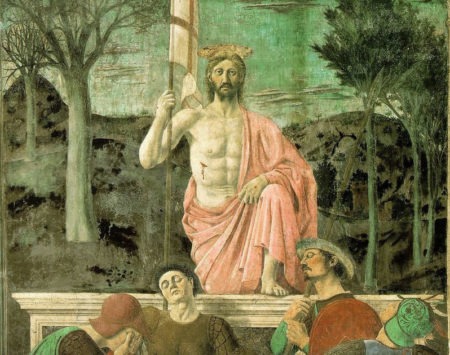
Piero della Francesca gets thunderingly right what so many Christians get so stunning wrong. Raised on the first day of the week – a day any faithful Jew would understand as the first day of creation – God in Christ has begun the re-creation of this world. This work of making all things new is not complete, but it has
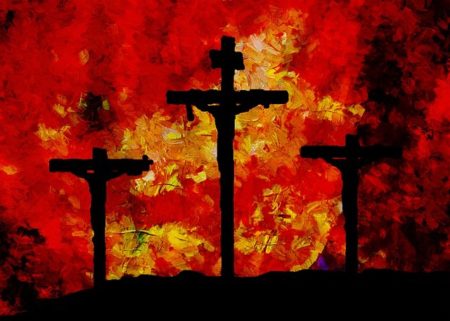
I have met many people who believe they need to earn God’s favor. They are insecure about the goodness of God. They believe they need to give something up, to pay the price or suffer in some way in order to merit God’s blessings. I also have met people whose issue is not insecurity but pride: those who feel they

Observing Holy Week has had a significant impact on my life. There are many different ways I could mark my growth as a follower of Jesus Christ, but a major part of my growth as a Christian came when I started to attend Holy Week services. Attending worship on Thursday and Friday of Holy Week is a highlight of my

From the seven depictions of Christ’s crucifixion story, to the mother of Jesus holding her infant son as she stretched out her arms to the weeping worshipper, the entire chapel was an invitation to see our sufferings – our very humanity – in light of the fact that neither Jesus nor Mary were exempt from suffering, pain, or death.
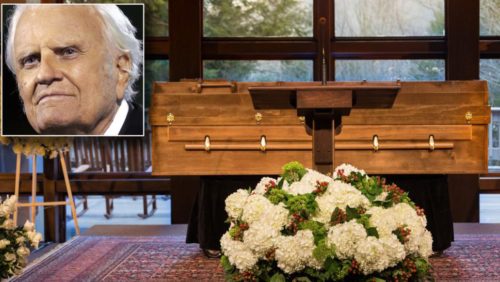
Because of his biblical and theological perspective, people often fail to reflect on how creative and innovative he was: the way he pioneered the use of radio and television; the way he harnessed print media; the role he played in launching a world-class magazine; and his influence in higher education, particularly theological education.

There are times when the body, that is, the church, is out of sorts too. Fractured relationships, broken trust, as Paul alludes to in his letter to the contentious Corinthians, jealousy over not getting to be the part of the body you want to be, pride – all of these and more tend to dismember us, if not in actual
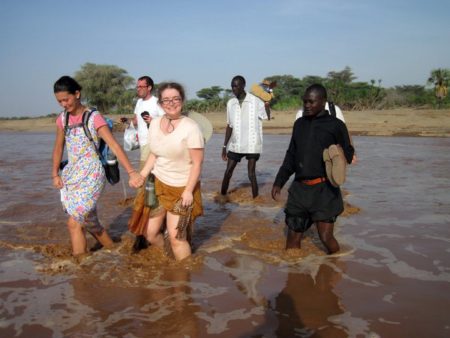
In A Public Faith: How Followers of Christ Should Serve the Common Good, Miroslav Volf cautions against the errors the church falls into that hinders it accomplishing what it was constituted to be. He calls it malfunction. He describes this malfunctioning as a poisoned well when he says, In the course of Christianity’s long history—full of remarkable achievements by its saints

Wesleyan Accent shares the opportunity to explore the Lenten season with Bishop Debra Wallace-Padgett, who serves the Birmingham Episcopal Area of the Southeastern Jurisdiction of the United Methodist Church in the United States. Wesleyan Accent: Growing up, Ash Wednesday was something vaguely Catholic-ish printed on the calendar; I didn’t observe it until later in life. What role has Ash Wednesday played

Find Mark 1:41 in your Bible. How does that line read in your version? How did Jesus feel about this leper who asked for healing? Some versions say Jesus was filled with compassion for the leper who came to him for healing. My version (NIV) and a few other versions say Jesus was indignant. By my experience, there is a