The Methodist Band Meeting: Confession Is For Protestants Too by Kevin Watson
Methodists gathered together because they were convinced that growth in holiness was most likely to happen in community.

Methodists gathered together because they were convinced that growth in holiness was most likely to happen in community.
We know that what we do here in Holy Communion is look forward to that day when life will finally be the way God wants it to be.

This is not an anti-technology diatribe. There are enough diatribes in the world, I think: talking heads, Facebook rants, raised fists and honking horns etching anger for a permanent moment of rush hour that hangs now in the universe reflecting our contorted faces back to us. What if I died in that moment? The moment of my life when my
God’s word is better delivered in obscurity than by celebrity. The greatest impact usually happens when no one notices.
It’s a mistake to criticize questioning by and in itself. An unexamined life is not worth living, and an unexamined faith will last about as long as Farrah Fawcett hair, Hammer pants, beanie babies, MySpace, “Gangnam Style” and every other grass that withers and flower that doth fade away.
Beginning at the point of our believing that it is God’s desire to forgive, confession becomes not a morbid discipline, not a dark groveling in the mud and mire of life, not a fearful response to a wrathful, angry God who is out to get us if we don’t shape up. Rather, confession becomes an act of anticipation, a response
New is unknown, and often we are afraid of the “what if” questions in our lives. But new is happening every day.

It began with Jesus, who invited twelve guys to quit their day jobs and enroll in a three-year intensive, seminary-level program. By following Jesus, these guys learned Hebrew Bible, pastoral care, prayer and healing, theology, missions and evangelism, preaching and economics. At the end of three years, Jesus declared them ready (in fact, he called them his peers) and commissioned
When we refuse to be silent we are saying that we have nothing left to learn or that God has nothing left to say to us.
By the time most of us get to be adults, we have accumulated a great deal of stuff. We’ve learned so many wrong things, stored up so much misinformation, learned to respond in so many destructive ways, adopted all the biting, snarling, snippy styles of relating, become secretive and cynical. We carry a lot of stuff around, and it burdens

Churches have personalities, expressed through their organization, Christian education
processes, preaching, and worship. Each can have strengths and challenges, but the diversity is reflective of the differences we see in people, including the
Apostles.
Instead of focusing on which
organizational structure or form of worship we prefer, we need to ask if our church is manifesting Christ

I have often thought when hearing of another nose-dive from ministry, “not him?” but underlying that has been a naive attitude that has assumed that it won’t ever be me.

Christmas is almost here! Thinking backing over the last few weeks, when have you felt the most peaceful? When have you felt the most stress or anxiety? As you think ahead to the coming week, what are you looking forward to? What, if anything, are you dreading? Offer those things into God’s care.

Yesterday was the third Sunday of Advent, called Gaudete Sunday; “gaudete” is Latin for “rejoice.” Even a cursory reading of the Bible reveals that joy and rejoicing are an inevitable overflow in the lives of people who have understood and experienced God at work in their lives.

As good as the story of Esther is, however, it presents us with a problem: God is absent. Unlike other Old Testament stories, where we read of God appearing to Abraham or working behind the scenes to foil the plans of the Pharaoh, the story of Esther never mentions God. Rather, the characters in Esther appear to be acting on
We live in a culture that wants to move faster and faster still. But, is faster always better? There are some things about going slow that you cannot get when you are moving fast. When I was serving as a youth minister, I took the youth group hiking to the top of a small mountain. At the end of the

At a time in my life when things were not like I wanted, I sat in a restaurant booth across from a friend as tears streamed down my face explaining how everything was going wrong. The holidays were around the corner. I was short on cash. I was helping other people but no one asked me if I needed help.
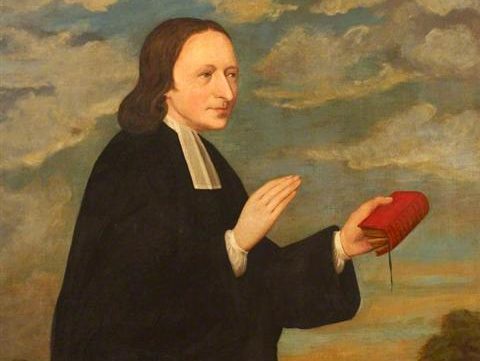
I’m a historian by training. It is what I do and how I think. This training orients my own spiritual formation as well. I think about the past as a way to make sense of God’s faithfulness and to consider my Christian duty as well as others’. Thinking like a historian tends to consider how we narrate our stories and

Many families enjoy re-telling the events that happened around the time that someone was born – the mad dash to the hospital, nervous pacing in the waiting room, funny names that your parents almost gave you. Luke begins his gospel by telling the story surrounding Jesus’ birth. Did you know that Jesus was born next to animals? That’s unusual isn’t

Christmas is around the corner, and for the Christian church this is the beginning of the Advent season. Advent is a season when we are reminded that God is with us. In fact, one of the names for God that we hear often during Christmastime is Emmanuel, which means: God with us. (Isaiah 7:14) However, many times we don’t feel